
A Republican bill with 3 Republican cosponsors · See all 3 cosponsors
Last activity — Referred to the House Committee on Education and Workforce.
In committee
Introduced and handed to a committee in the chamber it started in.
The committee holds it, and most bills are never heard from again. A hearing or a committee vote would be news; silence is the usual outcome, and it kills the bill without anyone voting against it.
Its path through Congress
- Introduced
- In Committee
What this bill would do
This bill, titled the "Stop Child Care Funding Fraud Act of 2026," aims to amend the Child Care and Development Block Grant Act of 1990. It focuses on increasing transparency and accountability regarding how States manage Federal child care funds. The legislation requires States to report their rates of improper payments and provide a plan to reduce those rates. It also establishes financial penalties for States that exceed specific improper payment thresholds. Additionally, it mandates more detailed reporting by the Secretary to show a State-by-State breakdown of these rates and actions.
Yes· 3 of 6
- Scored +7
Does this make what the government does easier for the public to see?
The bill mandates more transparent reporting of state improper payment rates to the federal government.
- Scored +5
Does this give the federal government more power?
The bill increases federal oversight and the ability to penalize or withhold funds from states.
- Scored +5
Does this make the government pay for what it commits to?
The bill increases accountability and reduces waste in the administration of federal child care funds.
The opposite
- Scored -5
Does this leave more decisions to the states?
The bill reduces state autonomy by imposing strict financial penalties for improper payment rates.
Who it would affect, and how
Potential Positive Impacts for People
-
Increased Accountability for State Funds: The bill requires States to submit a report on the rate of improper payments and a breakdown of actions to lower that rate (Section 2(a)(1)). This ensures that officials are held responsible for how child care funds are managed.
-
Financial Incentives to Reduce Errors: The bill creates a system where States face fund reductions if improper payments exceed certain percentages (Section 2(a)(2)). This provides a direct incentive for States to correct errors, such as payments that exceed the correct amount, are less than the correct amount, are made to ineligible children, or cannot be verified (Section 2(a)(4)).
-
Improved Transparency through Reporting: The Secretary must provide a report that is disaggregated by State, showing each State's improper payment rate and the actions taken to lower them (Section 2(b)). This allows for better public oversight of how the funds are being used across the country.
Potential Negative Impacts for People
-
Reduction in State Funding: States that fail to manage improper payments effectively will face a reduction in their aggregate funds, ranging from 5 percent to 15 percent depending on the rate of improper payments (Section 2(a)(2)). This could reduce the total amount of money available for child care services in those States.
-
Mandatory Corrective Action Requirements: States with improper payment rates exceeding 6 percent are required to complete and submit a payment corrective action plan within 60 days (Section 2(a)(3)). This plan must include verified child attendance documentation in an aggregated format (Section 2(a)(3)).
Groups and Interests Ranking
Every group the model scored this bill for, from -10 to +10. Tap or hover a score for the reason it gave.
- Governance And Ideology
- Does this make what the government does easier for the public to see? — The bill mandates more transparent reporting of state improper payment rates to the federal government. Does this give the federal government more power? — The bill increases federal oversight and the ability to penalize or withhold funds from states. Does this leave more decisions to the states? — The bill reduces state autonomy by imposing strict financial penalties for improper payment rates.
- Demographic And Interest Groups
- Would children be better off under this? — Increased accountability may ensure funds more accurately support children's needs. Would households on low incomes be better off under this? — More accurate administration of funds may benefit low-income families relying on childcare subsidies.
- Economy And Finance
- Does this make the government pay for what it commits to? — The bill increases accountability and reduces waste in the administration of federal child care funds.
- Social Issues And Justice
- Does this make child care cost less? — Enhanced oversight may ensure funds are used more effectively for childcare, though penalties could potentially reduce available state funds.
- 5/14/2026
- 1 Cosponsor added.
- 3/24/2026
- 1 Cosponsor added.
- 3/12/2026
- 1 Cosponsor added.
- 3/4/2026
- Referred to the House Committee on Education and Workforce.
- Introduced in House
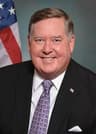 Ken Calvert
Republican · California
 Anna Paulina Luna
Republican · Florida
 August Pfluger
Republican · Texas