
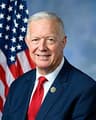
Ronny Jackson (R-TX)
United States-Israel FUTURES Act of 2026
A Republican bill with 13 Democratic cosponsors · See all 53 cosponsors
Last activity — Referred to the Committee on Armed Services, and in addition to the Committee on Foreign Affairs, for a period to be subsequently determined by the Speaker, in each case for consideration of such provisions as fall within the jurisdiction of the committee concerned.
In committee
Introduced and handed to a committee in the chamber it started in.
The committee holds it, and most bills are never heard from again. A hearing or a committee vote would be news; silence is the usual outcome, and it kills the bill without anyone voting against it.
Its path through Congress
- Introduced
- In Committee
What this bill would do
This bill establishes the United States-Israel Defense Technology Cooperation Initiative. The program aims to expand and accelerate bilateral research, development, testing, and industrial cooperation. It focuses on integrating Israeli-origin technologies into United States military systems and programs of record. Specific domains for cooperation include counter-unmanned systems, missile defense, artificial intelligence, and cyber defense. The Secretary of Defense is tasked with coordinating these efforts across various federal departments and agencies. Finally, the act authorizes $150,000,000 for each fiscal year from 2027 through 2029 to implement these goals.
Yes· 3 of 17
- Scored +9
Does this strengthen ties with allied countries?
Deepens the strategic partnership and technological ties between the U.S. and Israel.
- Scored +8
Does this better protect the country from computer attacks?
Explicitly targets cyber defense and digital resilience as key initiative domains.
- Scored +7
Does this put more money into stopping terrorism?
Focuses on counter-drone, anti-tunneling, and counterterrorism technologies.
The opposite· 3 of 4
- Scored -4
Does this reduce what is spent on the military?
Increases military-related spending by $150 million annually.
- Scored -3
Does this reduce what the federal government spends?
Authorizes additional federal spending of $150 million per year from 2027 to 2029.
- Scored -2
Does this reduce what the federal government owes?
Increases national spending by authorizing $150 million annually.
Who it would affect, and how
Potential Positive Impacts for People
-
Enhanced National Security and Technological Supremacy: The initiative seeks to grow American technological supremacy by integrating jointly developed and Israeli-origin defense technologies into United States military systems (Section 2, Subsection 7).
-
Expanded Defense Innovation: The initiative promotes collaborative research involving government, private sector, and academic institutions in both countries (Section 3, Subsection a, 2).
-
Economic and Industrial Growth: The bill establishes frameworks for joint ventures, licensing agreements, and United States-based co-production or manufacturing partnerships with Israeli industry (Section 3, Subsection a, 4).
-
Improved Military Capabilities: The initiative targets several critical domains to enhance readiness, such as counter-unmanned systems, missile and air defense, and cyber defense (Section 3, Subsection b).
Potential Negative Impacts for People
- Financial Cost to Taxpayers: The bill authorizes the appropriation of $150,000,000 for each of fiscal years 2027 through 2029 to carry out the act (Section 5).
Groups and Interests Ranking
Every group the model scored this bill for, from -10 to +10. Tap or hover a score for the reason it gave.
- National Security And Foreign Policy
- Does this strengthen ties with allied countries? — Deepens the strategic partnership and technological ties between the U.S. and Israel. Does this better protect the country from computer attacks? — Explicitly targets cyber defense and digital resilience as key initiative domains. Does this favour talking over confrontation abroad? — Establishes frameworks for high-level cooperation between defense ministries. Does this put more money into stopping terrorism? — Focuses on counter-drone, anti-tunneling, and counterterrorism technologies. Does this send more money or help to other countries? — Strengthens bilateral defense cooperation and military assistance framework with Israel. Does this make trade with other countries easier? — Facilitates joint ventures and manufacturing partnerships between U.S. and Israeli industries. Does this reduce what is spent on the military? — Increases military-related spending by $150 million annually.
- Education And Technology
- Does this put more money into scientific research? — Directly funds collaborative research in AI, quantum computing, and biotechnology. Does this put more into space exploration? — Coordinates with U.S. Space Command for technology integration.
- Demographic And Interest Groups
- Would business owners be better off under this? — Benefits defense contractors and tech firms through new research and co-production opportunities. Would students be better off under this? — Increases opportunities for academic institutions to participate in high-tech research.
- Governance And Ideology
- Does this make what the government does easier for the public to see? — Requires public updates on a DoD website regarding the initiative's activities. Does this give the federal government more power? — Expands the role of the Secretary of Defense in managing international technology initiatives.
- Healthcare
- Does this put more money into medical research? — Funds collaborative research in biotechnology and other emerging technologies. Does this make the country readier for the next outbreak? — Includes cooperation in biotechnology and medical defense.
- Economy And Finance
- Is this likely to create jobs? — Promotes U.S.-based co-production and manufacturing partnerships with Israeli industry. Is this likely to grow the economy? — Potential for growth through technological innovation and industrial partnerships. Does this make it easier to run a small business? — Collaborative research involving the private sector may benefit tech-focused small businesses. Does this reduce what the federal government spends? — Authorizes additional federal spending of $150 million per year from 2027 to 2029. Does this make the government pay for what it commits to? — Increases government expenditures. Does this reduce what the federal government owes? — Increases national spending by authorizing $150 million annually.
- 9/14/2026
- 1 Cosponsor added.
- 9/10/2026
- 1 Cosponsor added.
- 7/27/2026
- 1 Cosponsor added.
- 7/2/2026
- 3 Cosponsors added.
- 6/4/2026
- 1 Cosponsor added.
- 5/19/2026
- 2 Cosponsors added.
- 5/13/2026
- 1 Cosponsor added.
- 5/12/2026
- 3 Cosponsors added.
- 4/28/2026
- 1 Cosponsor added.
- 4/21/2026
- 2 Cosponsors added.
- 4/14/2026
- 1 Cosponsor added.
- 4/9/2026
- 1 Cosponsor added.
- 3/25/2026
- 2 Cosponsors added.
- 3/12/2026
- 9 Cosponsors added.
- 3/3/2026
- 11 Cosponsors added.
- 2/25/2026
- 4 Cosponsors added.
- 2/24/2026
- 6 Cosponsors added.
- 2/23/2026
- 1 Cosponsor added.
- 2/20/2026
- 1 Cosponsor added.
- 2/12/2026
- Referred to the Committee on Armed Services, and in addition to the Committee on Foreign Affairs, for a period to be subsequently determined by the Speaker, in each case for consideration of such provisions as fall within the jurisdiction of the committee concerned.
- 1 Cosponsor added.
- Introduced in House
One bill Congress.gov lists as related to this one — companions in the other chamber, earlier versions, and bills this one absorbed or was folded into.
 Gus Bilirakis
Republican · Florida
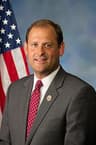 Andy Barr
Republican · Kentucky
 Mike Bost
Republican · Illinois
 Don Bacon
Republican · Nebraska
 Henry Cuellar
Democrat · Texas
 Donald Davis
Democrat · North Carolina
 Mike Ezell
Republican · Mississippi
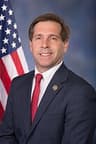 Charles Fleischmann
Republican · Tennessee
 Lois Frankel
Democrat · Florida
 Brian Fitzpatrick
Republican · Pennsylvania
 Scott Franklin
Republican · Florida
 Brad Finstad
Republican · Minnesota
 Clay Fuller
Republican · Georgia
 Josh Gottheimer
Democrat · New Jersey
 Andrew Garbarino
Republican · New York
 Craig Goldman
Republican · Texas
 Laura Gillen
Democrat · New York
 Richard Hudson
Republican · North Carolina
 Ashley Hinson
Republican · Iowa
 Pat Harrigan
Republican · North Carolina
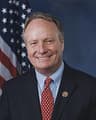 David Joyce
Republican · Ohio
 Brian Jack
Republican · Georgia
 David Kustoff
Republican · Tennessee
 Young Kim
Republican · California
 Thomas Kean
Republican · New Jersey
 Ted Lieu
Democrat · California
 Nick LaLota
Republican · New York
 Michael Lawler
Republican · New York
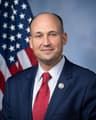 Nicholas Langworthy
Republican · New York
 Nancy Mace
Republican · South Carolina
 John Moolenaar
Republican · Michigan
 Carol Miller
Republican · West Virginia
 Barry Moore
Republican · Alabama
 August Pfluger
Republican · Texas
 John Rutherford
Republican · Florida
 Christopher Smith
Republican · New Jersey
 Adrian Smith
Republican · Nebraska
 Bradley Schneider
Democrat · Illinois
 Darren Soto
Democrat · Florida
 Thomas Suozzi
Democrat · New York
 Pete Stauber
Republican · Minnesota
 Derek Schmidt
Republican · Kansas
 Dina Titus
Democrat · Nevada
 Claudia Tenney
Republican · New York
 Shri Thanedar
Democrat · Michigan
 Jefferson Van Drew
Republican · New Jersey
 Beth Van Duyne
Republican · Texas
 Derrick Van Orden
Republican · Wisconsin
 Eugene Vindman
Democrat · Virginia
 Matt Van Epps
Republican · Tennessee
 Debbie Wasserman Schultz
Democrat · Florida
 Randy Weber
Republican · Texas
 Rudy Yakym
Republican · Indiana