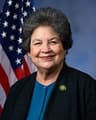
A Democratic bill with 11 Republican cosponsors · See all 23 cosponsors
Last activity — Referred to the House Committee on Education and Workforce.
In committee
Introduced and handed to a committee in the chamber it started in.
The committee holds it, and most bills are never heard from again. A hearing or a committee vote would be news; silence is the usual outcome, and it kills the bill without anyone voting against it.
Its path through Congress
- Introduced
- In Committee
What this bill would do
The Protecting Students on Campus Act of 2025 requires higher education institutions participating in Federal student aid programs to share information regarding Title VI of the Civil Rights Act of 1964. The Secretary of Education will lead a public awareness campaign featuring visual and auditory elements to inform students of their rights. Institutions must display specific links and campaign materials on their websites and in high-traffic campus locations. Additionally, the Assistant Secretary for Civil Rights must provide monthly briefings and written reports to Congress regarding discrimination complaints. Finally, the Act mandates annual reports from institutions to the Inspector General and requires audits of schools with high complaint rates.
Yes· 3 of 7
- Scored +6
Does this narrow racial gaps in how people are treated?
The bill mandates public awareness of Title VI rights and increases oversight of discrimination complaints based on race, color, or national origin.
- Scored +5
Would Black Americans be better off under this?
The bill provides enhanced mechanisms for reporting and addressing racial discrimination in higher education.
- Scored +5
Would Hispanic Americans be better off under this?
The bill provides enhanced mechanisms for reporting and addressing racial discrimination in higher education.
The opposite
- Scored -1
Does this reduce what student borrowers owe or repay?
The bill imposes new administrative and reporting requirements on institutions that receive federal student aid.
Who it would affect, and how
Potential Positive Impacts for People
-
Increased Awareness of Rights: The Secretary of Education will carry out a public awareness campaign to inform individuals of the rights provided under Title VI of the Civil Rights Act of 1964, using visual and auditory elements to maximize accessibility (Section 2(a)).
-
Easier Access to Complaint Processes: Institutions of higher education will be required to prominently display a link on their homepages to the Office for Civil Rights webpage, where individuals can submit complaints regarding discrimination based on race, color, or national origin (Section 2(b)).
-
Enhanced Transparency through Congressional Oversight: The Assistant Secretary for Civil Rights must provide monthly briefings and written reports to Congress detailing the number of discrimination complaints received, how they are being addressed, and how long they remain open (Section 3).
-
Accountability for High-Complaint Institutions: The Inspector General will conduct annual audits of institutions that fall into the top 5 percent of complaints based on student population to examine their processes and the need for referrals to the Office for Civil Rights (Section 4(b)).
Potential Negative Impacts for People
-
Increased Administrative Requirements for Institutions: Higher education institutions are required to prominently display specific links on their homepages and annually post awareness campaign materials in high-traffic physical and digital locations (Section 2(b)).
-
New Reporting Burdens: Each institution of higher education receiving Federal funds must submit an annual report to the Inspector General including the number of complaints, an analysis of their substance, and a narrative of actions taken (Section 4(a)).
Groups and Interests Ranking
Every group the model scored this bill for, from -10 to +10. Tap or hover a score for the reason it gave.
- Demographic And Interest Groups
- Would Black Americans be better off under this? — The bill provides enhanced mechanisms for reporting and addressing racial discrimination in higher education. Would Asian Americans be better off under this? — The bill provides enhanced mechanisms for reporting and addressing racial discrimination in higher education. Would Hispanic Americans be better off under this? — The bill provides enhanced mechanisms for reporting and addressing racial discrimination in higher education. Would students be better off under this? — Students receive better access to information regarding their rights and processes for reporting discrimination on campus. Would people in their twenties and thirties be better off under this? — College students will benefit from increased awareness of their civil rights and easier access to the complaint process.
- Social Issues And Justice
- Does this narrow racial gaps in how people are treated? — The bill mandates public awareness of Title VI rights and increases oversight of discrimination complaints based on race, color, or national origin.
- Governance And Ideology
- Does this make what the government does easier for the public to see? — The bill requires monthly briefings and written reports to Congress regarding the status and handling of discrimination complaints.
- Education And Technology
- Does this reduce what student borrowers owe or repay? — The bill imposes new administrative and reporting requirements on institutions that receive federal student aid.
- 10/6/2026
- 2 Cosponsors added.
- 3/2/2026
- 2 Cosponsors added.
- 2/20/2026
- 1 Cosponsor added.
- 2/10/2026
- 1 Cosponsor added.
- 2/3/2026
- 2 Cosponsors added.
- 1/16/2026
- 2 Cosponsors added.
- 1/9/2026
- 2 Cosponsors added.
- 1/8/2026
- 2 Cosponsors added.
- 1/7/2026
- 2 Cosponsors added.
- 12/18/2025
- Referred to the House Committee on Education and Workforce.
- 7 Cosponsors added.
- Introduced in House
One bill Congress.gov lists as related to this one — companions in the other chamber, earlier versions, and bills this one absorbed or was folded into.
 Don Bacon
Republican · Nebraska
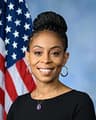 Shontel Brown
Democrat · Ohio
 Salud Carbajal
Democrat · California
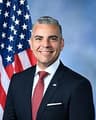 Juan Ciscomani
Republican · Arizona
 Gabe Evans
Republican · Colorado
 Brian Fitzpatrick
Republican · Pennsylvania
 Jennifer Kiggans
Republican · Virginia
 Ted Lieu
Democrat · California
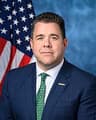 Nick LaLota
Republican · New York
 Michael Lawler
Republican · New York
 Nicole Malliotakis
Republican · New York
 Grace Meng
Democrat · New York
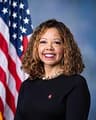 Lucy McBath
Democrat · Georgia
 Eleanor Norton
Democrat · District of Columbia
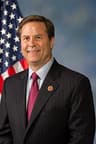 Donald Norcross
Democrat · New Jersey
 Scott Peters
Democrat · California
 Christopher Smith
Republican · New Jersey
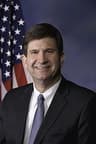 Bradley Schneider
Democrat · Illinois
 Thomas Suozzi
Democrat · New York
 Haley Stevens
Democrat · Michigan
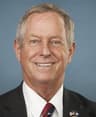 Joe Wilson
Republican · South Carolina
 Debbie Wasserman Schultz
Democrat · Florida
 Randy Weber
Republican · Texas