
Morgan McGarvey (D-KY)
Relief for Survivors of Miners Act of 2025
A Democratic bill with 10 Democratic cosponsors · See all 10 cosponsors
Last activity — Referred to the House Committee on Education and Workforce.
In committee
Introduced and handed to a committee in the chamber it started in.
The committee holds it, and most bills are never heard from again. A hearing or a committee vote would be news; silence is the usual outcome, and it kills the bill without anyone voting against it.
Its path through Congress
- Introduced
- In Committee
What this bill would do
This bill is called the Relief for Survivors of Miners Act of 2025. It amends the Black Lung Benefits Act to make it easier for survivors of coal miners to get benefits if the miner died from black lung disease, also known as pneumoconiosis. The bill creates legal presumptions that help connect a miner's death to the disease if they worked in a mine for at least 10 years or were totally disabled by it. It also sets up a program to help pay for certain attorneys' fees and medical expenses for contested claims that take a long time to process. Additionally, the legislation requires the Government Accountability Office to study various aspects of interim benefits, payment amounts, and survivor claims, and report back to Congress.
Yes· 3 of 12
- Scored +5
Would people over 65 be better off under this?
The legislation directly benefits older surviving spouses and family members of coal miners by simplifying access to black lung survivor benefits.
- Scored +5
Would households on low incomes be better off under this?
Providing financial assistance for attorneys' fees and medical expenses helps lower-income families navigating contested black lung claims.
- Scored +5
Would union members be better off under this?
Union workers in the coal mining industry and their families receive stronger protections and easier access to disability and survivor compensation.
The opposite
- Scored -2
Would business owners be better off under this?
Liable coal mine operators face potential retroactive financial liabilities and administrative responsibilities under the bill's provisions.
Who it would affect, and how
Potential Positive Impacts for People
-
Section 2(a) establishes new rebuttable presumptions for survivors of miners who worked in a coal mine for at least 10 years or were totally disabled by pneumoconiosis. This makes it easier for families to prove that a miner's death was caused by the disease, meaning survivors may face fewer hurdles when trying to receive deserved benefits.
-
Section 2(c) restores certain pre-1981 provisions regarding total disability due to pneumoconiosis. This change helps ensure that miners who were totally disabled by the disease at the time of their deaths, as well as their survivors, are properly accounted for under the law.
-
Section 2(d) creates the Attorneys' Fees and Medical Expenses Payment Program. This program helps claimants by paying up to $4,500 in attorneys' fees and up to $3,000 in reasonable medical expenses for qualifying contested claims that take longer than a year to reach a final order, easing the financial burden on families fighting for their benefits.
Potential Negative Impacts for People
-
Section 2(c)(2) and Section 2(a)(3) apply the new benefit and disability amendments retroactively to claims filed up to five years before the enactment of this Act that are still pending. While this helps some people, it creates backward-looking legal changes that could cause administrative burdens or disputes for ongoing cases involving liable operators.
-
Section 2(c)(1) broadens the scope of who qualifies under the law by including individuals totally disabled by the disease at the time of their deaths. This expansion could increase administrative strain and processing times within the Department of Labor as more claims and reviews are handled.
Groups and Interests Ranking
Every group the model scored this bill for, from -10 to +10. Tap or hover a score for the reason it gave.
- Demographic And Interest Groups
- Would households on low incomes be better off under this? — Providing financial assistance for attorneys' fees and medical expenses helps lower-income families navigating contested black lung claims. Would people in rural areas be better off under this? — Coal mining communities, which are predominantly rural, benefit directly from improved access to black lung benefits and medical expense coverage. Would people over 65 be better off under this? — The legislation directly benefits older surviving spouses and family members of coal miners by simplifying access to black lung survivor benefits. Would union members be better off under this? — Union workers in the coal mining industry and their families receive stronger protections and easier access to disability and survivor compensation. Would people with disabilities be better off under this? — The bill aids individuals affected by total disability due to pneumoconiosis and their surviving families. Would retired people be better off under this? — Retired miners and surviving elderly family members benefit from the streamlined and restored disability provisions. Would women be better off under this? — Many surviving spouses of coal miners are women who stand to benefit significantly from the eased survivor benefit requirements. Would middle-income households be better off under this? — Families of miners who qualify for the restored and expanded benefits will experience positive economic relief. Would business owners be better off under this? — Liable coal mine operators face potential retroactive financial liabilities and administrative responsibilities under the bill's provisions.
- Governance And Ideology
- Does this protect the right to fair treatment by the courts? — The bill establishes rebuttable legal presumptions and payment programs that support due process and fairness for claimants contesting benefit denials. Does this make what the government does easier for the public to see? — The legislation requires GAO studies and reports to Congress on interim benefits and claim processes, improving governmental oversight.
- Healthcare
- Does this make health care easier to get in general? — The bill facilitates access to medical expense coverage and benefits for survivors of coal miners affected by black lung disease.
- Social Issues And Justice
- Is this likely to lift people out of poverty? — By easing access to survivor benefits and establishing a payment program for fees and medical expenses, the bill helps alleviate financial hardship for families of deceased miners.
- 1/12/2026
- 1 Cosponsor added.
- 1/7/2026
- 1 Cosponsor added.
- 12/18/2025
- 1 Cosponsor added.
- 12/17/2025
- 1 Cosponsor added.
- 12/16/2025
- Referred to the House Committee on Education and Workforce.
- 6 Cosponsors added.
- Introduced in House
One bill Congress.gov lists as related to this one — companions in the other chamber, earlier versions, and bills this one absorbed or was folded into.
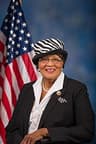 Alma Adams
Democrat · North Carolina
 Nikki Budzinski
Democrat · Illinois
 André Carson
Democrat · Indiana
 Christopher Deluzio
Democrat · Pennsylvania
 Maxine Dexter
Democrat · Oregon
 Summer Lee
Democrat · Pennsylvania
 Jennifer McClellan
Democrat · Virginia
 Ilhan Omar
Democrat · Minnesota
 Terri Sewell
Democrat · Alabama
 Rashida Tlaib
Democrat · Michigan