
Ted Lieu (D-CA)
Restricting First Use of Nuclear Weapons Act of 2025
A Democratic bill with 35 Democratic cosponsors · See all 35 cosponsors
Last activity — Referred to the Committee on Foreign Affairs, and in addition to the Committee on Armed Services, for a period to be subsequently determined by the Speaker, in each case for consideration of such provisions as fall within the jurisdiction of the committee concerned.
In committee
Introduced and handed to a committee in the chamber it started in.
The committee holds it, and most bills are never heard from again. A hearing or a committee vote would be news; silence is the usual outcome, and it kills the bill without anyone voting against it.
Its path through Congress
- Introduced
- In Committee
What this bill would do
This bill, known as the "Restricting First Use of Nuclear Weapons Act of 2025," aims to limit when the United States can initiate a nuclear strike. It establishes a policy that no first-use nuclear strike should occur without a formal declaration of war by Congress. The legislation prohibits the use of Federal funds for such strikes unless Congress has expressly authorized them through a declared war. To qualify as a first-use strike, the attack would be one conducted without the Secretary of Defense and the Chairman of the Joint Chiefs of Staff first confirming a nuclear attack against the United States, its territories, or its allies.
Yes· 3 of 5
- Scored +4
Does this better protect air, water and wildlife?
The bill seeks to prevent the long-term environmental consequences associated with nuclear warfare.
- Scored +3
Does this give the federal government more power?
The bill strengthens the constitutional power of Congress over the President's authority to wage war.
- Scored +3
Does this make what the government does easier for the public to see?
The bill implements a check that requires a formal declaration of war by Congress before a nuclear strike occurs.
The opposite
No question was scored the opposite.
Who it would affect, and how
Potential Positive Impacts for People
-
Restoring Constitutional Checks and Balances: The bill seeks to ensure that the decision to engage in massive warfare is made by the people's representatives rather than a single person, as found in Section 2(a)(2).
-
Protection Against Existential Risk: By restricting first-use strikes, the bill addresses the concern that nuclear weapons can instantly kill millions and create long-term health and environmental consequences (Section 2(a)(4)).
-
Prevention of Unconstitutional War: The bill aims to prevent a first-use strike conducted without a declaration of war, which it identifies as a violation of the Constitution (Section 2(a)(6)).
Potential Negative Impacts for People
- No specific negative impacts or burdens are explicitly stated within the provided text.
Groups and Interests Ranking
Every group the model scored this bill for, from -10 to +10. Tap or hover a score for the reason it gave.
- Governance And Ideology
- Does this make what the government does easier for the public to see? — The bill implements a check that requires a formal declaration of war by Congress before a nuclear strike occurs. Does this give the federal government more power? — The bill strengthens the constitutional power of Congress over the President's authority to wage war.
- National Security And Foreign Policy
- Does this strengthen ties with allied countries? — The bill protects allies from being included in preemptive strikes by requiring congressional authorization. Does this reduce what is spent on the military? — The bill restricts the use of Federal funds for first-use nuclear strikes unless Congress declares war.
- Environment Energy And Infrastructure
- Does this better protect air, water and wildlife? — The bill seeks to prevent the long-term environmental consequences associated with nuclear warfare.
- 5/29/2026
- 1 Cosponsor added.
- 4/23/2026
- 1 Cosponsor added.
- 4/20/2026
- 1 Cosponsor added.
- 4/13/2026
- 5 Cosponsors added.
- 12/2/2025
- 1 Cosponsor added.
- 11/12/2025
- 1 Cosponsor added.
- 11/4/2025
- 2 Cosponsors added.
- 10/24/2025
- 1 Cosponsor added.
- 10/8/2025
- 1 Cosponsor added.
- 8/5/2025
- 1 Cosponsor added.
- 7/21/2025
- 1 Cosponsor added.
- 6/24/2025
- 1 Cosponsor added.
- 5/7/2025
- 1 Cosponsor added.
- 2/11/2025
- 1 Cosponsor added.
- 1/23/2025
- Referred to the Committee on Foreign Affairs, and in addition to the Committee on Armed Services, for a period to be subsequently determined by the Speaker, in each case for consideration of such provisions as fall within the jurisdiction of the committee concerned.
- 16 Cosponsors added.
- Introduced in House
One bill Congress.gov lists as related to this one — companions in the other chamber, earlier versions, and bills this one absorbed or was folded into.
 Jake Auchincloss
Democrat · Massachusetts
 Gabe Amo
Democrat · Rhode Island
 Yassamin Ansari
Democrat · Arizona
 Donald Beyer
Democrat · Virginia
 Steve Cohen
Democrat · Tennessee
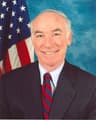 Joe Courtney
Democrat · Connecticut
 Judy Chu
Democrat · California
 Salud Carbajal
Democrat · California
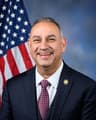 Gilbert Cisneros
Democrat · California
 Mark DeSaulnier
Democrat · California
 Maxine Dexter
Democrat · Oregon
 Raúl Grijalva
Democrat · Arizona
 John Garamendi
Democrat · California
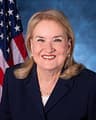 Sylvia Garcia
Democrat · Texas
 Val Hoyle
Democrat · Oregon
 Pramila Jayapal
Democrat · Washington
 Sara Jacobs
Democrat · California
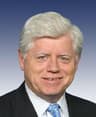 John Larson
Democrat · Connecticut
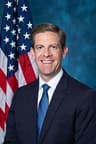 Mike Levin
Democrat · California
 James McGovern
Democrat · Massachusetts
 Grace Meng
Democrat · New York
 Sarah McBride
Democrat · Delaware
 Jerrold Nadler
Democrat · New York
 Eleanor Norton
Democrat · District of Columbia
 Ilhan Omar
Democrat · Minnesota
 Frank Pallone
Democrat · New Jersey
 Chellie Pingree
Democrat · Maine
 Mark Pocan
Democrat · Wisconsin
 Brad Sherman
Democrat · California
 Janice Schakowsky
Democrat · Illinois
 Lateefah Simon
Democrat · California
 Mike Thompson
Democrat · California
 Paul Tonko
Democrat · New York
 Rashida Tlaib
Democrat · Michigan
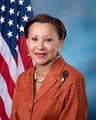 Nydia Velázquez
Democrat · New York