
A Democratic bill with 5 Republican cosponsors · See all 18 cosponsors
Last activity — Referred to the House Committee on the Judiciary.
In committee
Introduced and handed to a committee in the chamber it started in.
The committee holds it, and most bills are never heard from again. A hearing or a committee vote would be news; silence is the usual outcome, and it kills the bill without anyone voting against it.
Its path through Congress
- Introduced
- In Committee
What this bill would do
This bill, known as the "HIRRE Prosecutors Act of 2025," directs the Attorney General to create a single grant program to help various governments hire prosecutors. The program is intended to assist States, territories, local governments, or tribal governments. Grant funds can be used specifically to hire, retain, and train prosecutors or their support staff. The Attorney General may give preference to certain applications, such as those for new staff or those from remote and rural areas. The Federal government may cover up to 75 percent of the project costs. The bill authorizes up to $10,000,000 for each fiscal year from 2026 through 2030.
Yes· 3 of 7
- Scored +4
Would Native Americans be better off under this?
The bill specifically allows tribal governments to be eligible recipients for prosecutor hiring grants.
- Scored +4
Would people in rural areas be better off under this?
The bill offers preferential consideration to jurisdictions that are categorized as remote or rural areas.
- Scored +4
Does this invest in rural communities?
The bill allows the Attorney General to give preferential consideration to grant applications from remote and rural jurisdictions.
The opposite
No question was scored the opposite.
Who it would affect, and how
Potential Positive Impacts for People
-
Support for prosecutor staffing: The program allows funds to be used to hire, retain, and train prosecutors or support staff (Section 2(e)). This could help local legal systems maintain necessary personnel.
-
Help for those affected by budget cuts: The Attorney General may give preference to applications intended to rehire prosecutors who were laid off due to government budget reductions (Section 2(g)(2)).
-
Focus on specific communities: Preference may be given to jurisdictions that are tribal, remote, or rural (Section 2(g)(3)).
-
Financial flexibility for local governments: The Attorney General has the authority to waive the 25 percent matching requirement if it is equitable due to the financial circumstances of the recipient (Section 2(h)(2)).
Potential Negative Impacts for People
-
Restrictions on fund usage: Grant funds are strictly limited to hiring, retaining, and training prosecutors or support staff, meaning they cannot be used for other government needs (Section 2(e)).
-
Risk of losing funding: The Attorney General has the power to revoke or suspend funding if a project is determined not to be in substantial compliance with the program's terms (Section 2(i)(4)).
-
Requirement to increase local spending: The funds cannot be used to replace existing state or local funds; instead, they must be used to increase the total amount of funds available beyond what local sources would provide (Section 2(h)(3)).
Groups and Interests Ranking
Every group the model scored this bill for, from -10 to +10. Tap or hover a score for the reason it gave.
- Demographic And Interest Groups
- Would Native Americans be better off under this? — The bill specifically allows tribal governments to be eligible recipients for prosecutor hiring grants. Would people in rural areas be better off under this? — The bill offers preferential consideration to jurisdictions that are categorized as remote or rural areas. Would households on low incomes be better off under this? — By providing funds for remote and rural areas, the bill may support the legal infrastructure in these communities.
- Environment Energy And Infrastructure
- Does this invest in rural communities? — The bill allows the Attorney General to give preferential consideration to grant applications from remote and rural jurisdictions.
- Social Issues And Justice
- Does this change how police departments operate? — The bill provides resources to hire, train, and retain prosecutors, which can strengthen the local criminal justice system. Is this likely to lift people out of poverty? — The bill may assist in re-employing prosecutors who were laid off due to government budget cuts.
- Governance And Ideology
- Does this give the federal government more power? — The bill expands federal involvement in local governance by providing grants to state, local, and tribal prosecutor's offices.
- 6/23/2026
- 1 Cosponsor added.
- 3/27/2026
- 1 Cosponsor added.
- 2/24/2026
- 1 Cosponsor added.
- 2/23/2026
- 1 Cosponsor added.
- 2/11/2026
- 1 Cosponsor added.
- 2/10/2026
- 2 Cosponsors added.
- 2/9/2026
- 1 Cosponsor added.
- 2/5/2026
- 2 Cosponsors added.
- 1/12/2026
- 1 Cosponsor added.
- 12/11/2025
- Referred to the House Committee on the Judiciary.
- 7 Cosponsors added.
- Introduced in House
One bill Congress.gov lists as related to this one — companions in the other chamber, earlier versions, and bills this one absorbed or was folded into.
 Don Bacon
Republican · Nebraska
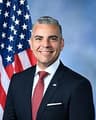 Juan Ciscomani
Republican · Arizona
 Brian Fitzpatrick
Republican · Pennsylvania
 Josh Gottheimer
Democrat · New Jersey
 Daniel Goldman
Democrat · New York
 Jennifer Kiggans
Republican · Virginia
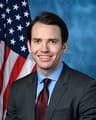 Kevin Kiley
Independent · California
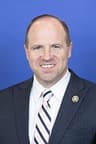 Timothy Kennedy
Democrat · New York
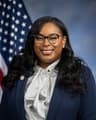 LaMonica McIver
Democrat · New Jersey
 Donald Norcross
Democrat · New Jersey
 Joe Neguse
Democrat · Colorado
 Nellie Pou
Democrat · New Jersey
 Deborah Ross
Democrat · North Carolina
 David Scott
Democrat · Georgia
 Eric Sorensen
Democrat · Illinois
 Suhas Subramanyam
Democrat · Virginia
 Glenn Thompson
Republican · Pennsylvania
 Eugene Vindman
Democrat · Virginia