
A Democratic bill with 1 Republican cosponsor · See all 15 cosponsors
Last activity — Referred to the House Committee on Education and Workforce.
In committee
Introduced and handed to a committee in the chamber it started in.
The committee holds it, and most bills are never heard from again. A hearing or a committee vote would be news; silence is the usual outcome, and it kills the bill without anyone voting against it.
Its path through Congress
- Introduced
- In Committee
What this bill would do
The Empowering App-Based Workers Act aims to increase transparency and accountability for digital labor platforms. It establishes strict disclosure requirements regarding electronic monitoring and automated decision-making systems used to manage workers. The bill implements a 25 percent cap on take rates for on-demand transportation services to ensure fairer pay. It also prohibits certain types of individualized algorithmic wage setting and limits how worker data can be used. Additionally, the Act provides workers with rights to detailed pay statements and itemized receipts for work assignments. Finally, it establishes enforcement mechanisms through the Secretary of Labor and a private right of action for workers and consumers.
Yes· 3 of 15
- Scored +7
Does this protect people from being watched or searched?
The bill prohibits companies from using monitoring tools to infer sensitive personal information and restricts data collection to working hours.
- Scored +6
Does this give people more control over their personal data?
The bill imposes strict limitations on how worker data can be collected, used for inferences, and shared with third parties.
- Scored +5
Would households on low incomes be better off under this?
The bill seeks to prevent poverty wages and wage theft for workers in low-paid sectors like retail and food services.
The opposite
- Scored -4
Would business owners be better off under this?
The bill imposes new regulatory compliance costs, transparency requirements, and a cap on take rates for certain digital platforms.
Who it would affect, and how
Potential Positive Impacts for People
-
Increased Pay Transparency: Workers will receive itemized receipts at the end of each assignment and weekly pay statements that detail their total pay, take rate, and hours worked (Section 4(a)(4), Section 4(a)(5)).
-
Fairer Compensation for Ride-Hailing: A 25 percent cap on take rates for on-demand transportation services is designed to limit exploitative practices and ensure workers receive a fairer share of consumer charges (Section 5(a)(1)).
-
Protection Against Wage Discrimination: The bill prohibits companies from offering different compensation for substantially similar tasks unless based on specific cost differentials or collective bargaining agreements (Section 5(c)(1)).
-
Enhanced Worker Privacy: Companies are prohibited from using monitoring tools to infer sensitive personal information such as immigration status, religious beliefs, or sexual orientation (Section 5(d)(1)).
-
Whistleblower Protections: The Act protects workers from retaliation or discrimination for exercising their rights or participating in inquiries regarding the Act (Section 8(a)).
-
Access to Information: Workers can appoint an authorized agent to receive required disclosures and notices on their behalf (Section s 7(a)).
Potential Negative Impacts for People
-
Restrictions on Data Usage: Companies are prohibited from collecting an app-based worker's data outside of their actual working time (Section 5(d)(2)).
-
Limits on Algorithmic Wage Setting: Companies may be restricted from using certain individualized data as inputs for compensation decisions unless they can meet specific demonstration requirements (Section 5(c)(2)).
Groups and Interests Ranking
Every group the model scored this bill for, from -10 to +10. Tap or hover a score for the reason it gave.
- Demographic And Interest Groups
- Would Black Americans be better off under this? — The bill addresses systemic wage inequities in sectors where people of color are overrepresented. Would households on low incomes be better off under this? — The bill seeks to prevent poverty wages and wage theft for workers in low-paid sectors like retail and food services. Would women be better off under this? — The bill provides protections for women who are disproportionately represented in certain app-based delivery workforces. Would Hispanic Americans be better off under this? — The bill protects workers from data collection that could infer immigration status. Would people with disabilities be better off under this? — The bill prohibits the use of data to infer disability status via automated systems. Would union members be better off under this? — The bill protects workers from discrimination based on union sympathy or likelihood of organizing. Would middle-income households be better off under this? — The bill increases transparency in digital labor markets which may affect various income levels. Would business owners be better off under this? — The bill imposes new regulatory compliance costs, transparency requirements, and a cap on take rates for certain digital platforms.
- Governance And Ideology
- Does this protect people from being watched or searched? — The bill prohibits companies from using monitoring tools to infer sensitive personal information and restricts data collection to working hours. Does this make what the government does easier for the public to see? — The bill requires digital platforms to publish anonymized data and provides the Secretary of Labor with enhanced investigative powers.
- Social Issues And Justice
- Does this narrow the gap between how men and women are treated? — The bill addresses sectors where women are disproportionately represented to ensure fair and transparent compensation. Does this narrow racial gaps in how people are treated? — The bill targets industries and platforms where people of color are disproportionately represented to prevent wage and employment discrimination. Does this make it easier for immigrants already here to become citizens? — The bill protects workers from having their immigration status inferred through electronic monitoring tools.
- Economy And Finance
- Does this raise the lowest wage an employer may pay? — The bill prevents wage theft and ensures app-based workers can access applicable minimum wage standards through increased transparency and algorithmic accountability. Does this give people more protection from unfair business practices? — The bill provides consumers with transparency regarding the take rates and compensation structures used by digital platforms.
- Education And Technology
- Does this give people more control over their personal data? — The bill imposes strict limitations on how worker data can be collected, used for inferences, and shared with third parties.
- 10/5/2026
- 1 Cosponsor added.
- 5/29/2026
- 1 Cosponsor added.
- 2/23/2026
- 2 Cosponsors added.
- 1/9/2026
- 1 Cosponsor added.
- 12/23/2025
- 1 Cosponsor added.
- 12/11/2025
- Referred to the House Committee on Education and Workforce.
- 9 Cosponsors added.
- Introduced in House
One bill Congress.gov lists as related to this one — companions in the other chamber, earlier versions, and bills this one absorbed or was folded into.
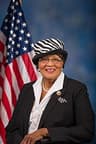 Alma Adams
Democrat · North Carolina
 Suzanne Bonamici
Democrat · Oregon
 Judy Chu
Democrat · California
 Greg Casar
Democrat · Texas
 Daniel Goldman
Democrat · New York
 Craig Goldman
Republican · Texas
 Adelita Grijalva
Democrat · Arizona
 Summer Lee
Democrat · Pennsylvania
 LaMonica McIver
Democrat · New Jersey
 Eleanor Norton
Democrat · District of Columbia
 Donald Norcross
Democrat · New Jersey
 Ilhan Omar
Democrat · Minnesota
 Mark Pocan
Democrat · Wisconsin
 Mark Takano
Democrat · California
 Rashida Tlaib
Democrat · Michigan