
A Democratic bill with 11 Democratic cosponsors · See all 11 cosponsors
Last activity — Referred to the House Committee on Ways and Means.
In committee
Introduced and handed to a committee in the chamber it started in.
The committee holds it, and most bills are never heard from again. A hearing or a committee vote would be news; silence is the usual outcome, and it kills the bill without anyone voting against it.
Its path through Congress
- Introduced
- In Committee
What this bill would do
This bill, known as the "ROBINHOOD Act," aims to amend the Internal Revenue Code of 1986. It proposes a new excise tax on specific secured loans or lines of credit. This tax would be set at 20 percent of the amount borrowed during the taxable year. The tax specifically targets "applicable borrowers," defined as individuals with adjusted gross incomes exceeding $400,000, or $450,000 for joint returns. The tax applies to loans secured by capital assets where the credit is based on the asset's value.
Yes
- Scored +8
Does this raise taxes on the highest earners?
The bill imposes a 20 percent excise tax on specific secured loans and lines of credit for individuals earning over $400,000 or $450,000.
- Scored +3
Does this make the government pay for what it commits to?
The bill generates new federal revenue through a 20 percent excise tax on specified secured loans.
- Scored +2
Would households on low incomes be better off under this?
The bill increases federal revenue through taxes on high-income earners which can be used for social programs.
The opposite
- Scored -7
Would high-income households be better off under this?
High-income individuals earning over $400,000 face a new 20 percent tax on loans secured by capital assets.
- Scored -7
Would people with substantial wealth be better off under this?
The bill targets individuals with high adjusted gross incomes by taxing their secured lines of credit.
- Scored -7
Would billionaires be better off under this?
The tax applies to large-scale secured loans that are often used by the extremely wealthy.
Who it would affect, and how
Potential Positive Impacts for People
- Tax Revenue Collection: The bill imposes a 20 percent tax on specified secured loans or lines of credit to be collected by the Secretary (Section 2(a)). This is intended to ensure high-income individuals pay their fair share of taxes.
Potential Negative Impacts for People
-
Financial Burden on High-Income Borrowers: An "applicable borrower," defined as an individual with an adjusted gross income greater than $400,000 ($450,000 for joint returns), must pay a tax equal to 20 percent of the amount borrowed (Section 2(a), Section 2(c)(1)).
-
Tax on Asset-Based Credit: Individuals using specified secured loans or lines of credit—which are arrangements secured by one or more capital assets where the loan amount is based on the asset's value—will be subject to this 20 percent tax (Section 2(a), Section 2(c)(1)).
Groups and Interests Ranking
Every group the model scored this bill for, from -10 to +10. Tap or hover a score for the reason it gave.
- Demographic And Interest Groups
- Would households on low incomes be better off under this? — The bill increases federal revenue through taxes on high-income earners which can be used for social programs. Would billionaires be better off under this? — The tax applies to large-scale secured loans that are often used by the extremely wealthy. Would high-income households be better off under this? — High-income individuals earning over $400,000 face a new 20 percent tax on loans secured by capital assets. Would people with substantial wealth be better off under this? — The bill targets individuals with high adjusted gross incomes by taxing their secured lines of credit.
- Economy And Finance
- Does this raise taxes on the highest earners? — The bill imposes a 20 percent excise tax on specific secured loans and lines of credit for individuals earning over $400,000 or $450,000. Does this make the government pay for what it commits to? — The bill generates new federal revenue through a 20 percent excise tax on specified secured loans.
- 9/3/2026
- 1 Cosponsor added.
- 6/30/2026
- 1 Cosponsor added.
- 5/12/2026
- 1 Cosponsor added.
- 5/7/2026
- 1 Cosponsor added.
- 4/28/2026
- 1 Cosponsor added.
- 4/21/2026
- 1 Cosponsor added.
- 4/20/2026
- 3 Cosponsors added.
- 4/16/2026
- 1 Cosponsor added.
- 12/17/2025
- 1 Cosponsor added.
- 12/4/2025
- Referred to the House Committee on Ways and Means.
- Introduced in House
 Steve Cohen
Democrat · Tennessee
 Christopher Deluzio
Democrat · Pennsylvania
 Valerie Foushee
Democrat · North Carolina
 Ro Khanna
Democrat · California
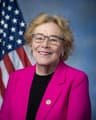 Zoe Lofgren
Democrat · California
 James McGovern
Democrat · Massachusetts
 Jerrold Nadler
Democrat · New York
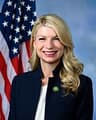 Brittany Pettersen
Democrat · Colorado
 Adam Smith
Democrat · Washington
 Rashida Tlaib
Democrat · Michigan
 Nikema Williams
Democrat · Georgia