A Democratic bill with 7 Republican cosponsors · See all 20 cosponsors
Last activity — Referred to the House Committee on the Judiciary.
In committee
Introduced and handed to a committee in the chamber it started in.
The committee holds it, and most bills are never heard from again. A hearing or a committee vote would be news; silence is the usual outcome, and it kills the bill without anyone voting against it.
Its path through Congress
- Introduced
- In Committee
What this bill would do
This bill, known as the "STOP Scams Against Seniors Act," aims to amend the Omnibus Crime Control and Safe Streets Act of 1968. It seeks to authorize the use of Edward Byrne Memorial Justice Assistance Grant Program funds to create elder justice task forces. These task forces are intended to address financial exploitation, scams, and fraud targeting individuals aged 60 or older. The bill allows these task forces to coordinate with various State, local, and Federal agencies. Additionally, it establishes new reporting requirements for grant recipients and the Attorney General.
Yes· 3 of 5
- Scored +8
Would people over 65 be better off under this?
The bill specifically creates task forces to combat financial exploitation, scams, and fraud targeting those aged 60 and older.
- Scored +8
Would retired people be better off under this?
The bill establishes protections against predatory scams that specifically target older individuals.
- Scored +3
Does this change how police departments operate?
The bill promotes coordination between state, local, and federal law enforcement agencies to combat financial crimes.
The opposite
No question was scored the opposite.
Who it would affect, and how
Potential Positive Impacts for People
-
Targeted Protection for Seniors: The bill allows for the establishment, operation, and implementation of elder justice task forces specifically to address financial exploitation, scams, and fraud targeting people 60 years of age or older (Section 2(a)).
-
Coordinated Law Enforcement Response: Task forces may include or coordinate with a wide range of entities, including State and local law enforcement, prosecutors, adult protective services professionals, and Federal agencies like the FBI, FTC, DOJ, and Secret Service (Section 2(a)).
-
Victim Support and Restitution: The reporting requirements track the number of victims to whom the task force provided support, legal assistance, or restitution (Section 2(b)).
Potential Negative Impacts for People
- No negative impacts or burdens are explicitly mentioned in the provided text.
Groups and Interests Ranking
Every group the model scored this bill for, from -10 to +10. Tap or hover a score for the reason it gave.
- Demographic And Interest Groups
- Would retired people be better off under this? — The bill establishes protections against predatory scams that specifically target older individuals. Would people over 65 be better off under this? — The bill specifically creates task forces to combat financial exploitation, scams, and fraud targeting those aged 60 and older.
- Social Issues And Justice
- Does this change how police departments operate? — The bill promotes coordination between state, local, and federal law enforcement agencies to combat financial crimes. Is this likely to lift people out of poverty? — By targeting financial exploitation and scams, the bill helps protect the assets of vulnerable individuals.
- Governance And Ideology
- Does this make what the government does easier for the public to see? — The bill mandates annual reports to Congress regarding the effectiveness and outcomes of elder justice task forces.
- 7/6/2026
- 1 Cosponsor added.
- 4/27/2026
- 2 Cosponsors added.
- 4/14/2026
- 1 Cosponsor added.
- 2/23/2026
- 1 Cosponsor added.
- 1/8/2026
- 1 Cosponsor added.
- 12/11/2025
- 1 Cosponsor added.
- 12/4/2025
- Referred to the House Committee on the Judiciary.
- 13 Cosponsors added.
- Introduced in House
One bill Congress.gov lists as related to this one — companions in the other chamber, earlier versions, and bills this one absorbed or was folded into.
 Julia Brownley
Democrat · California
 Nanette Barragán
Democrat · California
 Emanuel Cleaver
Democrat · Missouri
 Brian Fitzpatrick
Republican · Pennsylvania
 Josh Gottheimer
Democrat · New Jersey
 Daniel Goldman
Democrat · New York
 Henry Johnson
Democrat · Georgia
 Julie Johnson
Democrat · Texas
 Young Kim
Republican · California
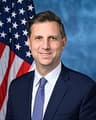 Seth Magaziner
Democrat · Rhode Island
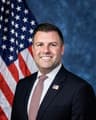 Ryan Mackenzie
Republican · Pennsylvania
 Sarah McBride
Democrat · Delaware
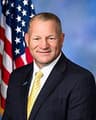 Troy Nehls
Republican · Texas
 Eleanor Norton
Democrat · District of Columbia
 Adam Smith
Democrat · Washington
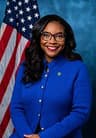 Emilia Sykes
Democrat · Ohio
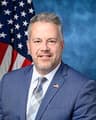 Eric Sorensen
Democrat · Illinois
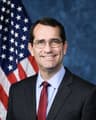 Derek Schmidt
Republican · Kansas
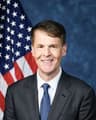 Jefferson Shreve
Republican · Indiana
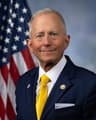 Jefferson Van Drew
Republican · New Jersey