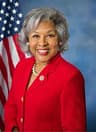
Joyce Beatty (D-OH)
21st Century STEM for Girls and Underrepresented Minorities Act
A Democratic bill with 16 Democratic cosponsors · See all 16 cosponsors
Last activity — Referred to the House Committee on Education and Workforce.
In committee
Introduced and handed to a committee in the chamber it started in.
The committee holds it, and most bills are never heard from again. A hearing or a committee vote would be news; silence is the usual outcome, and it kills the bill without anyone voting against it.
Its path through Congress
- Introduced
- In Committee
What this bill would do
This bill seeks to amend the Elementary and Secondary Education Act of 1965. It establishes a program where the Secretary provides competitive grants to qualified local educational agencies. These grants are intended to fund STEM education activities specifically for girls and underrepresented minorities. The program aims to encourage these groups to pursue studies and careers in science, technology, engineering, and mathematics. Grants are provided for a four-year period at $250,000 per year.
Yes· 3 of 16
- Scored +5
Would women be better off under this?
The bill provides grants specifically designed to encourage girls to pursue STEM fields and overcome gender bias.
- Scored +5
Does this narrow racial gaps in how people are treated?
The bill provides targeted funding to increase STEM participation among underrepresented minorities.
- Scored +5
Does this narrow the gap between how men and women are treated?
The bill provides targeted funding to increase STEM participation among girls and mitigate gender bias.
The opposite
- Scored -1
Does this reduce what the federal government spends?
The bill authorizes $10,000,000 in new annual federal spending for STEM grants.
Who it would affect, and how
Potential Positive Impacts for People
-
Encouraging STEM Careers: The bill provides funds for activities that prepare girls and underrepresented minorities for careers in STEM and highlight the advantages of these fields (Section 2, subsection c, clause 1).
-
Support for Families: The program can be used to educate parents about STEM opportunities and enlist their help in overcoming obstacles and encouraging their children's interest (Section 2, subsection c, clauses 2 and 3).
-
Direct Student Support: Students can benefit from tutoring, mentoring, after-school activities, and summer programs designed to develop skills and interest in STEM (Section 2, subsection c, clauses 4, 7, and 8).
-
Career Exposure and Experience: The grant allows for field trips to institutions of higher education, exposure to role models, and the ability to pay up to 50 percent of the cost of a STEM internship (Section 2, subsection c, clauses 5, 10, and 12).
-
Teacher Training: Funds can be used for professional development to help teachers eliminate gender and racial bias in the classroom and create a more positive environment (Section 2, subsection c, clause 13).
Potential Negative Impacts for People
-
Strict Eligibility Requirements: Local educational agencies must meet specific criteria to qualify, including receiving funds under part A of title I and serving a population where at least 40 percent are eligible for free or reduced price lunch (Section 2, subsection g, clause 2).
-
Administrative Burdens: To receive a grant, agencies must submit an application containing specific descriptions of their programs, research, and recruitment processes (Section s 2, subsection b, clause 1). Additionally, agencies are required to submit a written evaluation of their program at the end of each school year (Section 2, subsection f, clause 1).
Groups and Interests Ranking
Every group the model scored this bill for, from -10 to +10. Tap or hover a score for the reason it gave.
- Demographic And Interest Groups
- Would women be better off under this? — The bill provides grants specifically designed to encourage girls to pursue STEM fields and overcome gender bias. Would children be better off under this? — The bill funds various educational, tutoring, and mentorship activities for K-12 students. Would households on low incomes be better off under this? — The bill specifically targets local agencies serving high populations of students eligible for free or reduced price lunch. Would students be better off under this? — The bill funds tutoring, mentoring, summer programs, and internships for students. Would Black Americans be better off under this? — The bill provides resources to increase STEM opportunities for underrepresented minorities. Would Asian Americans be better off under this? — The bill provides resources to increase STEM opportunities for underrepresented minorities. Would Hispanic Americans be better off under this? — The bill provides resources to increase STEM opportunities for underrepresented minorities. Would Native Americans be better off under this? — The bill provides resources to increase STEM opportunities for underrepresented minorities. Would people in their twenties and thirties be better off under this? — The bill supports high school students through internships and career preparation.
- Social Issues And Justice
- Does this narrow the gap between how men and women are treated? — The bill provides targeted funding to increase STEM participation among girls and mitigate gender bias. Does this narrow racial gaps in how people are treated? — The bill provides targeted funding to increase STEM participation among underrepresented minorities. Is this likely to lift people out of poverty? — The bill supports students in high-poverty school districts to prepare them for high-paying STEM careers.
- Education And Technology
- Does this put more money into public schools? — The bill provides new competitive grant funding for local educational agencies to support STEM programs. Does this make college cost less? — The bill funds field trips to institutions of higher education and provides academic advice for advanced coursework. Does this put more money into scientific research? — The bill funds educational activities that prepare students for careers in scientific and technical fields.
- Economy And Finance
- Is this likely to create jobs? — The bill aims to prepare students for future STEM careers through educational grants. Does this reduce what the federal government spends? — The bill authorizes $10,000,000 in new annual federal spending for STEM grants.
- 6/30/2026
- 1 Cosponsor added.
- 2/24/2026
- 1 Cosponsor added.
- 1/7/2026
- 1 Cosponsor added.
- 12/17/2025
- 2 Cosponsors added.
- 12/9/2025
- 2 Cosponsors added.
- 12/3/2025
- Referred to the House Committee on Education and Workforce.
- 9 Cosponsors added.
- Introduced in House
One bill Congress.gov lists as related to this one — companions in the other chamber, earlier versions, and bills this one absorbed or was folded into.
 Shontel Brown
Democrat · Ohio
 Wesley Bell
Democrat · Missouri
 Yvette Clarke
Democrat · New York
 Suzan DelBene
Democrat · Washington
 Sharice Davids
Democrat · Kansas
 Bill Foster
Democrat · Illinois
 Adelita Grijalva
Democrat · Arizona
 Henry Johnson
Democrat · Georgia
 Zoe Lofgren
Democrat · California
 Stephen Lynch
Democrat · Massachusetts
 Summer Lee
Democrat · Pennsylvania
 LaMonica McIver
Democrat · New Jersey
 Eleanor Norton
Democrat · District of Columbia
 Nellie Pou
Democrat · New Jersey
 Eric Swalwell
Democrat · California
 Melanie Stansbury
Democrat · New Mexico