A Democratic bill with 4 Republican cosponsors · See all 42 cosponsors
Last activity — Referred to the House Committee on Education and Workforce.
In committee
Introduced and handed to a committee in the chamber it started in.
The committee holds it, and most bills are never heard from again. A hearing or a committee vote would be news; silence is the usual outcome, and it kills the bill without anyone voting against it.
Its path through Congress
- Introduced
- In Committee
What this bill would do
The Veteran Education Empowerment Act aims to reauthorize and improve a grant program for institutions of higher education. This program assists schools in establishing, maintaining, improving, and operating Student Veteran Centers. These centers provide dedicated spaces, such as lounges and centralized offices, to support student veterans and their families. The bill seeks to address unique challenges faced by veterans transitioning to academic and civilian life. Grants are awarded to institutions that meet specific enrollment and sustainability criteria. The legislation also includes provisions for priority consideration and reporting requirements to ensure effectiveness.
Yes· 3 of 11
- Scored +7
Would veterans be better off under this, taking everything together?
The bill creates dedicated support systems, lounges, and counseling services specifically for student veterans and their families.
- Scored +6
Does this increase the pay, pensions or support veterans receive?
The bill funds centers that help veterans understand and obtain federal, state, and institutional benefits.
- Scored +5
Would students be better off under this?
The bill provides academic assistance, tutoring, and guidance to help students succeed in higher education.
The opposite
No question was scored the opposite.
Who it would affect, and how
Potential Positive Impacts for People
-
Support for Student Veterans and their Families: The bill establishes Student Veteran Centers which provide lounge or meeting spaces for student veterans, their spouses, partners, and children (Section 3, subsection (g)(2)(A)).
-
Improved Transition and Career Success: Centers are designed to help students transition from military service to student life and the civilian workforce (Section 3, subsection (g)(2)(iii)(A-II)).
-
Access to Specialized Guidance: Centers provide a single point of contact for comprehensive support services, including assistance with understanding benefits from the institution, Federal Government, and State (Section 3, subsection (g)(2)(iii)(B-IV)).
-
Academic Assistance: The program allows for supportive instruction services, such as assistance with special admissions and the transfer of credits (Section 3, subsection (c)(2)(A)).
-
Mental Health and Well-being: Priority consideration is given to institutions that commit to providing mental health counseling to student veterans and their families (Section 3, subsection (b)(3)(A)(viii)).
-
Workforce and Community Connection: The bill encourages partnerships with local workforce development organizations and nonprofit veteran service organizations to assist veterans (Section 3, subsection (b)(3)(A)(iii-iv)).
Potential Negative Impacts for People
-
Sustainability Risks: Institutions must present a sustainability plan to prove they can keep the center running after the grant period ends, which may pose a challenge for some schools (Section 3, subsection (b)(2)(B)).
-
Grant Limitations: Grants are subject to the availability of appropriations, meaning funding is not guaranteed (Section 3, subsection (a)).
-
Funding Caps: Each grant awarded may not exceed a total of $500,000, which may limit the scale of center operations for certain institutions (Section 3, subsection (d)(2)).
Groups and Interests Ranking
Every group the model scored this bill for, from -10 to +10. Tap or hover a score for the reason it gave.
- Demographic And Interest Groups
- Would veterans be better off under this, taking everything together? — The bill creates dedicated support systems, lounges, and counseling services specifically for student veterans and their families. Would students be better off under this? — The bill provides academic assistance, tutoring, and guidance to help students succeed in higher education. Would people in their twenties and thirties be better off under this? — The bill supports student veterans who are often in the young adult demographic by providing academic and career transition assistance. Would households on low incomes be better off under this? — The bill helps student veterans access benefits and navigate the costs of higher education. Would women be better off under this? — The bill explicitly requires tracking the demographics of the women served by these centers. Would Hispanic Americans be better off under this? — The bill requires reporting on the demographics of service recipients, including minority groups, to ensure equitable service.
- National Security And Foreign Policy
- Does this increase the pay, pensions or support veterans receive? — The bill funds centers that help veterans understand and obtain federal, state, and institutional benefits.
- Healthcare
- Does this make mental health care easier to get? — The bill provides priority consideration to institutions that commit to providing mental health counseling to student veterans and their families.
- Education And Technology
- Does this make college cost less? — The bill provides support services including assistance with credit transfers and academic success to help students graduate.
- Economy And Finance
- Is this likely to create jobs? — The bill encourages institutions to hire staff, including veterans, to run the centers.
- Social Issues And Justice
- Is this likely to lift people out of poverty? — The bill assists veterans in transitioning to the civilian workforce through specialized services.
- 4/27/2026
- 1 Cosponsor added.
- 4/23/2026
- 1 Cosponsor added.
- 4/6/2026
- 1 Cosponsor added.
- 3/27/2026
- 1 Cosponsor added.
- 2/23/2026
- 1 Cosponsor added.
- 1/23/2026
- 1 Cosponsor added.
- 1/7/2026
- 1 Cosponsor added.
- 12/3/2025
- 2 Cosponsors added.
- 12/2/2025
- Referred to the House Committee on Education and Workforce.
- 33 Cosponsors added.
- Introduced in House
5 bills Congress.gov lists as related to this one — companions in the other chamber, earlier versions, and bills this one absorbed or was folded into.
 Sanford Bishop
Democrat · Georgia
 Gus Bilirakis
Republican · Florida
 Don Bacon
Republican · Nebraska
 Nikki Budzinski
Democrat · Illinois
 Wesley Bell
Democrat · Missouri
 Ed Case
Democrat · Hawaii
 Kathy Castor
Democrat · Florida
 André Carson
Democrat · Indiana
 Judy Chu
Democrat · California
 Salud Carbajal
Democrat · California
 Angie Craig
Democrat · Minnesota
 Debbie Dingell
Democrat · Michigan
 Madeleine Dean
Democrat · Pennsylvania
 Dwight Evans
Democrat · Pennsylvania
 Cleo Fields
Democrat · Louisiana
 Brian Fitzpatrick
Republican · Pennsylvania
 Maxwell Frost
Democrat · Florida
 Sylvia Garcia
Democrat · Texas
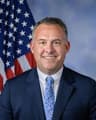 Adam Gray
Democrat · California
 Robin Kelly
Democrat · Illinois
 Raja Krishnamoorthi
Democrat · Illinois
 Teresa Leger Fernandez
Democrat · New Mexico
 Stephen Lynch
Democrat · Massachusetts
 Ted Lieu
Democrat · California
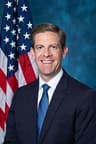 Mike Levin
Democrat · California
 Gwen Moore
Democrat · Wisconsin
 Grace Meng
Democrat · New York
 Seth Moulton
Democrat · Massachusetts
 Sarah McBride
Democrat · Delaware
 Eleanor Norton
Democrat · District of Columbia
 Zachary Nunn
Republican · Iowa
 Chellie Pingree
Democrat · Maine
 Scott Peters
Democrat · California
 Luz Rivas
Democrat · California
 Terri Sewell
Democrat · Alabama
 Andrea Salinas
Democrat · Oregon
 Dina Titus
Democrat · Nevada
 Rashida Tlaib
Democrat · Michigan
 Jill Tokuda
Democrat · Hawaii
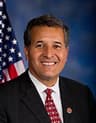 Juan Vargas
Democrat · California
 Frederica Wilson
Democrat · Florida
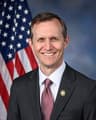 George Whitesides
Democrat · California