
Rick Larsen (D-WA)
Transportation Assistance for Olympic and World Cup Cities Act of 2025
A Democratic bill with 1 Republican cosponsor · See all 5 cosponsors
Last activity — Referred to the House Committee on Transportation and Infrastructure.
In committee
Introduced and handed to a committee in the chamber it started in.
The committee holds it, and most bills are never heard from again. A hearing or a committee vote would be news; silence is the usual outcome, and it kills the bill without anyone voting against it.
Its path through Congress
- Introduced
- In Committee
What this bill would do
This bill is known as the Transportation Assistance for Olympic and World Cup Cities Act of 2025. It amends title 49 of the United States Code to provide transportation assistance for cities hosting major international sporting events. Covered events include the Olympic, Paralympic, Special Olympics, FIFA Women's World Cup, and FIFA Men's World Cup. The legislation authorizes $50,000,000 for each fiscal year to fund these transportation efforts. It also outlines specific rules for grant allocations, eligible entities, and technical assistance from the Secretary of Transportation.
Yes· 3 of 19
- Scored +6
Does this repair or build roads and bridges?
The bill directly provides federal funding and planning assistance for regional transportation and infrastructure projects.
- Scored +6
Does this improve buses, trains and other public transport?
The legislation incentivizes bus sharing and transit resource optimization for major events.
- Scored +4
Would people in cities be better off under this?
Urban residents in host cities directly benefit from improved transportation networks and congestion mitigation.
The opposite
- Scored -1
Does this reduce what the federal government owes?
The bill authorizes $50,000,000 in annual appropriations, slightly increasing federal spending.
- Scored -1
Does this reduce what the federal government spends?
The legislation allocates federal grant funds for specific transportation infrastructure.
Who it would affect, and how
Potential Positive Impacts for People
-
Under Section 2, adding subsection (c)(1), the Secretary of Transportation will allocate up to $10,000,000 evenly to each host metropolitan planning organization for a covered event. This provides direct financial backing to help local areas manage the influx of visitors and traffic.
-
Under Section 2, adding subsection (c)(2)(A), host metropolitan planning organizations may use these funds to carry out transportation projects or fund eligible entities located within a 100-mile radius. This helps neighboring communities share the economic benefits and manage regional transit demands.
-
Under Section 2, adding subsection (d)(3), the Secretary is directed to facilitate and incentivize programs to temporarily pool and share buses and related equipment among participating and non-participating state and local entities, Indian Tribes, and territories. This helps ensure that transit resources are optimized during the event.
Potential Negative Impacts for People
-
Under Section 2, adding subsection (c)(2)(B), amounts received under the grant program may not be used for activities relating to preparing or submitting a bid to be selected to hold a covered event. Local taxpayers could be left bearing the upfront costs of bidding without federal transportation assistance for that specific phase.
-
Under Section 2, adding subsection (c)(4), the bill authorizes the appropriation of $50,000,000 for each fiscal year to remain available until expended. This draws heavily on federal funds that must be accounted for in the broader federal budget.
Groups and Interests Ranking
Every group the model scored this bill for, from -10 to +10. Tap or hover a score for the reason it gave.
- Demographic And Interest Groups
- Would people in cities be better off under this? — Urban residents in host cities directly benefit from improved transportation networks and congestion mitigation. Would business owners be better off under this? — Local business owners benefit from the massive influx of tourists and visitors attending international sporting events. Would people with disabilities be better off under this? — Paralympic and Special Olympics events are explicitly covered, ensuring accessibility and transit improvements for individuals with disabilities. Would women be better off under this? — The inclusion of the FIFA Women's World Cup as a covered event helps promote women's sports infrastructure. Would children be better off under this? — Better managed transit and public events provide safer and more accessible experiences for families. Would Native Americans be better off under this? — Indian Tribes are explicitly included as eligible entities to receive transportation assistance. Would people in rural areas be better off under this? — Communities within a 100-mile radius can share in the regional transportation benefits. Would people in their twenties and thirties be better off under this? — Young adults benefit from increased job opportunities and enhanced public transit options.
- Environment Energy And Infrastructure
- Does this improve buses, trains and other public transport? — The legislation incentivizes bus sharing and transit resource optimization for major events. Does this repair or build roads and bridges? — The bill directly provides federal funding and planning assistance for regional transportation and infrastructure projects. Does this invest in rural communities? — Eligible entities within a 100-mile radius can include neighboring areas, supporting regional development.
- Economy And Finance
- Is this likely to grow the economy? — Hosting major international sporting events and improving regional transit infrastructure supports local economic growth. Does this make it easier to run a small business? — Local businesses benefit from improved regional transit and the influx of visitors during covered events. Is this likely to create jobs? — The bill funds transportation projects for major sporting events, which will temporarily boost local job creation. Does this reduce what the federal government spends? — The legislation allocates federal grant funds for specific transportation infrastructure. Does this reduce what the federal government owes? — The bill authorizes $50,000,000 in annual appropriations, slightly increasing federal spending.
- National Security And Foreign Policy
- Does this strengthen ties with allied countries? — Hosting international sporting events fosters global cooperation and strengthens cultural and diplomatic ties. Does this favour talking over confrontation abroad? — Coordinating major international games encourages positive diplomatic engagement with global sports bodies.
- Governance And Ideology
- Does this make it easier to do business across state lines? — Improves the movement of people and goods across regional jurisdictions during major events. Does this leave more decisions to the states? — Empowers state and local government entities and Indian Tribes with targeted resources for transit planning. Does this give the federal government more power? — Expands the Department of Transportation's authority to award grants and provide technical assistance.
- 12/9/2025
- 4 Cosponsors added.
- 12/2/2025
- Referred to the House Committee on Transportation and Infrastructure.
- 1 Cosponsor added.
- Introduced in House
 Julia Brownley
Democrat · California
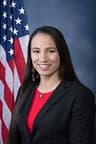 Sharice Davids
Democrat · Kansas
 Laura Friedman
Democrat · California
 Burgess Owens
Republican · Utah
 Dina Titus
Democrat · Nevada