
A Republican bill with 11 Democratic cosponsors · See all 22 cosponsors
Last activity — Referred to the House Committee on Energy and Commerce.
In committee
Introduced and handed to a committee in the chamber it started in.
The committee holds it, and most bills are never heard from again. A hearing or a committee vote would be news; silence is the usual outcome, and it kills the bill without anyone voting against it.
Its path through Congress
- Introduced
- In Committee
What this bill would do
The NEST Act aims to amend the Social Security Act to include the purchase and distribution of newborn supply kits as a special project. These kits are designed to assist mothers with postpartum recovery and infant care. The bill allows the Secretary to reserve up to $5,000,000 annually from fiscal years 2026 through 2030 for this purpose. Distribution would be handled through grants or cooperative agreements with nonprofit entities that have a multi-state presence. The program prioritizes high-need areas and families with incomes below 185 percent of the poverty line.
Yes· 3 of 9
- Scored +5
Would children be better off under this?
The bill provides essential newborn supplies like diapers, blankets, and thermometers to infants.
- Scored +5
Would households on low incomes be better off under this?
The bill prioritizes families with incomes below 185 percent of the poverty line for the distribution of essential goods.
- Scored +5
Would women be better off under this?
The bill provides postpartum recovery supplies and mental health resources specifically for mothers.
The opposite
No question was scored the opposite.
Who it would affect, and how
Potential Positive Impacts for People
-
Support for postpartum recovery and infant care: The kits include essential goods such as diapers, wipes, blankets, and thermometers for infants, as well as postpartum pads, lotion, and cold packs for mothers (Section 2(b)).
-
Access to health information and resources: Kits will provide information regarding the National Maternal Mental Health Hotline, the National Women's Health and Breastfeeding Helpline, and Federal programs like the special supplemental nutrition program for women, infants, and children (Section 2(b)).
-
Health monitoring capabilities: The kits include a blood pressure monitor and educational material regarding the use of low-dose aspirin for conditions like hypertension and preeclampsia (Section 2(b)).
-
Targeted assistance for high-need areas: The bill directs priority to geographic areas with significant needs, including maternity care deserts, rural communities, and areas with high maternal mortality rates (Section 2(d)(2)(C)).
-
Financial assistance for low-income families: Priority is given to mothers or newborn infants whose family income does not exceed 185 percent of the poverty line (Section 2(d)(2)(D)).
Potential Negative Impacts for People
- No specific negative impacts are explicitly stated in the provided text.
Groups and Interests Ranking
Every group the model scored this bill for, from -10 to +10. Tap or hover a score for the reason it gave.
- Demographic And Interest Groups
- Would children be better off under this? — The bill provides essential newborn supplies like diapers, blankets, and thermometers to infants. Would households on low incomes be better off under this? — The bill prioritizes families with incomes below 185 percent of the poverty line for the distribution of essential goods. Would women be better off under this? — The bill provides postpartum recovery supplies and mental health resources specifically for mothers. Would people in rural areas be better off under this? — The bill mandates priority for rural communities in the distribution of newborn supply kits. Would Native Americans be better off under this? — The bill allows for distribution through Tribal organizations to reach Native communities.
- Social Issues And Justice
- Is this likely to lift people out of poverty? — The bill provides essential goods to families earning below 185 percent of the poverty line to ease financial burdens. Does this narrow racial gaps in how people are treated? — The bill prioritizes distribution in high-need areas like the Delta region which often have higher racial disparities in maternal mortality.
- Healthcare
- Does this make health care easier to get in general? — The bill provides newborn supply kits and educational resources to improve access to essential infant and postpartum care.
- Environment Energy And Infrastructure
- Does this invest in rural communities? — The bill specifically directs priority to rural communities for the distribution of newborn supply kits.
- 6/23/2026
- 2 Cosponsors added.
- 3/3/2026
- 2 Cosponsors added.
- 2/9/2026
- 1 Cosponsor added.
- 2/4/2026
- 1 Cosponsor added.
- 2/3/2026
- 3 Cosponsors added.
- 1/30/2026
- 2 Cosponsors added.
- 1/7/2026
- 3 Cosponsors added.
- 12/11/2025
- 1 Cosponsor added.
- 12/9/2025
- 2 Cosponsors added.
- 12/5/2025
- 2 Cosponsors added.
- 11/18/2025
- Referred to the House Committee on Energy and Commerce.
- 3 Cosponsors added.
- Introduced in House
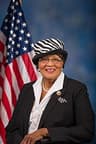 Alma Adams
Democrat · North Carolina
 Don Bacon
Republican · Nebraska
 Nanette Barragán
Democrat · California
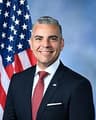 Juan Ciscomani
Republican · Arizona
 Cleo Fields
Democrat · Louisiana
 Robin Kelly
Democrat · Illinois
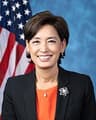 Young Kim
Republican · California
 Stephen Lynch
Democrat · Massachusetts
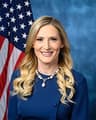 Laurel Lee
Republican · Florida
 Michael Lawler
Republican · New York
 Nicholas Langworthy
Republican · New York
 Mariannette Miller-Meeks
Republican · Iowa
 Ryan Mackenzie
Republican · Pennsylvania
 Eleanor Norton
Democrat · District of Columbia
 Chris Pappas
Democrat · New Hampshire
 Maria Salazar
Republican · Florida
 Terri Sewell
Democrat · Alabama
 Kim Schrier
Democrat · Washington
 David Valadao
Republican · California
 Eugene Vindman
Democrat · Virginia
 Robert Wittman
Republican · Virginia
 Bonnie Watson Coleman
Democrat · New Jersey