
Sam Graves (R-MO)
Aviation Funding Solvency Act
A Republican bill with 15 Democratic cosponsors · See all 29 cosponsors
Last activity — Ordered to be Reported (Amended) by Voice Vote.
Introduced, nothing more yet
Formally proposed, and not yet handed to a committee.
Nearly every bill is sent to a committee within days. Introduction alone is not a sign of support, of momentum, or of any likelihood of passing — any member may introduce any bill.
Its path through Congress
- Introduced
What this bill would do
The Aviation Funding Solvency Act aims to provide funding from the Aviation Insurance Revolving Fund to ensure Federal Aviation Administration activities continue during a government shutdown. This occurs if an appropriation measure or a continuing appropriations law is not in effect. The bill allows the Administrator to use covered amounts for various programs, projects, and activities, including those for operations, facilities, and equipment. It establishes specific rules for the rate of operations and the availability of these funds. Additionally, it mandates that the Administrator prioritize employee compensation for the Air Traffic Organization if funds are insufficient. The act also includes an amendment regarding non-premium war risk insurance.
Yes· 3 of 4
- Scored +5
Would union members be better off under this?
The bill ensures that compensation for employees of the Air Traffic Organization is prioritized during funding gaps.
- Scored +5
Does this strengthen the rights of workers to organise?
The bill mandates that the Administrator prioritize the payment of compensation for employees of the Air Traffic Organization if funds are insufficient.
- Scored +2
Does this improve buses, trains and other public transport?
Ensuring the continuity of FAA operations helps maintain the broader national transportation infrastructure.
The opposite
- Scored -1
Does this reduce what the federal government spends?
The bill provides a mechanism to continue aviation operations using existing revolving fund balances during a government shutdown.
Who it would affect, and how
Potential Positive Impacts for People
-
Continuity of Aviation Services: The bill allows the Administrator to use funds from the Aviation Insurance Revolving Fund to continue programs, projects, or activities such as "Federal Aviation Administration--Operations" and "Federal Aviation Administration--Facilities and Equipment" if there is a lapse in appropriations (Section 2(a)).
-
Protection of Employee Compensation: If funds are insufficient to cover all activities, the Administrator is required to prioritize paying the compensation for employees of the Air Traffic Organization (Section 2(g)).
Potential Negative Impacts for People
-
Restrictions on Funding Availability: The use of these funds is not unlimited; the provision does not apply if continuing a program would cause the balance of the Aviation Insurance Revolving Fund to drop below $1,000,000,000 (Section 2(h)(2)).
-
Limited Scope of Funds: The funds are subject to the rate of operations established in the preceding fiscal year's appropriation or continuing appropriations act (Section 2(b)).
Groups and Interests Ranking
Every group the model scored this bill for, from -10 to +10. Tap or hover a score for the reason it gave.
- Demographic And Interest Groups
- Would union members be better off under this? — The bill ensures that compensation for employees of the Air Traffic Organization is prioritized during funding gaps.
- Economy And Finance
- Does this strengthen the rights of workers to organise? — The bill mandates that the Administrator prioritize the payment of compensation for employees of the Air Traffic Organization if funds are insufficient. Does this reduce what the federal government spends? — The bill provides a mechanism to continue aviation operations using existing revolving fund balances during a government shutdown.
- Environment Energy And Infrastructure
- Does this improve buses, trains and other public transport? — Ensuring the continuity of FAA operations helps maintain the broader national transportation infrastructure.
- Governance And Ideology
- Does this make what the government does easier for the public to see? — The bill provides a contingency plan for the continuity of federal agency functions during budget impasses.
- 5/13/2026
- 2 Cosponsors added.
- 4/27/2026
- 2 Cosponsors added.
- 3/12/2026
- 2 Cosponsors added.
- 3/4/2026
- 2 Cosponsors added.
- 1/21/2026
- 2 Cosponsors added.
- 1/7/2026
- 2 Cosponsors added.
- 12/18/2025
- Subcommittee on Aviation Discharged
- Committee Consideration and Mark-up Session Held
- Ordered to be Reported (Amended) by Voice Vote.
- 12/17/2025
- 8 Cosponsors added.
- 12/15/2025
- 2 Cosponsors added.
- 12/10/2025
- 2 Cosponsors added.
- 11/19/2025
- Referred to the Subcommittee on Aviation.
- 2 Cosponsors added.
- 11/18/2025
- Referred to the House Committee on Transportation and Infrastructure.
- 3 Cosponsors added.
- Introduced in House
 Yassamin Ansari
Democrat · Arizona
 Robert Bresnahan
Republican · Pennsylvania
 André Carson
Democrat · Indiana
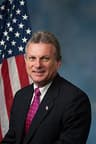 Earl Carter
Republican · Georgia
 Salud Carbajal
Democrat · California
 Donald Davis
Democrat · North Carolina
 Suzan DelBene
Democrat · Washington
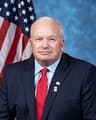 Scott Fitzgerald
Republican · Wisconsin
 Laura Friedman
Democrat · California
 Laura Gillen
Democrat · New York
 Jeff Hurd
Republican · Colorado
 Henry Johnson
Democrat · Georgia
 David Kustoff
Republican · Tennessee
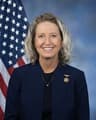 Jennifer Kiggans
Republican · Virginia
 Rick Larsen
Democrat · Washington
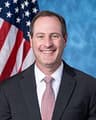 Tracey Mann
Republican · Kansas
 Troy Nehls
Republican · Texas
 Burgess Owens
Republican · Utah
 Chris Pappas
Democrat · New Hampshire
 Mike Quigley
Democrat · Illinois
 David Rouzer
Republican · North Carolina
 Marilyn Strickland
Democrat · Washington
 Adrian Smith
Republican · Nebraska
 Pete Stauber
Republican · Minnesota
 Jefferson Shreve
Republican · Indiana
 Dina Titus
Democrat · Nevada
 Norma Torres
Democrat · California
 Shri Thanedar
Democrat · Michigan
 Daniel Webster
Republican · Florida