
Betty McCollum (D-MN)
Boundary Waters Wilderness Protection and Pollution Prevention Act
A Democratic bill with 42 Democratic cosponsors · See all 42 cosponsors
Last activity — Referred to the House Committee on Natural Resources.
In committee
Introduced and handed to a committee in the chamber it started in.
The committee holds it, and most bills are never heard from again. A hearing or a committee vote would be news; silence is the usual outcome, and it kills the bill without anyone voting against it.
Its path through Congress
- Introduced
- In Committee
What this bill would do
This bill, titled the "Boundary Waters Wilderness Protection and Pollution Prevention Act," aims to protect the Boundary Waters Canoe Area Wilderness and connected lands and waters within the Rainy River Watershed in Minnesota. It proposes to withdraw approximately 225,504 acres of Federal land and waters from various forms of entry, mining laws, and mineral leasing. The legislation seeks to prevent potential environmental damage caused by sulfide-ore copper mining, such as acid mine drainage. The withdrawal is intended to preserve the natural resources, water quality, and air quality of the area, including Voyageurs National Park. While many mineral entries are restricted, the Forest Service maintains some authority regarding specific materials.
Yes· 3 of 9
- Scored +9
Does this better protect air, water and wildlife?
The bill withdraws lands from mining to protect water quality, air quality, and forest habitats from acid mine drainage.
- Scored +8
Would Native Americans be better off under this?
The bill protects the treaty-based usufructuary rights and cultural resource sites of the local Chippewa Bands.
- Scored +6
Does this narrow racial gaps in how people are treated?
The bill protects the treaty-protected hunting, fishing, and cultural resource sites of the Grand Portage, Fond du Lac, and Bois Forte Bands of Chippewa.
The opposite
No question was scored the opposite.
Who it would affect, and how
Potential Positive Impacts for People
-
Protection of Natural Resources and Water Quality: The bill seeks to prevent contamination of the air, water, and forested habitats from sulfide-ore copper mining (Sec. 2, Findings 7, 8, 10, and 11).
-
Economic Support for Tourism: Protecting the area from mining could allow the region's amenity-based and tourism industry to grow, potentially adding 1,500 to 4,600 jobs and $100,000,000 to $900,000,000 in income over the next 20 years (Sec. 2, Finding 11B).
-
Preservation of Treaty Rights: The bill acknowledges that the Grand Portage Band of Lake Superior Chippewa, the Fond du Lac Band of Lake Superior Chippewa, and the Bois Forte Band of Chippewa retain hunting, fishing, and other usufructuary rights in this area (Sec. 2, Finding 4).
-
Protection of Cultural Sites: The wilderness area contains 1,500 cultural resource sites, including historic Ojibwe village sites and Native American pictograph panel sites (Sec. 2, Finding 2B).
-
Continued Resource Extraction for Specific Materials: The Chief of the Forest Service retains the authority to permit the removal of sand, gravel, granite, iron ore, and taconite, provided it does not harm the water, air, or forest habitat (Sec. 3, subsection d).
Potential Negative Impacts for People
-
Restriction of Mineral Entry and Leasing: The bill withdraws lands and waters from all forms of entry, appropriation, disposal, and the operation of mineral and geothermal leasing laws (Sec. 3, subsection b).
-
Impact on Mining Development: The legislation targets the mining of metals such as copper, nickel, platinum, palladium, gold, and silver (Sec. 2, Finding 11).
Groups and Interests Ranking
Every group the model scored this bill for, from -10 to +10. Tap or hover a score for the reason it gave.
- Demographic And Interest Groups
- Would Native Americans be better off under this? — The bill protects the treaty-based usufructuary rights and cultural resource sites of the local Chippewa Bands. Would people in rural areas be better off under this? — The bill protects the tourism-based economy which is a major income source for the region. Would households on low incomes be better off under this? — The bill supports a tourism economy that provides significant regional income. Would middle-income households be better off under this? — The bill supports the stability of the regional tourism economy.
- Economy And Finance
- Is this likely to create jobs? — The bill aims to protect the region's tourism industry, which is projected to grow by up to 4,600 jobs. Does this make it easier to run a small business? — By protecting the wilderness, the bill supports the amenity-based and tourism industry.
- Environment Energy And Infrastructure
- Does this better protect air, water and wildlife? — The bill withdraws lands from mining to protect water quality, air quality, and forest habitats from acid mine drainage.
- Social Issues And Justice
- Does this narrow racial gaps in how people are treated? — The bill protects the treaty-protected hunting, fishing, and cultural resource sites of the Grand Portage, Fond du Lac, and Bois Forte Bands of Chippewa. Is this likely to lift people out of poverty? — The bill seeks to protect a significant source of regional income from the tourism sector.
- 10/26/2026
- 1 Cosponsor added.
- 8/27/2026
- 1 Cosponsor added.
- 8/3/2026
- 1 Cosponsor added.
- 7/20/2026
- 1 Cosponsor added.
- 6/3/2026
- 1 Cosponsor added.
- 5/13/2026
- 1 Cosponsor added.
- 5/12/2026
- 1 Cosponsor added.
- 5/11/2026
- 2 Cosponsors added.
- 2/3/2026
- 1 Cosponsor added.
- 1/20/2026
- 1 Cosponsor added.
- 1/14/2026
- 1 Cosponsor added.
- 6/23/2025
- 1 Cosponsor added.
- 4/24/2025
- 1 Cosponsor added.
- 3/26/2025
- 3 Cosponsors added.
- 3/18/2025
- 3 Cosponsors added.
- 2/12/2025
- 2 Cosponsors added.
- 1/21/2025
- Referred to the House Committee on Natural Resources.
- 20 Cosponsors added.
- Introduced in House
 Yassamin Ansari
Democrat · Arizona
 Julia Brownley
Democrat · California
 Donald Beyer
Democrat · Virginia
 Nanette Barragán
Democrat · California
 Ed Case
Democrat · Hawaii
 Steve Cohen
Democrat · Tennessee
 André Carson
Democrat · Indiana
 Gerald Connolly
Democrat · Virginia
 Judy Chu
Democrat · California
 Salud Carbajal
Democrat · California
 Sean Casten
Democrat · Illinois
 Diana DeGette
Democrat · Colorado
 Suzan DelBene
Democrat · Washington
 Debbie Dingell
Democrat · Michigan
 Jesús García
Democrat · Illinois
 Sylvia Garcia
Democrat · Texas
 Jared Huffman
Democrat · California
 Raja Krishnamoorthi
Democrat · Illinois
 Ted Lieu
Democrat · California
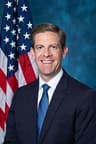 Mike Levin
Democrat · California
 Gwen Moore
Democrat · Wisconsin
 Kevin Mullin
Democrat · California
 Kelly Morrison
Democrat · Minnesota
 Jerrold Nadler
Democrat · New York
 Eleanor Norton
Democrat · District of Columbia
 Joe Neguse
Democrat · Colorado
 Ilhan Omar
Democrat · Minnesota
 Chellie Pingree
Democrat · Maine
 Mark Pocan
Democrat · Wisconsin
 Mike Quigley
Democrat · Illinois
 Deborah Ross
Democrat · North Carolina
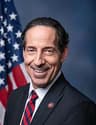 Jamie Raskin
Democrat · Maryland
 Emily Randall
Democrat · Washington
 Janice Schakowsky
Democrat · Illinois
 Melanie Stansbury
Democrat · New Mexico
 Mike Thompson
Democrat · California
 Paul Tonko
Democrat · New York
 Rashida Tlaib
Democrat · Michigan
 Jill Tokuda
Democrat · Hawaii
 Shri Thanedar
Democrat · Michigan
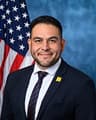 Gabe Vasquez
Democrat · New Mexico
 Nikema Williams
Democrat · Georgia