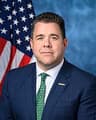
Nick LaLota (R-NY)
Vietnam Veterans Liver Fluke Cancer Study Act
A Republican bill with 5 Democratic cosponsors · See all 8 cosponsors
Last activity — Received in the Senate and Read twice and referred to the Committee on Veterans' Affairs.
In the other chamber's committee
Passed one chamber and has been handed to a committee in the other.
The committee decides whether it goes any further, and most bills that reach a committee never leave it. A committee that simply does nothing kills a bill without anyone ever voting against it, so no news from here is usually the news.
Its path through Congress
- Introduced
- Passed House 411–0
- In Senate committee
What this bill would do
This Act, known as the "Vietnam Veterans Liver Fluke Cancer Study Act," directs the Secretary of Veterans Affairs to conduct an epidemiological study. The study focuses on the prevalence of cholangiocarcinoma among veterans who served in the Vietnam theater of operations during the Vietnam era. The Secretary must consult with the Director of the Centers for Disease Control and Prevention to carry out this study using specific cancer registries. Following the study, the Secretary is required to submit an initial report to Congress along with recommendations for action. Additionally, the Secretary must track the prevalence of this cancer in covered veterans and provide periodic updates. Finally, the bill extends a specific limitation on certain pension payments by one month.
Yes· 3 of 7
- Scored +6
Would veterans be better off under this, taking everything together?
The bill directly addresses health concerns and financial limitations for Vietnam veterans.
- Scored +5
Would people over 65 be better off under this?
The bill specifically benefits older Vietnam-era veterans through medical study and pension adjustments.
- Scored +5
Would retired people be better off under this?
The bill impacts pension payments which are relevant to retirees/veterans.
The opposite
No question was scored the opposite.
What Congress actually voted on
One recorded vote has been taken on this bill.
- The House: a fast-track vote, needing two-thirds to pass The House sets aside its normal procedure to move quickly: no amendments, little debate, and a two-thirds bar instead of a simple majority. It is used for measures expected to be uncontroversial, so a bill that fails here failed despite broad expectations that it would not. Passed 411 yes · 0 no
04/07/2025 · Roll call 89 · recorded as “On Motion to Suspend the Rules and Pass, as Amended”
Who it would affect, and how
Potential Positive Impacts for People
-
Epidemiological Study on Cancer Prevalence: The Secretary of Veterans Affairs will conduct a study to identify the rate of incidence of cholangiocarcinoma and break down data by demographics such as age, gender, race, ethnicity, and location (Section 2(a)). This could provide important information regarding the health of Vietnam era veterans.
-
Recommendations for Action: The Secretary must submit a report that includes recommendations for administrative or legislative actions to address issues identified in the study (Section 2(b)(1)(B)).
-
Continued Tracking: The Secretary is required to track the prevalence of cholangiocarcinoma in covered veterans and provide updates to Congress (Section 2(c)).
-
Pension Payment Extension: The amendment to Section 5503(d)(7) of title 38, United States Code, extends a certain limitation of pension payments from November 30, 2031, to December 31, 2031 (Section 3).
Potential Negative Impacts for People
- No negative impacts are explicitly mentioned in the provided text.
Groups and Interests Ranking
Every group the model scored this bill for, from -10 to +10. Tap or hover a score for the reason it gave.
- Demographic And Interest Groups
- Would veterans be better off under this, taking everything together? — The bill directly addresses health concerns and financial limitations for Vietnam veterans. Would retired people be better off under this? — The bill impacts pension payments which are relevant to retirees/veterans. Would people over 65 be better off under this? — The bill specifically benefits older Vietnam-era veterans through medical study and pension adjustments.
- Healthcare
- Does this help veterans get medical care? — The bill directs a study to improve understanding and potential treatment of cancer prevalence among Vietnam veterans. Does this put more money into medical research? — The bill mandates a specific epidemiological study on cholangiocarcinoma.
- National Security And Foreign Policy
- Does this increase the pay, pensions or support veterans receive? — The bill provides for medical research and extends certain pension payment limitations for veterans.
- Education And Technology
- Does this put more money into scientific research? — The act funds an epidemiological study through the VA and CDC.
- 4/8/2025
- Received in the Senate and Read twice and referred to the Committee on Veterans' Affairs.
- 4/7/2025
- Motion to reconsider laid on the table Agreed to without objection.
- Passed/agreed to in House: On motion to suspend the rules and pass the bill, as amended Agreed to by the Yeas and Nays: (2/3 required): 411 - 0 (Roll no. 89). (text: CR H1435-1436: 1)
- On motion to suspend the rules and pass the bill, as amended Agreed to by the Yeas and Nays: (2/3 required): 411 - 0 (Roll no. 89). (text: CR H1435-1436)
- Considered as unfinished business. (consideration: CR H1441-1442)
- At the conclusion of debate, the Yeas and Nays were demanded and ordered. Pursuant to the provisions of clause 8, rule XX, the Chair announced that further proceedings on the motion would be postponed.
- DEBATE - The House proceeded with forty minutes of debate on H.R. 586.
- Considered under suspension of the rules. (consideration: CR H1435-1437)
- Mr. Bost moved to suspend the rules and pass the bill, as amended.
- 1 Cosponsor added.
- 3/31/2025
- 1 Cosponsor added.
- 2/25/2025
- Referred to the Subcommittee on Health.
- 1/28/2025
- 1 Cosponsor added.
- 1/21/2025
- Referred to the House Committee on Veterans' Affairs.
- 5 Cosponsors added.
- Introduced in House
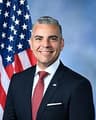 Juan Ciscomani
Republican · Arizona
 Donald Davis
Democrat · North Carolina
 Brian Fitzpatrick
Republican · Pennsylvania
 Josh Gottheimer
Democrat · New Jersey
 Marie Perez
Democrat · Washington
 Michael Lawler
Republican · New York
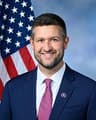 Patrick Ryan
Democrat · New York
 Josh Riley
Democrat · New York