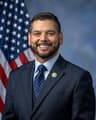
A Democratic bill with 2 Republican cosponsors · See all 9 cosponsors
Last activity — Referred to the House Committee on Appropriations.
In committee
Introduced and handed to a committee in the chamber it started in.
The committee holds it, and most bills are never heard from again. A hearing or a committee vote would be news; silence is the usual outcome, and it kills the bill without anyone voting against it.
Its path through Congress
- Introduced
- In Committee
What this bill would do
This bill is called the "Home Energy Assistance in Times of Shutdown Act" or the "HEATS Act." Its purpose is to provide funding for LIHEAP when the Federal Government is shut down. It allows the use of money from the Treasury that hasn't been appropriated to cover payments under the Low-Income Home Energy Assistance Act of 1981 during a lapse in discretionary appropriations.
Yes· 3 of 24
- Scored +10
Would households on low incomes be better off under this?
Directly guarantees energy assistance funding for low-income households during shutdowns.
- Scored +7
Would people over 65 be better off under this?
Seniors on fixed incomes are highly dependent on LIHEAP for heating.
- Scored +7
Would retired people be better off under this?
Low-income retirees are a primary demographic for LIHEAP benefits.
The opposite
- Scored -1
Does this reduce what the federal government owes?
Appropriating additional funds from the Treasury increases government spending.
- Scored -1
Does this reduce what the federal government spends?
The bill increases spending by providing funding during government shutdowns.
- Scored -1
Does this make the government pay for what it commits to?
Appropriating funds not otherwise appropriated bypasses standard discretionary appropriation processes.
Who it would affect, and how
Potential Positive Impacts for People
- Continued Energy Assistance: People receiving payments under section 2602(b) of the Low-Income Home Energy Assistance Act of 1981 would still receive funding even during a government shutdown (Section 2).
Potential Negative Impacts for People
- No negative impacts for people are explicitly mentioned in the text of the bill.
Groups and Interests Ranking
Every group the model scored this bill for, from -10 to +10. Tap or hover a score for the reason it gave.
- Demographic And Interest Groups
- Would households on low incomes be better off under this? — Directly guarantees energy assistance funding for low-income households during shutdowns. Would retired people be better off under this? — Low-income retirees are a primary demographic for LIHEAP benefits. Would people over 65 be better off under this? — Seniors on fixed incomes are highly dependent on LIHEAP for heating. Would children be better off under this? — Ensures low-income families with children have heated homes during government shutdowns. Would people with disabilities be better off under this? — Crucial for low-income individuals with disabilities who may have higher heating needs. Would people in rural areas be better off under this? — Rural residents often face higher heating costs and rely heavily on LIHEAP. Would people in middle age be better off under this? — Provides energy security for low-income middle-aged adults. Would Native Americans be better off under this? — Provides critical energy assistance to vulnerable low-income tribal members. Would people in cities be better off under this? — High concentration of low-income households in urban areas benefit from LIHEAP. Would people in their twenties and thirties be better off under this? — Provides energy security for low-income young adults. Would Black Americans be better off under this? — Disproportionately helps minority communities that experience higher rates of energy poverty. Would Hispanic Americans be better off under this? — Disproportionately helps minority communities that experience higher rates of energy poverty. Would students be better off under this? — Helps low-income students maintain a heated living environment for studying. Would veterans be better off under this, taking everything together? — Provides energy security for low-income veterans. Would women be better off under this? — Supports low-income female-headed households. Would Asian Americans be better off under this? — Helps low-income individuals within the Asian American community. Would farmers be better off under this? — Helps low-income farming families maintain heating. Would immigrants be better off under this? — Provides support to low-income immigrant households eligible for assistance. Would LGBTQ people be better off under this? — Supports low-income members of the LGBTQ community. Would men be better off under this? — Supports low-income male-headed households. Would white Americans be better off under this? — Helps low-income white households maintain heating.
- Social Issues And Justice
- Is this likely to lift people out of poverty? — Ensures low-income individuals can afford heating during government shutdowns, preventing extreme hardship. Is this likely to reduce homelessness? — Preventing energy shutoffs helps low-income families maintain stable housing.
- Economy And Finance
- Is this likely to grow the economy? — Maintaining energy assistance for low-income households provides minor economic stability. Does this make the government pay for what it commits to? — Appropriating funds not otherwise appropriated bypasses standard discretionary appropriation processes. Does this reduce what the federal government spends? — The bill increases spending by providing funding during government shutdowns. Does this reduce what the federal government owes? — Appropriating additional funds from the Treasury increases government spending.
- 11/17/2025
- 1 Cosponsor added.
- 11/12/2025
- 1 Cosponsor added.
- 11/10/2025
- 2 Cosponsors added.
- 11/7/2025
- 2 Cosponsors added.
- 10/31/2025
- 3 Cosponsors added.
- 10/14/2025
- Referred to the House Committee on Appropriations.
- Introduced in House
 Alma Adams
Democrat · North Carolina
 Julia Brownley
Democrat · California
 Jim Costa
Democrat · California
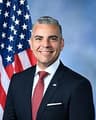 Juan Ciscomani
Republican · Arizona
 Laura Friedman
Democrat · California
 Jennifer McClellan
Democrat · Virginia
 Ryan Mackenzie
Republican · Pennsylvania
 Lori Trahan
Democrat · Massachusetts
 Derek Tran
Democrat · California