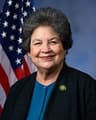
A Democratic bill with 6 Republican cosponsors · See all 12 cosponsors
Last activity — Referred to the House Committee on Science, Space, and Technology.
In committee
Introduced and handed to a committee in the chamber it started in.
The committee holds it, and most bills are never heard from again. A hearing or a committee vote would be news; silence is the usual outcome, and it kills the bill without anyone voting against it.
Its path through Congress
- Introduced
- In Committee
What this bill would do
The bill authorizes the Administrator of FEMA to make grants to career, combination, and volunteer fire departments for programs that improve home safety and prevent falls among older adults. These grants have a performance period of three years and are awarded on a competitive basis through a neutral peer review process. The legislation allows grant funds to be used for procuring lock boxes, hiring community paramedicine personnel, installing smoke detectors, making minor home modifications, and conducting risk assessments. Fire departments must submit applications explaining their challenges and long-term plans, and they are prohibited from using the grant funds to replace existing State or local funding. The bill authorizes specific appropriations from fiscal year 2026 through fiscal year 2035, and the authorities under the section expire on September 30, 2036.
Yes· 3 of 9
- Scored +8
Would people over 65 be better off under this?
The bill directly funds fall prevention, home modifications, and improved emergency response specifically for people over 65.
- Scored +8
Would retired people be better off under this?
The bill targets fall prevention and emergency preparedness which are critical safety issues for the retired population.
- Scored +5
Does this make health care easier to get in general?
The bill funds community paramedicine and risk assessments to improve emergency response and health monitoring for seniors.
The opposite
- Scored -1
Does this reduce what the federal government spends?
The bill authorizes significant new federal grant spending through FEMA.
Who it would affect, and how
Potential Positive Impacts for People
-
Section 3(a)(1): This provision allows FEMA to make grants directly to career, combination, and volunteer fire departments to implement programs that improve home safety and prevent falls for older adults. This is positive because it provides financial support to local responders to protect older adults from the leading cause of injury and injury-related deaths.
-
Section 3(c)(5): This section allows grant funds to be used for minor home modifications to reduce fall risks, such as flattening rugs, removing tripping hazards, and installing hand rails and grab bars. This is positive because it directly helps seniors make their homes safer against the reality that over 70 percent of falls occur in the home.
-
Section 3(c)(3): This part allows grant funds to be used for the installation and replacement of smoke detectors and batteries. This is positive because it enhances overall home safety for residents beyond just fall prevention.
-
Section 3(c)(1): This allows for the procurement and installation of devices, including lock boxes, to give emergency responders quicker access to a home during an emergency. This is positive because it can reduce response times and save lives when an in-home emergency occurs.
Potential Negative Impacts for People
- Section 3(d)(2): This provision states that no grant shall be awarded to a municipality or recipient whose annual budget for fire-related programs and emergency response has been reduced below 80 percent of the average funding level in the three years immediately preceding the application. This could be viewed as negative because communities with struggling local budgets that were forced to cut funding below this threshold might be completely blocked from receiving federal help, even if their seniors desperately need the fall prevention programs.
Groups and Interests Ranking
Every group the model scored this bill for, from -10 to +10. Tap or hover a score for the reason it gave.
- Demographic And Interest Groups
- Would retired people be better off under this? — The bill targets fall prevention and emergency preparedness which are critical safety issues for the retired population. Would people over 65 be better off under this? — The bill directly funds fall prevention, home modifications, and improved emergency response specifically for people over 65. Would households on low incomes be better off under this? — The bill provides federal assistance for home safety improvements that might otherwise be unaffordable for low-income households.
- Healthcare
- Does this make health care easier to get in general? — The bill funds community paramedicine and risk assessments to improve emergency response and health monitoring for seniors.
- Economy And Finance
- Is this likely to create jobs? — The bill allows for the recruitment, retention, and salaries of community paramedicine personnel such as firefighters and social workers. Does this reduce what the federal government spends? — The bill authorizes significant new federal grant spending through FEMA.
- Governance And Ideology
- Does this make what the government does easier for the public to see? — The bill requires a performance assessment system and a report to Congress on the effectiveness of the grants.
- Social Issues And Justice
- Is this likely to lift people out of poverty? — The bill provides resources for home modifications and safety equipment that can reduce the financial burden of fall-related medical expenses on low-income seniors.
- Environment Energy And Infrastructure
- Does this improve buses, trains and other public transport? — The bill focuses on residential infrastructure improvements for safety rather than public transit systems.
- National Security And Foreign Policy
- Does this increase the pay, pensions or support veterans receive? — While not specific to veterans, the focus on community paramedicine and emergency response can benefit the elderly veteran population.
- 10/13/2026
- 1 Cosponsor added.
- 10/6/2026
- 1 Cosponsor added.
- 9/24/2026
- 3 Cosponsors added.
- 1/8/2026
- 1 Cosponsor added.
- 10/28/2025
- 1 Cosponsor added.
- 10/24/2025
- 1 Cosponsor added.
- 9/30/2025
- 1 Cosponsor added.
- 9/26/2025
- Referred to the House Committee on Science, Space, and Technology.
- 3 Cosponsors added.
- Introduced in House
One bill Congress.gov lists as related to this one — companions in the other chamber, earlier versions, and bills this one absorbed or was folded into.
 Juan Ciscomani
Republican · Arizona
 Brian Fitzpatrick
Republican · Pennsylvania
 Adelita Grijalva
Democrat · Arizona
 Josh Harder
Democrat · California
 Michael Lawler
Republican · New York
 Nicole Malliotakis
Republican · New York
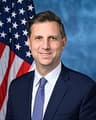 Seth Magaziner
Democrat · Rhode Island
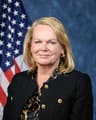 April McClain Delaney
Democrat · Maryland
 Eleanor Norton
Democrat · District of Columbia
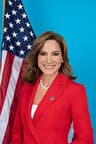 Maria Salazar
Republican · Florida
 Glenn Thompson
Republican · Pennsylvania
 Frederica Wilson
Democrat · Florida