
A Democratic bill with 33 Democratic cosponsors · See all 33 cosponsors
Last activity — Referred to the House Committee on Energy and Commerce.
In committee
Introduced and handed to a committee in the chamber it started in.
The committee holds it, and most bills are never heard from again. A hearing or a committee vote would be news; silence is the usual outcome, and it kills the bill without anyone voting against it.
Its path through Congress
- Introduced
- In Committee
What this bill would do
The Algorithmic Accountability Act of 2025 directs the Federal Trade Commission to create regulations requiring certain entities to perform impact assessments on specific algorithms. These "covered algorithms" are those used in "critical decisions" regarding a consumer's life, such as education, employment, or financial services. Covered entities must perform these assessments both before and after deploying their algorithms. They are also required to submit annual summary reports to the Commission. The bill establishes a Bureau of Technology within the FTC to provide technical expertise for these tasks. Finally, it creates a public repository to help inform consumers about the use of these algorithms.
Yes· 3 of 20
- Scored +7
Does this give people more protection from unfair business practices?
The bill significantly enhances consumer protection by requiring impact assessments and transparency for algorithms making critical decisions.
- Scored +6
Does this make what the government does easier for the public to see?
The bill establishes a public repository for algorithm-related information.
- Scored +6
Does this put more rules on large technology companies?
The bill imposes new regulatory requirements on large entities deploying complex algorithms.
The opposite
- Scored -4
Would business owners be better off under this?
The bill imposes new regulatory and administrative burdens on large business entities.
Who it would affect, and how
Potential Positive Impacts for People
-
Increased Consumer Protection: The bill requires entities to attempt to eliminate or mitigate any likely material negative impact an algorithm might have on a consumer's life (Section 3(b)(1)(H)).
-
Greater Transparency: The Act requires companies to provide consumers with clear notice that an algorithm will be used and establishes a mechanism for consumers to opt out (Section 4(a)(8)(A)).
-
Consumer Empowerment: The creation of a publicly accessible repository will help inform consumers about how algorithms are being used and provide links to mechanisms where they can contest or appeal decisions (Section 6(b)(1)(B) and Section 4(a)(8)(B)).
-
Focus on Fairness: Impact assessments must include an evaluation of differential performance related to characteristics such as race, color, sex, gender, age, disability, religion, family status, or socioeconomic status (Section 4(a)(4)(E)).
-
Data Privacy Safeguards: The bill requires entities to perform testing and evaluation of privacy risks, including assessing data minimization practices and information security measures (Section 4(a)(3)).
Potential Negative Impacts for People
-
Administrative Burden: The Commission must consider the administrative burden placed on both the Commission and the covered entities when creating these regulations (Section 3(b)(1)(A)(iii)).
-
Commercial Risk: In establishing a public repository, the Commission must consider how to minimize potential commercial risks to entities when providing information to the public (Section 6(b)(1)(C)(i)).
-
Data Limitations: Impact assessments may be limited or not possible based on the availability of certain types of information or data (Section 3(b)(2)(A)(i)).
-
Compliance Difficulties: Some impact assessment requirements might be infeasible due to a lack of certain technological innovations or because demographic data is too sensitive to collect or store (Section 4(a)(12)).
Groups and Interests Ranking
Every group the model scored this bill for, from -10 to +10. Tap or hover a score for the reason it gave.
- Demographic And Interest Groups
- Would Black Americans be better off under this? — The bill targets differential performance based on race to ensure equity. Would Asian Americans be better off under this? — The bill targets differential performance based on race to ensure equity. Would Hispanic Americans be better off under this? — The bill targets differential performance based on race to ensure equity. Would Native Americans be better off under this? — The bill targets differential performance based on race to ensure equity. Would people with disabilities be better off under this? — The bill mandates evaluations of algorithms for potential discrimination against people with disabilities. Would veterans be better off under this, taking everything together? — The bill includes veteran status in the evaluation of differential performance. Would women be better off under this? — The bill requires assessments for differential performance based on sex. Would households on low incomes be better off under this? — The bill protects against algorithmic bias in essential services used by low-income individuals. Would middle-income households be better off under this? — The bill provides transparency for decisions affecting financial and housing services. Would students be better off under this? — The bill protects against algorithmic bias in education and training decisions. Would business owners be better off under this? — The bill imposes new regulatory and administrative burdens on large business entities.
- Governance And Ideology
- Does this make what the government does easier for the public to see? — The bill establishes a public repository for algorithm-related information. Does this protect people from being watched or searched? — The bill requires entities to evaluate privacy risks and data minimization. Does this give the federal government more power? — The bill expands the regulatory authority of the Federal Trade Commission. Does this protect the right to fair treatment by the courts? — The bill provides mechanisms for consumers to contest or appeal algorithmic decisions.
- Social Issues And Justice
- Does this expand the rights of people with disabilities? — The bill mandates assessments for differential performance related to disability. Does this narrow the gap between how men and women are treated? — The bill requires evaluation of differential performance related to sex and gender to prevent algorithmic bias. Does this narrow racial gaps in how people are treated? — The bill requires evaluation of differential performance related to race to prevent algorithmic bias.
- Education And Technology
- Does this put more rules on large technology companies? — The bill imposes new regulatory requirements on large entities deploying complex algorithms. Does this give people more control over their personal data? — The bill requires assessment of privacy risks and data minimization practices.
- Economy And Finance
- Does this give people more protection from unfair business practices? — The bill significantly enhances consumer protection by requiring impact assessments and transparency for algorithms making critical decisions.
- 11/9/2026
- 1 Cosponsor added.
- 9/10/2026
- 1 Cosponsor added.
- 9/1/2026
- 1 Cosponsor added.
- 6/25/2026
- 1 Cosponsor added.
- 4/29/2026
- 1 Cosponsor added.
- 4/16/2026
- 1 Cosponsor added.
- 10/24/2025
- 1 Cosponsor added.
- 10/6/2025
- 2 Cosponsors added.
- 9/30/2025
- 3 Cosponsors added.
- 9/19/2025
- Referred to the House Committee on Energy and Commerce.
- 21 Cosponsors added.
- Introduced in House
One bill Congress.gov lists as related to this one — companions in the other chamber, earlier versions, and bills this one absorbed or was folded into.
 Nanette Barragán
Democrat · California
 Shontel Brown
Democrat · Ohio
 Becca Balint
Democrat · Vermont
 Wesley Bell
Democrat · Missouri
 Kathy Castor
Democrat · Florida
 Steve Cohen
Democrat · Tennessee
 Danny Davis
Democrat · Illinois
 Christopher Deluzio
Democrat · Pennsylvania
 Mark DeSaulnier
Democrat · California
 Dwight Evans
Democrat · Pennsylvania
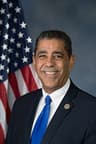 Adriano Espaillat
Democrat · New York
 Valerie Foushee
Democrat · North Carolina
 Shomari Figures
Democrat · Alabama
 Jesús García
Democrat · Illinois
 Jared Huffman
Democrat · California
 Jahana Hayes
Democrat · Connecticut
 Pramila Jayapal
Democrat · Washington
 Sara Jacobs
Democrat · California
 Jonathan Jackson
Democrat · Illinois
 Robin Kelly
Democrat · Illinois
 Summer Lee
Democrat · Pennsylvania
 Seth Magaziner
Democrat · Rhode Island
 Jennifer McClellan
Democrat · Virginia
 Eleanor Norton
Democrat · District of Columbia
 Alexandria Ocasio-Cortez
Democrat · New York
 Ilhan Omar
Democrat · Minnesota
 Ayanna Pressley
Democrat · Massachusetts
 Delia Ramirez
Democrat · Illinois
 Andrea Salinas
Democrat · Oregon
 Rashida Tlaib
Democrat · Michigan
 Lori Trahan
Democrat · Massachusetts
 Marc Veasey
Democrat · Texas
 Frederica Wilson
Democrat · Florida