A Republican bill with 10 Republican cosponsors · See all 10 cosponsors
Last activity — Referred to the House Committee on Energy and Commerce.
In committee
Introduced and handed to a committee in the chamber it started in.
The committee holds it, and most bills are never heard from again. A hearing or a committee vote would be news; silence is the usual outcome, and it kills the bill without anyone voting against it.
Its path through Congress
- Introduced
- In Committee
What this bill would do
This bill, known as the "STOP FRAUD in Medicaid Act," seeks to amend title XIX of the Social Security Act. It directs State Medicaid fraud control units to investigate and prosecute instances of beneficiary fraud. The legislation expands the scope of these units to include individuals applying for or receiving services. Specific language changes are required in sections 1903(q)(3) and 1902(a)(61) of the Social Security Act. These amendments would take effect 180 days after the Act is enacted.
Yes· 3 of 6
- Scored +3
Does this reduce what the federal government spends?
The bill targets the investigation and prosecution of beneficiary fraud to prevent the improper use of Medicaid funds.
- Scored +2
Would households on low incomes be better off under this?
Ensuring Medicaid funds are not lost to fraud helps protect the program's capacity to serve low-income individuals.
- Scored +2
Does this make what the government does easier for the public to see?
The bill expands the authority of fraud control units to investigate both providers and individual beneficiaries.
The opposite
No question was scored the opposite.
Who it would affect, and how
Potential Positive Impacts for People
- Increased accountability for beneficiary fraud: By directing State Medicaid fraud control units to investigate and prosecute instances where individuals are applying for or receiving services, the bill targets fraud at the beneficiary level (Section 2(a)).
Potential Negative Impacts for People
- No specific negative impacts are mentioned in the text: The provided text focuses on the directive to investigate and prosecute, but does not list specific negative consequences or burdens for any group of people.
Groups and Interests Ranking
Every group the model scored this bill for, from -10 to +10. Tap or hover a score for the reason it gave.
- Demographic And Interest Groups
- Would households on low incomes be better off under this? — Ensuring Medicaid funds are not lost to fraud helps protect the program's capacity to serve low-income individuals. Would people over 65 be better off under this? — Protecting Medicaid funds helps ensure the long-term stability of benefits used by seniors.
- Economy And Finance
- Does this reduce what the federal government spends? — The bill targets the investigation and prosecution of beneficiary fraud to prevent the improper use of Medicaid funds.
- Governance And Ideology
- Does this make what the government does easier for the public to see? — The bill expands the authority of fraud control units to investigate both providers and individual beneficiaries.
- Healthcare
- Does this put more money into Medicaid, the health coverage for people on low incomes? — By targeting fraud in the application and receipt of services, the bill aims to ensure Medicaid resources are used more efficiently.
- Social Issues And Justice
- Is this likely to lift people out of poverty? — Protecting the integrity of Medicaid funds can help ensure that resources remain available for those truly in need.
- 9/1/2026
- 1 Cosponsor added.
- 7/6/2026
- 1 Cosponsor added.
- 6/29/2026
- 2 Cosponsors added.
- 6/24/2026
- 2 Cosponsors added.
- 6/23/2026
- 1 Cosponsor added.
- 4/20/2026
- 1 Cosponsor added.
- 4/16/2026
- 2 Cosponsors added.
- 9/15/2025
- Referred to the House Committee on Energy and Commerce.
- Introduced in House
One bill Congress.gov lists as related to this one — companions in the other chamber, earlier versions, and bills this one absorbed or was folded into.
 Ben Cline
Republican · Virginia
 Russell Fry
Republican · South Carolina
 Mike Haridopolos
Republican · Florida
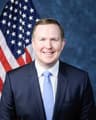 Brian Jack
Republican · Georgia
 Mike Kennedy
Republican · Utah
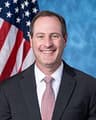 Tracey Mann
Republican · Kansas
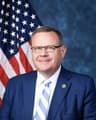 Tim Moore
Republican · North Carolina
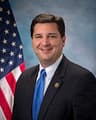 David Rouzer
Republican · North Carolina
 David Taylor
Republican · Ohio
 Joe Wilson
Republican · South Carolina