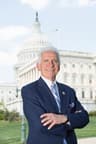
Jim Costa (D-CA)
Ian Kalvinskas Pediatric Liver Cancer Early Detection and Screening Act
A Democratic bill with 8 Republican cosponsors · See all 18 cosponsors
Last activity — Sponsor introductory remarks on measure. (CR H4418)
Introduced, nothing more yet
Formally proposed, and not yet handed to a committee.
Nearly every bill is sent to a committee within days. Introduction alone is not a sign of support, of momentum, or of any likelihood of passing — any member may introduce any bill.
Its path through Congress
- Introduced
What this bill would do
This bill, known as the "Ian Kalvinskas Pediatric Liver Cancer Early Detection and Screening Act," directs the Secretary of Health and Human Services to promote screenings for liver diseases in newborns. It mandates that the Comptroller General conduct a study regarding federally funded initiatives for early detection, trends in transplant wait-list mortality, and the cost effectiveness of adding direct-bilirubin testing to newborn screening panels. Additionally, the Secretary is tasked with carrying out a public education program regarding the early signs of pediatric liver disease and the safety of living liver donation. The Comptroller General must submit reports to Congress regarding the study and the results of the education program.
Yes· 3 of 6
- Scored +7
Would children be better off under this?
The bill focuses on enhancing early detection and survival rates for pediatric liver diseases and cancers.
- Scored +5
Does this make health care easier to get in general?
The bill promotes early detection of liver diseases through studies on newborn screening panels and healthcare provider education.
- Scored +3
Would households on low incomes be better off under this?
The study on mortality trends includes insurance status to help address healthcare access issues for lower-income groups.
The opposite
No question was scored the opposite.
Who it would affect, and how
Potential Positive Impacts for People
-
Improved Early Detection of Liver Disease: The bill seeks to address the urgent need for earlier detection of pediatric liver disease through studies on federally funded initiatives and the potential addition of direct-bilirubin measurement to newborn-screening panels (Section 2, Section 3).
-
Increased Public Awareness: The Secretary of Health and Human Services will develop and disseminate plain-language materials regarding the early signs of pediatric liver disease and the safety of living liver donation (Section 4).
-
Better Understanding of Transplant Mortality: The GAO is directed to study trends in pediatric liver-transplant wait-list mortality, including breakdowns by geography, race, insurance status, diagnosis, and severity of illness (Section 3).
Potential Negative Impacts for People
- No Additional Funding for Education: The bill specifies that no additional funds are authorized to be appropriated for the purpose of carrying out the public education program (Section 4).
Groups and Interests Ranking
Every group the model scored this bill for, from -10 to +10. Tap or hover a score for the reason it gave.
- Demographic And Interest Groups
- Would children be better off under this? — The bill focuses on enhancing early detection and survival rates for pediatric liver diseases and cancers. Would households on low incomes be better off under this? — The study on mortality trends includes insurance status to help address healthcare access issues for lower-income groups. Would Black Americans be better off under this? — The bill's mandate to study mortality by race aims to identify and potentially mitigate racial health disparities in transplant outcomes.
- Healthcare
- Does this make health care easier to get in general? — The bill promotes early detection of liver diseases through studies on newborn screening panels and healthcare provider education. Does this put more money into medical research? — The bill directs the GAO to study federally funded initiatives for identifying risk factors and innovative therapeutic strategies for pediatric liver tumors.
- Social Issues And Justice
- Does this narrow racial gaps in how people are treated? — The GAO is tasked with studying transplant wait-list mortality trends broken down by race to identify potential disparities.
- 11/9/2026
- 1 Cosponsor added.
- 10/22/2026
- 2 Cosponsors added.
- 10/15/2026
- 1 Cosponsor added.
- 10/5/2026
- 1 Cosponsor added.
- 7/16/2026
- 1 Cosponsor added.
- 7/13/2026
- 1 Cosponsor added.
- 5/13/2026
- 1 Cosponsor added.
- 1/12/2026
- 1 Cosponsor added.
- 1/7/2026
- 1 Cosponsor added.
- 1/6/2026
- 2 Cosponsors added.
- 10/14/2025
- 1 Cosponsor added.
- 10/6/2025
- 1 Cosponsor added.
- 9/30/2025
- 1 Cosponsor added.
- 9/26/2025
- 2 Cosponsors added.
- 9/18/2025
- Sponsor introductory remarks on measure. (CR H4418)
- 9/15/2025
- Referred to the House Committee on Energy and Commerce.
- 1 Cosponsor added.
- Introduced in House
 Joyce Beatty
Democrat · Ohio
 Don Bacon
Republican · Nebraska
 Robert Bresnahan
Republican · Pennsylvania
 Yvette Clarke
Democrat · New York
 Donald Davis
Democrat · North Carolina
 Debbie Dingell
Democrat · Michigan
 Josh Gottheimer
Democrat · New Jersey
 Adelita Grijalva
Democrat · Arizona
 Bill Huizenga
Republican · Michigan
 Jonathan Jackson
Democrat · Illinois
 Michael Lawler
Republican · New York
 James Moylan
Republican · Guam
 Ryan Mackenzie
Republican · Pennsylvania
 Eleanor Norton
Democrat · District of Columbia
 Rashida Tlaib
Democrat · Michigan
 Beth Van Duyne
Republican · Texas
 Joe Wilson
Republican · South Carolina
 Debbie Wasserman Schultz
Democrat · Florida