A Democratic bill with 9 Republican cosponsors · See all 29 cosponsors
Last activity — Referred to the House Committee on Education and Workforce.
In committee
Introduced and handed to a committee in the chamber it started in.
The committee holds it, and most bills are never heard from again. A hearing or a committee vote would be news; silence is the usual outcome, and it kills the bill without anyone voting against it.
Its path through Congress
- Introduced
- In Committee
What this bill would do
This bill is called the Advancing Toward Impact Aid Full Funding Act. It amends section 7014 of the Elementary and Secondary Education Act of 1965. The legislation sets authorized amounts of money to be appropriated for specific fiscal years ranging from 2026 through 2031. These funds are designated for payments regarding the Federal acquisition of real property, basic payments, payments for heavily impacted local educational agencies, payments for children with disabilities, and construction.
Yes· 3 of 6
- Scored +8
Does this put more money into public schools?
The bill authorizes significant increases in impact aid payments for local educational agencies and construction through 2031.
- Scored +7
Would children be better off under this?
The bill increases funding for children with disabilities and general educational impact aid.
- Scored +7
Would people with disabilities be better off under this?
The bill provides increased authorized funding for payments for children with disabilities.
The opposite
No question was scored the opposite.
Who it would affect, and how
Potential Positive Impacts for People
-
Section 2, subsection (a) authorizes specific amounts of money starting at $85,000,000 for fiscal year 2026 and increasing up to $250,000,000 for fiscal year 2031 for payments for the Federal acquisition of real property. This provides a clear funding path that advances toward full Federal funding for impact aid.
-
Section 2, subsection (b) authorizes funding for basic payments and payments for heavily impacted local educational agencies, starting at $1,487,058,000 for fiscal year 2026 and increasing to $2,347,658,000 for fiscal year 2031. This could help local educational agencies by providing steadily increasing financial support over the years.
-
Section 2, subsection (c) sets authorized appropriations for payments for children with disabilities, moving from $50,000,000 in fiscal year 2026 up to $120,000,000 by fiscal year 2031. This provides designated and growing financial backing for supporting children with disabilities.
-
Section 2, subsection (d) authorizes appropriations for construction starting at $20,000,000 for fiscal year 2026 and growing to $45,000,000 for fiscal year 2031. This offers structured financial support for construction needs over the six-year period.
Potential Negative Impacts for People
- The provided text does not contain any specific provisions outlining negative consequences, burdens, or explicit downsides for individuals or groups of people in the United States.
Groups and Interests Ranking
Every group the model scored this bill for, from -10 to +10. Tap or hover a score for the reason it gave.
- Demographic And Interest Groups
- Would children be better off under this? — The bill increases funding for children with disabilities and general educational impact aid. Would people with disabilities be better off under this? — The bill provides increased authorized funding for payments for children with disabilities. Would students be better off under this? — The bill increases funding for educational agencies and construction, which directly supports student environments. Would households on low incomes be better off under this? — Increased impact aid can support local school districts that often serve higher concentrations of low-income students.
- Education And Technology
- Does this put more money into public schools? — The bill authorizes significant increases in impact aid payments for local educational agencies and construction through 2031.
- Social Issues And Justice
- Does this expand the rights of people with disabilities? — The bill increases authorized appropriations for payments specifically for children with disabilities through 2031.
- 10/19/2026
- 1 Cosponsor added.
- 10/5/2026
- 1 Cosponsor added.
- 9/28/2026
- 1 Cosponsor added.
- 9/21/2026
- 1 Cosponsor added.
- 9/3/2026
- 1 Cosponsor added.
- 7/20/2026
- 1 Cosponsor added.
- 3/18/2026
- 1 Cosponsor added.
- 11/20/2025
- 1 Cosponsor added.
- 10/24/2025
- 1 Cosponsor added.
- 10/21/2025
- 2 Cosponsors added.
- 9/26/2025
- 1 Cosponsor added.
- 9/19/2025
- 1 Cosponsor added.
- 9/18/2025
- 1 Cosponsor added.
- 9/17/2025
- 5 Cosponsors added.
- 9/16/2025
- 3 Cosponsors added.
- 9/15/2025
- 2 Cosponsors added.
- 9/8/2025
- Referred to the House Committee on Education and Workforce.
- 5 Cosponsors added.
- Introduced in House
 Julia Brownley
Democrat · California
 Mike Bost
Republican · Illinois
 Don Bacon
Republican · Nebraska
 Jack Bergman
Republican · Michigan
 Ed Case
Democrat · Hawaii
 Joe Courtney
Democrat · Connecticut
 Angie Craig
Democrat · Minnesota
 Sharice Davids
Democrat · Kansas
 Veronica Escobar
Democrat · Texas
 Bill Foster
Democrat · Illinois
 Brian Fitzpatrick
Republican · Pennsylvania
 John Garamendi
Democrat · California
 Adelita Grijalva
Democrat · Arizona
 Sara Jacobs
Democrat · California
 Thomas Kean
Republican · New Jersey
 Rick Larsen
Democrat · Washington
 Donald Norcross
Democrat · New Jersey
 Jay Obernolte
Republican · California
 Frank Pallone
Democrat · New Jersey
 Scott Peters
Democrat · California
 Patrick Ryan
Democrat · New York
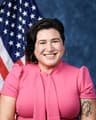 Emily Randall
Democrat · Washington
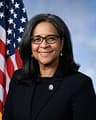 Marilyn Strickland
Democrat · Washington
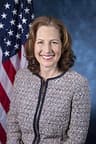 Kim Schrier
Democrat · Washington
 Hillary Scholten
Democrat · Michigan
 Michael Turner
Republican · Ohio
 Jill Tokuda
Democrat · Hawaii
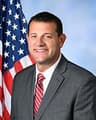 David Valadao
Republican · California
 Jefferson Van Drew
Republican · New Jersey