A Democratic bill with 35 Democratic cosponsors · See all 35 cosponsors
Last activity — Referred to the Committee on Energy and Commerce, and in addition to the Committees on Ways and Means, and Oversight and Government Reform, for a period to be subsequently determined by the Speaker, in each case for consideration of such provisions as fall within the jurisdiction of the committee concerned.
In committee
Introduced and handed to a committee in the chamber it started in.
The committee holds it, and most bills are never heard from again. A hearing or a committee vote would be news; silence is the usual outcome, and it kills the bill without anyone voting against it.
Its path through Congress
- Introduced
- In Committee
What this bill would do
The "PrEP and PEP are Prevention Act" requires no-cost coverage for certain HIV prevention services. This includes FDA-approved drugs for pre-exposure prophylaxis (PrEP) and post-exposure prophylaxis (PEP). The bill mandates these services be covered without cost-sharing across private insurance, Medicare, Medicaid, CHIP, and the Federal Employees Health Benefits Program. Coverage extends beyond medication to include administrative fees, diagnostic procedures, counseling, and clinical monitoring.
Yes· 3 of 35
- Scored +10
Would households on low incomes be better off under this?
Completely removes financial barriers for PrEP and PEP through Medicaid, CHIP, and other programs.
- Scored +10
Would LGBTQ people be better off under this?
Directly benefits a high-risk population by ensuring no-cost access to critical HIV prevention.
- Scored +10
Does this lower the price of prescription medicines?
Eliminates all out-of-pocket costs for FDA-approved PrEP and PEP medications across multiple insurance types.
The opposite· 3 of 6
- Scored -4
Does this leave more decisions to the states?
Reduces state autonomy by requiring specific coverage for HIV prevention services.
- Scored -2
Would business owners be better off under this?
Employer-sponsored plans may face higher costs to cover these mandates.
- Scored -2
Does this lower what people pay for private health insurance?
Mandating no-cost coverage for specific services may lead private insurers to raise premiums to offset costs.
Who it would affect, and how
Potential Positive Impacts for People
-
Expanded Free Access to Prevention: People can access FDA-approved HIV prevention drugs (PrEP and PEP), diagnostic tests, counseling, and monitoring without paying out-of-pocket costs. This is mandated for private insurance (Section 2(a)(1)), Medicare (Section 2(b)), Medicaid (Section 2(c)(1)), CHIP (Section 2(c)(2)), and Federal Employees Health Benefits (Section 2(d)(1)).
-
Removal of Financial Barriers in Medicare: The bill eliminates coinsurance (Section 2(b)(1)(B)), deductibles (Section 2(b)(1)(C)), and cost-sharing for Part D drugs (Section 2(b)(2)(A)) specifically for HIV prevention services.
-
Reduced Administrative Hurdles: For those with private insurance, the bill generally prohibits preauthorization requirements for these prevention services (Section 2(a)(2)).
-
Comprehensive Support: Benefits are not limited to drugs but include related services like HIV risk assessment, medication adherence counseling, and clinical follow-up recommended by Public Health Service guidelines (Section 2(a)(1), 2(b)(1)(ii), 2(c)(1)(ll), and 2(d)(1)).
Potential Negative Impacts for People
- Limited Drug Choices: Under private insurance, a plan may still require preauthorization for a specific drug if they provide a "therapeutically equivalent" drug without preauthorization (Section 2(a)(2)).
Groups and Interests Ranking
Every group the model scored this bill for, from -10 to +10. Tap or hover a score for the reason it gave.
- Demographic And Interest Groups
- Would LGBTQ people be better off under this? — Directly benefits a high-risk population by ensuring no-cost access to critical HIV prevention. Would households on low incomes be better off under this? — Completely removes financial barriers for PrEP and PEP through Medicaid, CHIP, and other programs. Would Black Americans be better off under this? — Targets health disparities by removing cost barriers for populations disproportionately affected by HIV. Would Hispanic Americans be better off under this? — Targets health disparities by removing cost barriers for populations disproportionately affected by HIV. Would Native Americans be better off under this? — Improves access to essential preventive care in underserved populations. Would students be better off under this? — Students often rely on CHIP or low-cost plans and benefit from the removal of cost-sharing. Would people in their twenties and thirties be better off under this? — Young adults are a key demographic for PrEP usage and benefit from removed cost barriers. Would middle-income households be better off under this? — Removes out-of-pocket costs for those with private insurance. Would retired people be better off under this? — Provides no-cost HIV prevention specifically through Medicare. Would people over 65 be better off under this? — Removes cost-sharing and deductibles for HIV prevention drugs under Medicare Part D. Would Asian Americans be better off under this? — Increases access to essential preventive health services. Would billionaires be better off under this? — Eliminates out-of-pocket costs for PrEP/PEP. Would high-income households be better off under this? — Eliminates costs for high-income individuals with insurance. Would people with substantial wealth be better off under this? — Eliminates out-of-pocket costs for PrEP/PEP. Would men be better off under this? — Increases access to HIV prevention services for men. Would people in middle age be better off under this? — Increases affordable access to preventive health for adults across various insurance plans. Would people with disabilities be better off under this? — Increases access via Medicaid and other no-cost mandates. Would people in rural areas be better off under this? — Improves healthcare access for those in rural areas using Medicaid. Would the very wealthiest people be better off under this? — Eliminates out-of-pocket costs for PrEP/PEP. Would union members be better off under this? — Ensures their insurance plans cover PrEP/PEP at no cost. Would people in cities be better off under this? — Improves healthcare access in urban centers. Would white Americans be better off under this? — Increases access to essential preventive health services. Would women be better off under this? — Increases access to HIV prevention services for women. Would children be better off under this? — Ensures children in CHIP have no-cost access to HIV prevention services. Would immigrants be better off under this? — Improves access via Medicaid/CHIP where eligible. Would business owners be better off under this? — Employer-sponsored plans may face higher costs to cover these mandates.
- Healthcare
- Does this lower the price of prescription medicines? — Eliminates all out-of-pocket costs for FDA-approved PrEP and PEP medications across multiple insurance types. Does this make health care easier to get in general? — Significantly increases access to HIV prevention through the removal of financial and administrative barriers. Does this put more money into Medicaid, the health coverage for people on low incomes? — Mandates that Medicaid and CHIP provide no-cost coverage for HIV prevention services. Does this put more money into Medicare, the health coverage for people over 65? — Expands Medicare Part B and Part D to cover HIV prevention services without cost-sharing. Does this strengthen the Affordable Care Act? — Strengthens preventive service mandates within the broader framework of health insurance regulations. Does this lower what people pay for private health insurance? — Mandating no-cost coverage for specific services may lead private insurers to raise premiums to offset costs.
- Social Issues And Justice
- Does this expand the rights of LGBTQ people? — Provides critical, no-cost HIV prevention services that disproportionately benefit the LGBTQ+ community. Does this narrow racial gaps in how people are treated? — Reduces financial barriers to healthcare for marginalized communities disproportionately affected by HIV. Is this likely to lift people out of poverty? — Reduces the financial burden of critical health services for low-income individuals.
- Economy And Finance
- Does this give people more protection from unfair business practices? — Protects consumers from out-of-pocket costs and preauthorization hurdles for essential HIV prevention services. Does this make the government pay for what it commits to? — Increases federal spending obligations without specified funding offsets. Does this reduce what the federal government spends? — The bill expands government spending by mandating no-cost coverage for PrEP and PEP across federal health programs. Does this reduce what the federal government owes? — Increased mandatory spending for Medicare and Medicaid coverage of HIV prevention services may increase the federal deficit.
- Governance And Ideology
- Does this give the federal government more power? — Imposes new federal mandates on state-run Medicaid and CHIP programs. Does this leave more decisions to the states? — Reduces state autonomy by requiring specific coverage for HIV prevention services.
- 6/30/2026
- 1 Cosponsor added.
- 2/2/2026
- 1 Cosponsor added.
- 12/3/2025
- 1 Cosponsor added.
- 10/28/2025
- 1 Cosponsor added.
- 9/9/2025
- 5 Cosponsors added.
- 9/4/2025
- Referred to the Committee on Energy and Commerce, and in addition to the Committees on Ways and Means, and Oversight and Government Reform, for a period to be subsequently determined by the Speaker, in each case for consideration of such provisions as fall within the jurisdiction of the committee concerned.
- 26 Cosponsors added.
- Introduced in House
 Joyce Beatty
Democrat · Ohio
 Nanette Barragán
Democrat · California
 Emanuel Cleaver
Democrat · Missouri
 Yvette Clarke
Democrat · New York
 Steve Cohen
Democrat · Tennessee
 André Carson
Democrat · Indiana
 Shomari Figures
Democrat · Alabama
 Sylvia Garcia
Democrat · Texas
 Robert Garcia
Democrat · California
 Henry Johnson
Democrat · Georgia
 Jonathan Jackson
Democrat · Illinois
 Julie Johnson
Democrat · Texas
 Robin Kelly
Democrat · Illinois
 Raja Krishnamoorthi
Democrat · Illinois
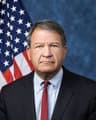 George Latimer
Democrat · New York
 Gwen Moore
Democrat · Wisconsin
 Kevin Mullin
Democrat · California
 LaMonica McIver
Democrat · New Jersey
 Jerrold Nadler
Democrat · New York
 Eleanor Norton
Democrat · District of Columbia
 Mark Pocan
Democrat · Wisconsin
 Mike Quigley
Democrat · Illinois
 Deborah Ross
Democrat · North Carolina
 Delia Ramirez
Democrat · Illinois
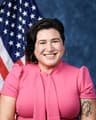 Emily Randall
Democrat · Washington
 Terri Sewell
Democrat · Alabama
 Lateefah Simon
Democrat · California
 Bennie Thompson
Democrat · Mississippi
 Dina Titus
Democrat · Nevada
 Rashida Tlaib
Democrat · Michigan
 Shri Thanedar
Democrat · Michigan
 Nydia Velázquez
Democrat · New York
 Nikema Williams
Democrat · Georgia
 Frederica Wilson
Democrat · Florida
 Bonnie Watson Coleman
Democrat · New Jersey