
Lloyd Smucker (R-PA)
Safe Transit Accountability Act
A Republican bill with 1 Republican cosponsor · See the cosponsor
Last activity — Referred to the Subcommittee on Highways and Transit.
In committee
Introduced and handed to a committee in the chamber it started in.
The committee holds it, and most bills are never heard from again. A hearing or a committee vote would be news; silence is the usual outcome, and it kills the bill without anyone voting against it.
Its path through Congress
- Introduced
- In Committee
What this bill would do
This bill, known as the "Safe Transit Accountability Act," aims to amend title 49 of the United States Code. It seeks to authorize the accountable executive of a safety committee to resolve disputes within that committee. Specifically, it would grant the accountable executive the power to decide whether to implement recommended risk-based mitigations or strategies. Additionally, this individual would serve as the sole tiebreaker for any safety committee dispute resolution procedures.
Yes
- Scored +3
Does this improve buses, trains and other public transport?
The bill streamlines dispute resolution within transit safety committees by granting the accountable executive final decision-making authority.
- Scored +2
Would people in cities be better off under this?
The bill may improve the efficiency of public transit operations used heavily by urban residents through faster dispute resolution.
The opposite
- Scored -2
Does this make what the government does easier for the public to see?
The bill concentrates decision-making power in a single individual, which may reduce the transparency of committee deliberations.
Who it would affect, and how
Potential Positive Impacts for People
-
Dispute Resolution Efficiency: By establishing the accountable executive as the "sole tiebreaker of any Safety Committee dispute resolution procedures," the bill provides a mechanism to resolve disagreements within the committee (Section 2).
-
Clear Decision-Making Authority: The bill clarifies that the accountable executive "shall determine whether to implement the risk-based mitigation or strategies recommended by the Safety Committee," which establishes a specific individual responsible for those decisions (Section 2).
Potential Negative Impacts for People
- Concentration of Power: The bill grants the "accountable executive" the authority to be the "sole tiebreaker" of dispute resolution procedures and the final decisionmaker on implementing risk-based mitigations or strategies (Section 2).
Groups and Interests Ranking
Every group the model scored this bill for, from -10 to +10. Tap or hover a score for the reason it gave.
- Environment Energy And Infrastructure
- Does this improve buses, trains and other public transport? — The bill streamlines dispute resolution within transit safety committees by granting the accountable executive final decision-making authority.
- Demographic And Interest Groups
- Would people in cities be better off under this? — The bill may improve the efficiency of public transit operations used heavily by urban residents through faster dispute resolution.
- Governance And Ideology
- Does this make what the government does easier for the public to see? — The bill concentrates decision-making power in a single individual, which may reduce the transparency of committee deliberations.
- 8/6/2025
- Referred to the Subcommittee on Highways and Transit.
- 8/5/2025
- Referred to the House Committee on Transportation and Infrastructure.
- 1 Cosponsor added.
- Introduced in House
One bill Congress.gov lists as related to this one — companions in the other chamber, earlier versions, and bills this one absorbed or was folded into.
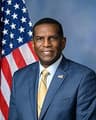 Burgess Owens
Republican · Utah