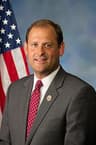
A Republican bill with 24 Republican cosponsors · See all 24 cosponsors
Last activity — Placed on the Union Calendar, Calendar No. 64.
Cleared committee, waiting for its first floor vote
A committee approved it and it is on the calendar of the chamber it started in.
This is further than most bills get, and still no promise of a vote: the calendar is a queue, and the majority leadership decides what is called. A bill can sit here until the Congress ends.
Its path through Congress
- Introduced
- On Calendar
What this bill would do
The Promoting New Bank Formation Act aims to assist new financial institutions and rural community banks. It requires Federal banking agencies to implement a 3-year phase-in period for de novo institutions to meet Federal capital standards. The bill allows these institutions to request deviations from approved business plans during this three-year window. Additionally, it provides a specific leverage ratio for rural community depository institutions. It also amends the Home Owners' Loan Act to include agricultural loans for Federal savings associations. Finally, the bill mandates a study to understand why there are few new insured depository institutions and how to promote them in underserved areas.
Yes· 3 of 9
- Scored +5
Would farmers be better off under this?
The expansion of agricultural loan authority for Federal Savings Associations directly benefits farmers.
- Scored +5
Would people in rural areas be better off under this?
The bill provides specific relief and easier capital standards for rural depository institutions.
- Scored +4
Would business owners be better off under this?
New bank formations and easier capital compliance provide more options for business financing.
The opposite
No question was scored the opposite.
Who it would affect, and how
Potential Positive Impacts for People
-
Capital Standard Relief: De novo depository institutions or their holding companies can use a 3-syear phase-in period to meet Federal capital requirements, starting from the date they become an insured depository institution (Section 2).
-
Business Plan Flexibility: During the first three years, institutions can request to deviate from their previously approved business plans, providing a process for agencies to approve, conditionally approve, or deny such requests (Section 3).
-
Automatic Approvals: To ensure efficiency, if a Federal banking agency fails to act on a business plan change request within 30 days, the request is automatically deemed approved (Section 3).
-
Support for Rural Banks: Rural depository institutions with less than $10,000,000,000 in total consolidated assets can benefit from an 8 percent Community Bank Leverage Ratio, which agencies can phase in gradually over the first two years (Section 4).
-
Agricultural Loan Access: Federal savings associations are granted authority to provide secured or unsecured loans for agricultural purposes (Section 5).
-
Increased Understanding of Banking Deserts: The bill requires a study to identify causes for the low number of new institutions and ways to promote them in areas currently underserved by depository institutions (Section 6).
Potential Negative Impacts for People
- Denial of Business Plan Changes: While there is a process for deviating from business plans, Federal banking agencies still retain the authority to deny these requests (Section 3).
Groups and Interests Ranking
Every group the model scored this bill for, from -10 to +10. Tap or hover a score for the reason it gave.
- Demographic And Interest Groups
- Would farmers be better off under this? — The expansion of agricultural loan authority for Federal Savings Associations directly benefits farmers. Would people in rural areas be better off under this? — The bill provides specific relief and easier capital standards for rural depository institutions. Would business owners be better off under this? — New bank formations and easier capital compliance provide more options for business financing. Would households on low incomes be better off under this? — Improved access to banking and agricultural credit may indirectly benefit low-income households. Would middle-income households be better off under this? — Increased competition in the banking sector may eventually lead to better consumer rates.
- Economy And Finance
- Does this make it easier to run a small business? — The bill facilitates easier entry for new financial institutions which can provide essential credit to small businesses. Is this likely to grow the economy? — Promoting new bank formations can stimulate local economies by increasing access to credit. Is this likely to create jobs? — By easing capital requirements for new banks, the bill may indirectly encourage job creation through increased banking activity.
- Environment Energy And Infrastructure
- Does this invest in rural communities? — By providing relief to rural community banks and expanding agricultural loan authority, it supports rural economic development.
- 5/6/2025
- Reported (Amended) by the Committee on Financial Services. H. Rept. 119-90.
- Placed on the Union Calendar, Calendar No. 64.
- 4/2/2025
- Committee Consideration and Mark-up Session Held
- Ordered to be Reported (Amended) by the Yeas and Nays: 28 - 21.
- 4/1/2025
- 1 Cosponsor added.
- 3/31/2025
- 1 Cosponsor added.
- 2/24/2025
- 2 Cosponsors added.
- 2/10/2025
- 2 Cosponsors added.
- 2/5/2025
- 3 Cosponsors added.
- 2/4/2025
- 5 Cosponsors added.
- 1/23/2025
- 4 Cosponsors added.
- 1/22/2025
- 5 Cosponsors added.
- 1/21/2025
- 1 Cosponsor added.
- 1/16/2025
- Referred to the House Committee on Financial Services.
- Introduced in House
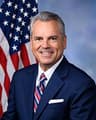 Mark Alford
Republican · Missouri
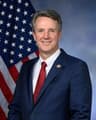 Ben Cline
Republican · Virginia
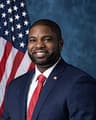 Byron Donalds
Republican · Florida
 Monica De La Cruz
Republican · Texas
 Neal Dunn
Republican · Florida
 Troy Downing
Republican · Montana
 Jake Ellzey
Republican · Texas
 Scott Fitzgerald
Republican · Wisconsin
 Scott Franklin
Republican · Florida
 Mike Flood
Republican · Nebraska
 Bill Huizenga
Republican · Michigan
 Brad Knott
Republican · North Carolina
 Barry Loudermilk
Republican · Georgia
 Michael Lawler
Republican · New York
 Daniel Meuser
Republican · Pennsylvania
 Tim Moore
Republican · North Carolina
 Addison McDowell
Republican · North Carolina
 Gary Palmer
Republican · Alabama
 John Rose
Republican · Tennessee
 Pete Sessions
Republican · Texas
 Derek Schmidt
Republican · Kansas
 Jefferson Shreve
Republican · Indiana
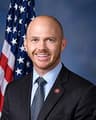 William Timmons
Republican · South Carolina
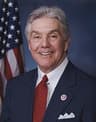 Roger Williams
Republican · Texas