
A Democratic bill with 86 Democratic cosponsors · See all 86 cosponsors
Last activity — Referred to the Committee on Education and Workforce, and in addition to the Committees on House Administration, Oversight and Government Reform, the Judiciary, and Transportation and Infrastructure, for a period to be subsequently determined by the Speaker, in each case for consideration of such provisions as fall within the jurisdiction of the committee concerned.
In committee
Introduced and handed to a committee in the chamber it started in.
The committee holds it, and most bills are never heard from again. A hearing or a committee vote would be news; silence is the usual outcome, and it kills the bill without anyone voting against it.
Its path through Congress
- Introduced
- In Committee
What this bill would do
The "Protected Time Off Act" or "PTO Act" requires employers to provide paid annual leave to covered employees. Under this law, employees earn one hour of paid annual leave for every 25 hours worked, up to a maximum of 80 hours per year. The bill defines specific requirements for how leave is used, compensated, and carried over between periods. It also establishes strict rules against employer interference or discrimination based on the use of this leave. Enforcement is handled through the Secretary of Labor and a private right of action for employees. The Act takes effect 180 days after enactment.
Yes· 3 of 6
- Scored +5
Would households on low incomes be better off under this?
The act guarantees paid time off and protects against wage loss for tipped workers during leave periods.
- Scored +4
Would middle-income households be better off under this?
The bill provides a predictable way for workers to accrue paid leave for any personal reason.
- Scored +4
Would union members be better off under this?
The bill allows labor organizations to use grievance and arbitration procedures to enforce these leave provisions.
The opposite
- Scored -4
Would business owners be better off under this?
The bill imposes new administrative and financial obligations on employers to provide and pay for annual leave.
Who it would affect, and how
Potential Positive Impacts for People
-
Guaranteed Paid Time Off: Employees will earn paid annual leave starting from the commencement of their employment, with a rate of one hour for every 25 hours worked (Section 3(a)(1)-(3)).
-
Flexible Leave Use: Employees are permitted to use their earned paid annual leave for any reason (Section 3(b)(1)).
-
Consistent Compensation: Workers using leave are compensated at their regular rate of pay, and tipped employees are guaranteed a rate equivalent to the higher of the Federal, State, or local minimum wage or their regular rate (Section 3(b)(3)).
-
Benefit Protection: Employers are required to maintain any employment benefits provided to an employee during their period of leave (Section 3(b)(6)).
-
Leave Portability: Employees are permitted to carry over up to 40 hours of unused paid annual leave to the following 12-month period (Section 3(c)(5)).
-
Financial Security upon Separation: If an employee leaves their job, the employer must pay out unused annual leave at a rate based on the employee's final or average regular rate (Section 3(d)(1)).
-
Protection from Retaliation: The law makes it unlawful for employers to discharge, discriminate against, or use the taking of leave as a negative factor in employment actions like hiring or promotion (Section 5(a)).
Potential Negative Impacts for People
-
Leave Caps: Employers are not required to provide more than 80 hours of paid annual leave to an employee during any 12-month period (Section 3(a)(2)(A)).
-
Leave Exclusions: The definition of paid annual leave specifically excludes several types of leave, such as family and medical leave, sick leave, bereavement leave, and leave for jury duty or voting (Section 2(5)(B)).
-
Employment Separation Limitations: For employees rehired within 12 months, the requirement to reinstate leave only applies to those who had more than 80 hours of leave (Section 3(d)(2)(A)).
Groups and Interests Ranking
Every group the model scored this bill for, from -10 to +10. Tap or hover a score for the reason it gave.
- Demographic And Interest Groups
- Would households on low incomes be better off under this? — The act guarantees paid time off and protects against wage loss for tipped workers during leave periods. Would middle-income households be better off under this? — The bill provides a predictable way for workers to accrue paid leave for any personal reason. Would union members be better off under this? — The bill allows labor organizations to use grievance and arbitration procedures to enforce these leave provisions. Would people in their twenties and thirties be better off under this? — Young adults entering the workforce benefit from the immediate accrual of paid leave from the commencement of employment. Would business owners be better off under this? — The bill imposes new administrative and financial obligations on employers to provide and pay for annual leave.
- Governance And Ideology
- Does this make what the government does easier for the public to see? — The bill requires employers to establish a system to inform employees how much paid annual leave they have earned.
- Social Issues And Justice
- Is this likely to lift people out of poverty? — The bill provides guaranteed paid leave and ensures workers are paid their regular rate or higher during time off, providing a slight buffer for low-income workers.
- 7/9/2026
- 1 Cosponsor added.
- 6/30/2026
- 1 Cosponsor added.
- 6/25/2026
- 1 Cosponsor added.
- 6/23/2026
- 1 Cosponsor added.
- 6/10/2026
- 3 Cosponsors added.
- 6/9/2026
- 1 Cosponsor added.
- 6/4/2026
- 2 Cosponsors added.
- 6/3/2026
- 1 Cosponsor added.
- 5/29/2026
- 3 Cosponsors added.
- 5/21/2026
- 2 Cosponsors added.
- 5/14/2026
- 1 Cosponsor added.
- 5/13/2026
- 1 Cosponsor added.
- 5/11/2026
- 1 Cosponsor added.
- 5/7/2026
- 1 Cosponsor added.
- 4/30/2026
- 2 Cosponsors added.
- 4/27/2026
- 1 Cosponsor added.
- 4/21/2026
- 1 Cosponsor added.
- 4/20/2026
- 2 Cosponsors added.
- 4/15/2026
- 1 Cosponsor added.
- 4/14/2026
- 1 Cosponsor added.
- 4/13/2026
- 4 Cosponsors added.
- 4/6/2026
- 1 Cosponsor added.
- 3/16/2026
- 1 Cosponsor added.
- 2/11/2026
- 1 Cosponsor added.
- 11/25/2025
- 1 Cosponsor added.
- 10/14/2025
- 1 Cosponsor added.
- 9/23/2025
- 1 Cosponsor added.
- 9/18/2025
- 1 Cosponsor added.
- 9/8/2025
- 1 Cosponsor added.
- 9/2/2025
- 1 Cosponsor added.
- 8/19/2025
- 1 Cosponsor added.
- 8/5/2025
- 2 Cosponsors added.
- 7/25/2025
- Referred to the Committee on Education and Workforce, and in addition to the Committees on House Administration, Oversight and Government Reform, the Judiciary, and Transportation and Infrastructure, for a period to be subsequently determined by the Speaker, in each case for consideration of such provisions as fall within the jurisdiction of the committee concerned.
- 42 Cosponsors added.
- Introduced in House
 Alma Adams
Democrat · North Carolina
 Gabe Amo
Democrat · Rhode Island
 Yassamin Ansari
Democrat · Arizona
 Suzanne Bonamici
Democrat · Oregon
 Julia Brownley
Democrat · California
 Shontel Brown
Democrat · Ohio
 Nikki Budzinski
Democrat · Illinois
 Emanuel Cleaver
Democrat · Missouri
 Yvette Clarke
Democrat · New York
 André Carson
Democrat · Indiana
 Judy Chu
Democrat · California
 Troy Carter
Democrat · Louisiana
 Jasmine Crockett
Democrat · Texas
 Greg Casar
Democrat · Texas
 Danny Davis
Democrat · Illinois
 Rosa DeLauro
Democrat · Connecticut
 Christopher Deluzio
Democrat · Pennsylvania
 Mark DeSaulnier
Democrat · California
 Debbie Dingell
Democrat · Michigan
 Maxine Dexter
Democrat · Oregon
 Dwight Evans
Democrat · Pennsylvania
 Cleo Fields
Democrat · Louisiana
 Maxwell Frost
Democrat · Florida
 Laura Friedman
Democrat · California
 Al Green
Democrat · Texas
 Jimmy Gomez
Democrat · California
 Jesús García
Democrat · Illinois
 Sylvia Garcia
Democrat · Texas
 Robert Garcia
Democrat · California
 Daniel Goldman
Democrat · New York
 Adelita Grijalva
Democrat · Arizona
 Jared Huffman
Democrat · California
 Jahana Hayes
Democrat · Connecticut
 Josh Harder
Democrat · California
 Val Hoyle
Democrat · Oregon
 Henry Johnson
Democrat · Georgia
 Pramila Jayapal
Democrat · Washington
 Jonathan Jackson
Democrat · Illinois
 Julie Johnson
Democrat · Texas
 Robin Kelly
Democrat · Illinois
 Ro Khanna
Democrat · California
 Raja Krishnamoorthi
Democrat · Illinois
 Sydney Kamlager-Dove
Democrat · California
 Stephen Lynch
Democrat · Massachusetts
 Ted Lieu
Democrat · California
 Mike Levin
Democrat · California
 Summer Lee
Democrat · Pennsylvania
 George Latimer
Democrat · New York
 James McGovern
Democrat · Massachusetts
 Grace Meng
Democrat · New York
 Seth Moulton
Democrat · Massachusetts
 Kevin Mullin
Democrat · California
 Robert Menendez
Democrat · New Jersey
 LaMonica McIver
Democrat · New Jersey
 Sarah McBride
Democrat · Delaware
 Christian Menefee
Democrat · Texas
 Analilia Mejia
Democrat · New Jersey
 Jerrold Nadler
Democrat · New York
 Eleanor Norton
Democrat · District of Columbia
 Donald Norcross
Democrat · New Jersey
 Joe Neguse
Democrat · Colorado
 Alexandria Ocasio-Cortez
Democrat · New York
 Ilhan Omar
Democrat · Minnesota
 Johnny Olszewski
Democrat · Maryland
 Chellie Pingree
Democrat · Maine
 Mark Pocan
Democrat · Wisconsin
 Mike Quigley
Democrat · Illinois
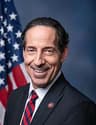 Jamie Raskin
Democrat · Maryland
 Delia Ramirez
Democrat · Illinois
 Emily Randall
Democrat · Washington
 Brad Sherman
Democrat · California
 Janice Schakowsky
Democrat · Illinois
 Linda Sánchez
Democrat · California
 Melanie Stansbury
Democrat · New Mexico
 Andrea Salinas
Democrat · Oregon
 Lateefah Simon
Democrat · California
 Dina Titus
Democrat · Nevada
 Paul Tonko
Democrat · New York
 Rashida Tlaib
Democrat · Michigan
 Jill Tokuda
Democrat · Hawaii
 Shri Thanedar
Democrat · Michigan
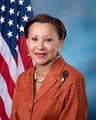 Nydia Velázquez
Democrat · New York
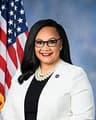 Nikema Williams
Democrat · Georgia
 Debbie Wasserman Schultz
Democrat · Florida
 Frederica Wilson
Democrat · Florida
 Bonnie Watson Coleman
Democrat · New Jersey