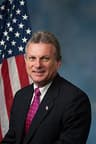
Earl Carter (R-GA)
Palliative Care and Hospice Education and Training Act
A Republican bill with 8 Democratic cosponsors · See all 9 cosponsors
Last activity — Referred to the House Committee on Energy and Commerce.
In committee
Introduced and handed to a committee in the chamber it started in.
The committee holds it, and most bills are never heard from again. A hearing or a committee vote would be news; silence is the usual outcome, and it kills the bill without anyone voting against it.
Its path through Congress
- Introduced
- In Committee
What this bill would do
This bill, known as the "Palliative Care and Hospice Education and Training Act," aims to amend the Public Health Service Act to bolster the palliative care and hospice workforce. It seeks to increase the number of permanent faculty members across various medical and health profession programs. The legislation establishes several grant and award programs to support clinical training, physician training, and academic career development. It also authorizes funds for nursing-specific education and the dissemination of information regarding palliative care benefits. Furthermore, the bill instructs the National Institutes of Health to expand research efforts in this field.
Yes· 3 of 15
- Scored +7
Does this make health care easier to get in general?
The bill expands palliative and hospice care training and research to improve quality of life for those with serious illnesses.
- Scored +6
Would people over 65 be better off under this?
The bill focuses on palliative and hospice care which is critical for seniors facing serious illnesses.
- Scored +6
Would retired people be better off under this?
Increased hospice and palliative care access benefits those in later life stages.
The opposite
No question was scored the opposite.
Who it would affect, and how
Potential Positive Impacts for People
-
Improved Care for Serious Illnesses: The bill supports training that emphasizes patient and family engagement and the integration of care to address gaps for individuals with serious or life-threatening illnesses (Section 2(a)(2)(A)).
-
Targeted Support for Underserved Populations: Priority is given to programs that benefit individuals in rural or medically underserved areas, Indian Tribes, pediatric populations, and racial and ethnic minority populations (Section 2(a)(3)(B)).
-
Enhanced Quality of Life: Training-related community-based programs are intended to improve the quality of life and health outcomes for individuals with serious or life-threatening illnesses (Section 2(a)(2)(B)(ii)).
-
Career Development for Professionals: The bill creates "Palliative Care and Hospice Academic Career Awards" to help individuals develop careers as academic specialists (Section 2(c)(1)).
-
Increased Access to Information: The Director is authorized to disseminate information to patients, families, and professionals regarding the benefits of palliative care, including pain and symptom management (Section 4(b)(1)).
-
Expanded Medical Research: The bill directs the National Institutes of Health to expand and intensify national research programs to address the quality of life for patients with various life-threatening diseases (Section 6(a)).
Potential Negative Impacts for People
-
Restrictions on Service Purpose: The bill explicitly states that palliative care and hospice shall not be furnished for the purpose of causing, or assisting in causing, a patient's death (Section 5(b)).
-
Funding Restrictions: Federal funds provided under this Act cannot be used for any item or service for which Federal funding is unavailable under section 3 of Public Law 105-12 (Section 5(a)).
Groups and Interests Ranking
Every group the model scored this bill for, from -10 to +10. Tap or hover a score for the reason it gave.
- Demographic And Interest Groups
- Would retired people be better off under this? — Increased hospice and palliative care access benefits those in later life stages. Would people over 65 be better off under this? — The bill focuses on palliative and hospice care which is critical for seniors facing serious illnesses. Would children be better off under this? — The bill prioritizes benefits for pediatric populations. Would Native Americans be better off under this? — The bill prioritizes benefits for Indian Tribes and Tribal organizations. Would people in rural areas be better off under this? — The bill gives priority to programs benefiting individuals in rural and frontier health professional shortage areas. Would veterans be better off under this, taking everything together? — The bill specifically targets information dissemination for the Veterans Health Administration. Would households on low incomes be better off under this? — The bill prioritizes medically underserved areas which often correlate with lower income. Would students be better off under this? — The bill provides career awards and training opportunities for health profession students and faculty.
- Healthcare
- Does this make health care easier to get in general? — The bill expands palliative and hospice care training and research to improve quality of life for those with serious illnesses. Does this put more money into medical research? — The bill mandates a strategy to expand and intensify national research programs in palliative care through the NIH. Does this help veterans get medical care? — The bill specifically mentions the importance of disseminating palliative care information to beneficiaries of the Veterans Health Administration.
- Education And Technology
- Does this put more money into scientific research? — The bill authorizes increased research capabilities through the National Institutes of Health.
- National Security And Foreign Policy
- Does this increase the pay, pensions or support veterans receive? — The bill includes provisions to disseminate information regarding palliative care to Veterans.
- Social Issues And Justice
- Does this narrow racial gaps in how people are treated? — The bill gives priority to programs that benefit racial and ethnic minority populations.
- Environment Energy And Infrastructure
- Does this invest in rural communities? — The bill prioritizes programs that benefit individuals in rural or medically underserved areas.
- 4/22/2026
- 1 Cosponsor added.
- 3/12/2026
- 1 Cosponsor added.
- 12/15/2025
- 1 Cosponsor added.
- 12/2/2025
- 1 Cosponsor added.
- 11/10/2025
- 1 Cosponsor added.
- 10/21/2025
- 1 Cosponsor added.
- 9/15/2025
- 1 Cosponsor added.
- 8/22/2025
- 1 Cosponsor added.
- 7/16/2025
- Referred to the House Committee on Energy and Commerce.
- 1 Cosponsor added.
- Introduced in House
One bill Congress.gov lists as related to this one — companions in the other chamber, earlier versions, and bills this one absorbed or was folded into.
 Ami Bera
Democrat · California
 Maggie Goodlander
Democrat · New Hampshire
 Sarah McBride
Democrat · Delaware
 Eleanor Norton
Democrat · District of Columbia
 Paul Tonko
Democrat · New York
 Jill Tokuda
Democrat · Hawaii
 Derek Tran
Democrat · California
 Jefferson Van Drew
Republican · New Jersey
 Eugene Vindman
Democrat · Virginia