A Democratic bill with 107 Democratic cosponsors · See all 107 cosponsors
Last activity — Referred to the House Committee on Education and Workforce.
In committee
Introduced and handed to a committee in the chamber it started in.
The committee holds it, and most bills are never heard from again. A hearing or a committee vote would be news; silence is the usual outcome, and it kills the bill without anyone voting against it.
Its path through Congress
- Introduced
- In Committee
What this bill would do
The Child Care for Working Families Act aims to increase the quality and supply of child care while lowering costs for families. The bill establishes an entitlement program for birth through five child care and early learning services, supported by significant federal appropriations. It also creates a program for universal preschool to ensure high-quality, inclusive, and free education for children aged 3 and 4. Title II provides grants to support the stability and quality of child care providers through wage increases and expanded capacity. Additionally, the bill focuses on providing access to underserved populations and high-need communities. The legislation also focuses on monitoring compliance, increasing reporting requirements, and extending the duration of Head Start services.
Yes· 3 of 44
- Scored +10
Would children be better off under this?
Provides universal access to high-quality, inclusive child care and preschool services.
- Scored +10
Would households on low incomes be better off under this?
Eliminates child care copayments for families at or below 85% of state median income and prioritizes high-poverty communities.
- Scored +10
Would people with disabilities be better off under this?
Mandates inclusive care and provides specific funding for the additional costs of serving children with disabilities.
The opposite· 3 of 4
- Scored -10
Does this reduce what the federal government spends?
Significantly increases federal spending on child care and universal preschool.
- Scored -7
Does this reduce what the federal government owes?
Appropriates billions of dollars in new spending for entitlements and grants through 2031.
- Scored -5
Does this make the government pay for what it commits to?
Establishes an entitlement program with high recurring costs and lacks identified offsets.
Who it would affect, and how
Potential Positive Impacts for People
-
Lower Child Care Costs for Families: The bill establishes a sliding fee scale for copayments based on family income, ensuring that families earning up to 85 percent of the State median income pay no copayment (Section 101(f)(3)(F)).
-
Increased Wages for Child Care Workers: The act requires states to ensure adequate wages that provide a living wage and are equivalent to the wages of elementary educators with similar credentials (Section 101(f)(3)(A)(iv)(cc)). Title II also focuses on supporting increased wages to stabilize the workforce (Section 201(2)).
-
Improved Working Conditions and Wages: The bill provides funding to assist Head Start agencies in ensuring teachers and staff receive wages comparable to elementary educators or, at a minimum, a living wage (Section 402(b)).
-
Improved Access for Vulnerable Populations: The bill prioritizes assistance for underserved populations, including children with disabilities, children experiencing homelessness, and children in foster or kinship care (Section 101(f)(3)(I)).
-
Universal Preschool Access: The act aims to provide high-quality, free, and inclusive preschool services to children aged 3 and 4 (Section 301(5)).
-
Expanded Educational Access: Head Start and Early Head Start agencies can receive grants to provide access to a full school year and a full school day of services (Section 401(a)(1)).
-
Support for Migrant Communities: Migrant and seasonal Head Start agencies can receive additional service hours to ensure continuous services, with priority given to those operating for fewer than 8 months per year (Section 401(a)(2) and Section 401(b)(2)).
-
Support for High-Need Communities: Title II includes provisions to expand the supply of child care in communities facing shortages, such as those needing services during nontraditional hours (Section 201(4)).
-
Enhanced Facilities and Quality: The bill provides for quality grants to help providers improve services and facilities grants to assist with remodeling, renovation, or construction (Section 101(h)(3)(B)(ii) and (iii)).
-
Program Quality Improvements: Agencies that already meet full-day and full-year needs can use grants to enhance the quality of their services (Section 401(a)(3)).
-
Resource Support for Agencies: Grant funds can be used to cover costs for additional facilities, classroom supplies, staff for extended hours, and professional development (Section 401(c)(1)).
Potential Negative Impacts for People
-
Strict Requirements for Providers: To be eligible for assistance, child care providers must prohibit the use of suspensions, expulsions, and aversive behavioral interventions (Section 101(f)(3)(L)).
-
Increased Administrative Burdens on States: States are required to develop complex cost estimation models, tiered quality systems, and extensive reporting requirements (Section 101(f)(3)(A)(ii) and (D)).
-
Specific Use Restrictions on Funds: Funds provided for facilities through grants may not be used for buildings or facilities used primarily for sectarian instruction or religious worship (Section 101(h)(3)(B)(iii)(V)).
-
Restrictions on Program Growth: Head Start agencies receiving these specific grant funds are prohibited from using the money to expand the number of children served in their programs (Section 401(c)(3)).
-
Compliance and Sanctions: The Secretary is authorized to establish procedures for determining the validity of complaints and imposing sanctions on States that fail to comply with requirements (Section 311(b)).
Groups and Interests Ranking
Every group the model scored this bill for, from -10 to +10. Tap or hover a score for the reason it gave.
- Demographic And Interest Groups
- Would children be better off under this? — Provides universal access to high-quality, inclusive child care and preschool services. Would households on low incomes be better off under this? — Eliminates child care copayments for families at or below 85% of state median income and prioritizes high-poverty communities. Would people with disabilities be better off under this? — Mandates inclusive care and provides specific funding for the additional costs of serving children with disabilities. Would Native Americans be better off under this? — Provides specific appropriations and tailored application processes for Indian Tribes and Tribal organizations. Would women be better off under this? — Drastically reduces the financial and logistical barriers to workforce participation for mothers. Would Black Americans be better off under this? — Prioritizes underserved populations and mandates racial equity in access and reporting. Would Hispanic Americans be better off under this? — Prioritizes dual language learners and underserved communities. Would people in rural areas be better off under this? — Prioritizes subgrants to providers in rural communities with low child care supply. Would Asian Americans be better off under this? — Increases access to affordable, high-quality child care. Would immigrants be better off under this? — Prioritizes dual language learners and provides grants for translation of regulations. Would people in middle age be better off under this? — Significantly lowers child care expenses for working parents. Would middle-income households be better off under this? — Provides a sliding fee scale and universal preschool to keep child care costs affordable. Would people in cities be better off under this? — Increases the supply and quality of child care in high-need urban areas. Would business owners be better off under this? — Provides grants for startup and facility expansion of child care businesses. Would farmers be better off under this? — Provides specific appropriations for children of migrant or seasonal agricultural labor. Would students be better off under this? — Enables parents who are also students to access child care and improves kindergarten readiness. Would white Americans be better off under this? — Improves child care access and affordability across the general population. Would men be better off under this? — Reduces child care costs for working fathers. Would union members be better off under this? — Supports living wages and requires coordination with labor organizations. Would people in their twenties and thirties be better off under this? — Reduces costs for parents entering the workforce and supports early childhood educator degrees. Would high-income households be better off under this? — Increases overall supply and quality of child care, though they pay the highest copayments. Would retired people be better off under this? — Helps grandparents providing care for children under 6. Would people over 65 be better off under this? — Provides eligibility for child care for children residing with parents over 65.
- Social Issues And Justice
- Does this make child care cost less? — Creates a sliding fee scale and universal preschool to eliminate or drastically reduce costs for families. Does this expand the rights of people with disabilities? — Mandates inclusive care, prioritizes children with disabilities, and ensures strict ADA and Section 504 compliance. Is this likely to lift people out of poverty? — Provides free child care for families at or below 85% of the state median income and prioritizes high-poverty communities. Does this narrow racial gaps in how people are treated? — Prioritizes underserved populations and requires disaggregated reporting by race and ethnicity to identify and address inequities. Does this narrow the gap between how men and women are treated? — Reduces the disproportionate burden of child care costs on working parents, primarily women. Is this likely to reduce homelessness? — Prioritizes children experiencing homelessness for access to services and provides specific transportation support. Does this protect the freedom to practise a religion? — Explicitly allows certificates to be used for sectarian child care if chosen by the parent.
- Education And Technology
- Does this put more money into public schools? — Provides substantial federal funding for universal preschool and Head Start expansion, often integrating with public school systems. Does this make it easier to use public money at a school other than the local one? — Supports a mixed-delivery system allowing families to choose between centers, family providers, and schools.
- Healthcare
- Does this make mental health care easier to get? — Provides funding for mental health consultation and trauma-informed care in early childhood settings. Does this make health care easier to get in general? — Supports comprehensive health and nutritional services and developmentally appropriate health standards for children. Does this put more money into medical research? — Appropriates funds for research and evaluations related to child care and early learning.
- Economy And Finance
- Does this raise the lowest wage an employer may pay? — Mandates a living wage for all staff in funded child care and preschool programs. Does this make it easier to run a small business? — Provides startup, facility, and supply expansion grants specifically targeting small business concerns and education-based providers. Is this likely to create jobs? — Creates demand for new child care slots and professionalizes the early childhood workforce through expanded preschool and Head Start programs. Does this give people more protection from unfair business practices? — Implements strict licensing, quality tiers, and bans on aversive behavioral interventions. Is this likely to grow the economy? — Increases workforce participation by lowering child care costs for working families and boosting long-term economic productivity. Does this strengthen the rights of workers to organise? — Requires consultation with labor organizations and tracks union representation in reports. Does this reduce what the federal government spends? — Significantly increases federal spending on child care and universal preschool. Does this reduce what the federal government owes? — Appropriates billions of dollars in new spending for entitlements and grants through 2031. Does this make the government pay for what it commits to? — Establishes an entitlement program with high recurring costs and lacks identified offsets.
- Governance And Ideology
- Does this give the federal government more power? — Sets national standards for child care quality, wages, and eligibility through federal funding mandates and oversight. Does this make what the government does easier for the public to see? — Requires detailed annual reports on spending, access, and outcomes to be made publicly available. Does this leave more decisions to the states? — Imposes strict federal requirements and maintenance of effort sanctions on states that fail to comply.
- Environment Energy And Infrastructure
- Does this invest in rural communities? — Provides priority subgrants to providers in rural communities and funding for Tribal organizations.
- 9/14/2026
- 1 Cosponsor added.
- 9/8/2026
- 1 Cosponsor added.
- 8/3/2026
- 1 Cosponsor added.
- 6/9/2026
- 1 Cosponsor added.
- 5/7/2026
- 1 Cosponsor added.
- 5/4/2026
- 2 Cosponsors added.
- 4/28/2026
- 1 Cosponsor added.
- 4/22/2026
- 1 Cosponsor added.
- 3/27/2026
- 1 Cosponsor added.
- 3/24/2026
- 1 Cosponsor added.
- 3/3/2026
- 1 Cosponsor added.
- 2/24/2026
- 1 Cosponsor added.
- 2/2/2026
- 1 Cosponsor added.
- 12/18/2025
- 1 Cosponsor added.
- 12/10/2025
- 1 Cosponsor added.
- 11/20/2025
- 1 Cosponsor added.
- 10/8/2025
- 1 Cosponsor added.
- 9/16/2025
- 1 Cosponsor added.
- 8/29/2025
- 2 Cosponsors added.
- 8/5/2025
- 1 Cosponsor added.
- 7/17/2025
- 1 Cosponsor added.
- 7/16/2025
- 1 Cosponsor added.
- 7/15/2025
- Referred to the House Committee on Education and Workforce.
- 83 Cosponsors added.
- Introduced in House
One bill Congress.gov lists as related to this one — companions in the other chamber, earlier versions, and bills this one absorbed or was folded into.
 Alma Adams
Democrat · North Carolina
 Pete Aguilar
Democrat · California
 Gabe Amo
Democrat · Rhode Island
 Yassamin Ansari
Democrat · Arizona
 Suzanne Bonamici
Democrat · Oregon
 Joyce Beatty
Democrat · Ohio
 Julia Brownley
Democrat · California
 Donald Beyer
Democrat · Virginia
 Shontel Brown
Democrat · Ohio
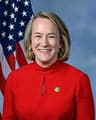 Nikki Budzinski
Democrat · Illinois
 Janelle Bynum
Democrat · Oregon
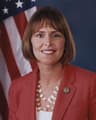 Kathy Castor
Democrat · Florida
 Yvette Clarke
Democrat · New York
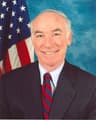 Joe Courtney
Democrat · Connecticut
 André Carson
Democrat · Indiana
 Judy Chu
Democrat · California
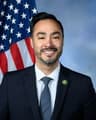 Joaquin Castro
Democrat · Texas
 Katherine Clark
Democrat · Massachusetts
 Salud Carbajal
Democrat · California
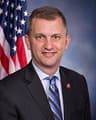 Sean Casten
Democrat · Illinois
 Angie Craig
Democrat · Minnesota
 Troy Carter
Democrat · Louisiana
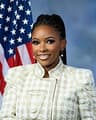 Jasmine Crockett
Democrat · Texas
 Danny Davis
Democrat · Illinois
 Rosa DeLauro
Democrat · Connecticut
 Suzan DelBene
Democrat · Washington
 Mark DeSaulnier
Democrat · California
 Debbie Dingell
Democrat · Michigan
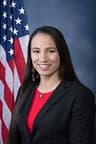 Sharice Davids
Democrat · Kansas
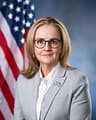 Madeleine Dean
Democrat · Pennsylvania
 Dwight Evans
Democrat · Pennsylvania
 Sarah Elfreth
Democrat · Maryland
 Cleo Fields
Democrat · Louisiana
 Bill Foster
Democrat · Illinois
 Lois Frankel
Democrat · Florida
 Maxwell Frost
Democrat · Florida
 Valerie Foushee
Democrat · North Carolina
 John Garamendi
Democrat · California
 Josh Gottheimer
Democrat · New Jersey
 Robert Garcia
Democrat · California
 Daniel Goldman
Democrat · New York
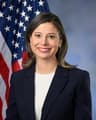 Maggie Goodlander
Democrat · New Hampshire
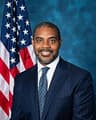 Steven Horsford
Democrat · Nevada
 Jared Huffman
Democrat · California
 Jahana Hayes
Democrat · Connecticut
 Jonathan Jackson
Democrat · Illinois
 William Keating
Democrat · Massachusetts
 Robin Kelly
Democrat · Illinois
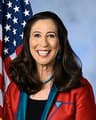 Teresa Leger Fernandez
Democrat · New Mexico
 Rick Larsen
Democrat · Washington
 Stephen Lynch
Democrat · Massachusetts
 Ted Lieu
Democrat · California
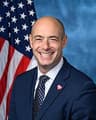 Greg Landsman
Democrat · Ohio
 Summer Lee
Democrat · Pennsylvania
 George Latimer
Democrat · New York
 Betty McCollum
Democrat · Minnesota
 Gwen Moore
Democrat · Wisconsin
 Doris Matsui
Democrat · California
 Seth Moulton
Democrat · Massachusetts
 Lucy McBath
Democrat · Georgia
 Morgan McGarvey
Democrat · Kentucky
 Seth Magaziner
Democrat · Rhode Island
 Robert Menendez
Democrat · New Jersey
 Jennifer McClellan
Democrat · Virginia
 LaMonica McIver
Democrat · New Jersey
 April McClain Delaney
Democrat · Maryland
 Kristen McDonald Rivet
Democrat · Michigan
 Sarah McBride
Democrat · Delaware
 Jerrold Nadler
Democrat · New York
 Eleanor Norton
Democrat · District of Columbia
 Donald Norcross
Democrat · New Jersey
 Nancy Pelosi
Democrat · California
 Chellie Pingree
Democrat · Maine
 Mark Pocan
Democrat · Wisconsin
 Chris Pappas
Democrat · New Hampshire
 Brittany Pettersen
Democrat · Colorado
 Deborah Ross
Democrat · North Carolina
 Jamie Raskin
Democrat · Maryland
 Delia Ramirez
Democrat · Illinois
 Luz Rivas
Democrat · California
 Josh Riley
Democrat · New York
 Adam Smith
Democrat · Washington
 Janice Schakowsky
Democrat · Illinois
 Linda Sánchez
Democrat · California
 Terri Sewell
Democrat · Alabama
 Eric Swalwell
Democrat · California
 Greg Stanton
Democrat · Arizona
 Haley Stevens
Democrat · Michigan
 Melanie Stansbury
Democrat · New Mexico
 Hillary Scholten
Democrat · Michigan
 Andrea Salinas
Democrat · Oregon
 Suhas Subramanyam
Democrat · Virginia
 Lateefah Simon
Democrat · California
 Bennie Thompson
Democrat · Mississippi
 Dina Titus
Democrat · Nevada
 Paul Tonko
Democrat · New York
 Rashida Tlaib
Democrat · Michigan
 Jill Tokuda
Democrat · Hawaii
 Shri Thanedar
Democrat · Michigan
 Lauren Underwood
Democrat · Illinois
 Juan Vargas
Democrat · California
 Eugene Vindman
Democrat · Virginia
 Maxine Waters
Democrat · California
 Nikema Williams
Democrat · Georgia
 Debbie Wasserman Schultz
Democrat · Florida
 Frederica Wilson
Democrat · Florida
 James Walkinshaw
Democrat · Virginia