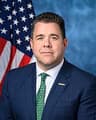
Nick LaLota (R-NY)
Veterans Foreign Medical Coverage Equality and Modernization Act of 2025
A Republican bill with 16 Democratic cosponsors · See all 22 cosponsors
Last activity — Referred to the Subcommittee on Health.
In committee
Introduced and handed to a committee in the chamber it started in.
The committee holds it, and most bills are never heard from again. A hearing or a committee vote would be news; silence is the usual outcome, and it kills the bill without anyone voting against it.
Its path through Congress
- Introduced
- In Committee
What this bill would do
This bill, known as the ``Veterans Foreign Medical Coverage Equality and Modernization Act of 2025'', seeks to amend title 38 of the United States Code. It requires the Department of Veterans Affairs to provide hospital care and medical services to veterans with service-connected disabilities rated as permanent and total even when they are outside of a State. The bill also mandates specific methods for making reimbursements more efficient through direct deposit. Additionally, it requires the use of mobile applications for digital submission, real-time tracking, and access to important documents. The Secretary of Veterans Affairs must submit a report to Congress regarding the implementation and efficacy of these changes within two years.
Yes
- Scored +7
Would veterans be better off under this, taking everything together?
The bill improves access to medical services across state lines and streamlines the reimbursement process through digital tools and direct deposit.
- Scored +7
Does this help veterans get medical care?
The bill expands medical coverage for veterans with permanent and total service-connected disabilities to include care outside of their home state.
- Scored +7
Does this increase the pay, pensions or support veterans receive?
The bill modernizes veteran benefits through digital tracking, faster direct deposit reimbursements, and expanded geographic access to care.
The opposite
No question was scored the opposite.
Who it would affect, and how
Potential Positive Impacts for People
-
Expanded Medical Access: The Secretary shall furnish hospital care and medical services outside a State to veterans with service-connected disabilities rated as permanent and total, provided the care meets standard medical practice and any prescribed medication is FDA approved (Section 2(a)(1)).
-
Faster Reimbursements: Reimbursements to veterans and medical providers can be made via direct deposit to expedite the process, improve efficiency, and reduce administrative costs (Section 2(a)(2)(A)).
-
Improved Digital Tools: Mobile applications will allow for the digital submission and real-time tracking of forms and documentation needed for care or reimbursement (Section 2(a)(2)(B)).
-
Easier Access to Documentation: Mobile applications will provide availability for benefits authorization letters, predetermination letters, or continuity of care documents (Section 2(a)(2)(B)).
Potential Negative Impacts for People
- No negative impacts or burdens are explicitly stated in the provided text.
Groups and Interests Ranking
Every group the model scored this bill for, from -10 to +10. Tap or hover a score for the reason it gave.
- Demographic And Interest Groups
- Would veterans be better off under this, taking everything together? — The bill improves access to medical services across state lines and streamlines the reimbursement process through digital tools and direct deposit.
- Healthcare
- Does this help veterans get medical care? — The bill expands medical coverage for veterans with permanent and total service-connected disabilities to include care outside of their home state.
- National Security And Foreign Policy
- Does this increase the pay, pensions or support veterans receive? — The bill modernizes veteran benefits through digital tracking, faster direct deposit reimbursements, and expanded geographic access to care.
- 8/31/2026
- 1 Cosponsor added.
- 6/23/2026
- 1 Cosponsor added.
- 11/7/2025
- 1 Cosponsor added.
- 8/26/2025
- 1 Cosponsor added.
- 8/15/2025
- 1 Cosponsor added.
- 8/5/2025
- 1 Cosponsor added.
- 7/14/2025
- 1 Cosponsor added.
- 7/10/2025
- 2 Cosponsors added.
- 6/5/2025
- 1 Cosponsor added.
- 5/20/2025
- 1 Cosponsor added.
- 5/15/2025
- 1 Cosponsor added.
- 4/24/2025
- 1 Cosponsor added.
- 4/14/2025
- 1 Cosponsor added.
- 4/7/2025
- 1 Cosponsor added.
- 3/27/2025
- 1 Cosponsor added.
- 3/18/2025
- 1 Cosponsor added.
- 3/6/2025
- 1 Cosponsor added.
- 3/5/2025
- 1 Cosponsor added.
- 2/24/2025
- 1 Cosponsor added.
- 2/20/2025
- Referred to the Subcommittee on Health.
- 2/4/2025
- 1 Cosponsor added.
- 1/22/2025
- 1 Cosponsor added.
- 1/15/2025
- Referred to the House Committee on Veterans' Affairs.
- Introduced in House
 Henry Cuellar
Democrat · Texas
 André Carson
Democrat · Indiana
 J. Correa
Democrat · California
 Gilbert Cisneros
Democrat · California
 Donald Davis
Democrat · North Carolina
 Veronica Escobar
Democrat · Texas
 Brian Fitzpatrick
Republican · Pennsylvania
 Josh Gottheimer
Democrat · New Jersey
 Andrew Garbarino
Republican · New York
 Laura Gillen
Democrat · New York
 Timothy Kennedy
Democrat · New York
 Susie Lee
Democrat · Nevada
 Michael Lawler
Republican · New York
 Nicole Malliotakis
Republican · New York
 Maria Salazar
Republican · Florida
 Thomas Suozzi
Democrat · New York
 Kim Schrier
Democrat · Washington
 Eric Sorensen
Democrat · Illinois
 Dina Titus
Democrat · Nevada
 Shri Thanedar
Democrat · Michigan
 Jefferson Van Drew
Republican · New Jersey
 Eugene Vindman
Democrat · Virginia