
A Democratic bill with 52 Democratic cosponsors · See all 52 cosponsors
Last activity — Referred to the House Committee on Energy and Commerce.
In committee
Introduced and handed to a committee in the chamber it started in.
The committee holds it, and most bills are never heard from again. A hearing or a committee vote would be news; silence is the usual outcome, and it kills the bill without anyone voting against it.
Its path through Congress
- Introduced
- In Committee
What this bill would do
The Access to Birth Control Act seeks to amend the Public Health Service Act to establish specific duties for pharmacies regarding contraception. It requires pharmacies that receive FDA-approved contraceptives in interstate commerce to provide these items to customers without delay if they are in stock. If a product is not in stock, the pharmacy must offer to locate a different pharmacy or order the item through expedited procedures. The bill also prohibits pharmacies from creating intimidating environments or having employees obstruct, misrepresent, or breach medical confidentiality regarding contraceptive requests. Furthermore, it establishes civil penalties for violations and allows aggrieved individuals to bring private lawsuits.
Yes· 3 of 16
- Scored +8
Would women be better off under this?
Directly supports reproductive autonomy and consistent access to essential health services.
- Scored +8
Does this make health care easier to get in general?
The bill significantly improves healthcare access by mandating the provision of contraceptives and preventing pharmacy-level obstructions.
- Scored +7
Does this narrow the gap between how men and women are treated?
By securing access to contraception, the bill supports reproductive autonomy and gender equality.
The opposite
- Scored -5
Would business owners be better off under this?
Imposes potential financial liabilities and legal risks on pharmacies and business owners.
- Scored -4
Does this leave more decisions to the states?
The bill limits the ability of states or individual providers to restrict access to contraception.
- Scored -3
Does this protect the freedom to practise a religion?
The bill limits certain religious freedom defenses regarding the provision of contraceptive services.
Who it would affect, and how
Potential Positive Impacts for People
-
Ensuring Access to Medication: If a customer requests a contraceptive or related medication that is currently in stock, the pharmacy must provide it without delay (Section 3, subsection a, clause 1).
-
Assistance with Out-of-Stock Items: If a pharmacy stocks contraception but does not have the specific item requested, they must offer to locate a pharmacy of the customer's choice or order the item through expedited procedures (Section 3, subsection a, clause 2).
-
Protection from Harassment and Obstruction: The bill mandates that pharmacies do not operate environments where customers are intimidated, threatened, or harassed, and ensures employees do not obstruct the delivery of services (Section 3, subsection a, clause 3, subclauses A and B).
-
Preservation of Privacy: The pharmacy is prohibited from having employees who breach or threaten to breach medical confidentiality regarding a request for contraception (Section 3, subsection a, clause 3, subclause D).
-
Right to Return Prescriptions: Employees are prohibited from refusing to return a valid, lawful prescription for contraception or related medication upon the customer's request (Section 3, subsection a, clause 3, subclause E).
-
Legal Recourse for Violations: Individuals who are aggrieved by a pharmacy's violation of these requirements can file a civil action to seek relief, including actual and punitive damages (Section 3, subsection f, clause 2).
Potential Negative Impacts for People
-
Financial Liability for Pharmacies: Pharmacies that violate these requirements may be liable for civil penalties up to $1,000 per day of violation, with a cap of $100,000 for all violations in a single proceeding (Section 3, subsection f, clause 1).
-
Legal Risks from Private Lawsuits: Any aggrieved person can commence a civil action against a pharmacy in a court of competent jurisdiction, which includes the potential for paying attorney's fees and costs (Section 3, subsection f, clause 2).
Groups and Interests Ranking
Every group the model scored this bill for, from -10 to +10. Tap or hover a score for the reason it gave.
- Demographic And Interest Groups
- Would women be better off under this? — Directly supports reproductive autonomy and consistent access to essential health services. Would Hispanic Americans be better off under this? — Directly targets barriers often experienced by Hispanic women in accessing contraception. Would households on low incomes be better off under this? — Ensures reliable access to essential medications that can be critical for budget management. Would Black Americans be better off under this? — Addresses inequities in health care access highlighted in the bill's findings. Would Asian Americans be better off under this? — Helps mitigate documented challenges in accessing contraceptive care. Would immigrants be better off under this? — Helps overcome reported barriers related to immigration status in accessing care. Would Native Americans be better off under this? — Improves access for communities facing systemic healthcare inequities. Would people in their twenties and thirties be better off under this? — Access to contraception is highly relevant to young adults managing reproductive health. Would people in middle age be better off under this? — Provides essential health services relevant to middle-aged populations. Would students be better off under this? — Supports reproductive health autonomy essential for educational and professional goals. Would business owners be better off under this? — Imposes potential financial liabilities and legal risks on pharmacies and business owners.
- Social Issues And Justice
- Does this narrow the gap between how men and women are treated? — By securing access to contraception, the bill supports reproductive autonomy and gender equality. Does this narrow racial gaps in how people are treated? — The bill addresses systemic barriers that disproportionately affect communities of color in accessing reproductive care. Does this protect the freedom to practise a religion? — The bill limits certain religious freedom defenses regarding the provision of contraceptive services.
- Healthcare
- Does this make health care easier to get in general? — The bill significantly improves healthcare access by mandating the provision of contraceptives and preventing pharmacy-level obstructions.
- Economy And Finance
- Does this give people more protection from unfair business practices? — The bill enhances consumer protection by ensuring access to medication and establishing legal recourse for pharmacy failures.
- Governance And Ideology
- Does this protect people from being watched or searched? — The bill includes strong provisions to protect medical confidentiality regarding contraceptive requests. Does this give the federal government more power? — The bill expands federal oversight and enforcement capabilities over pharmacy operations. Does this leave more decisions to the states? — The bill limits the ability of states or individual providers to restrict access to contraception.
- 9/10/2026
- 2 Cosponsors added.
- 8/10/2026
- 1 Cosponsor added.
- 6/8/2026
- 1 Cosponsor added.
- 4/6/2026
- 1 Cosponsor added.
- 1/22/2026
- 1 Cosponsor added.
- 12/17/2025
- 1 Cosponsor added.
- 7/21/2025
- 1 Cosponsor added.
- 7/2/2025
- 2 Cosponsors added.
- 6/25/2025
- 1 Cosponsor added.
- 6/23/2025
- Referred to the House Committee on Energy and Commerce.
- 41 Cosponsors added.
- Introduced in House
2 bills Congress.gov lists as related to this one — companions in the other chamber, earlier versions, and bills this one absorbed or was folded into.
 Julia Brownley
Democrat · California
 Ami Bera
Democrat · California
 Donald Beyer
Democrat · Virginia
 Nanette Barragán
Democrat · California
 Kathy Castor
Democrat · Florida
 Yvette Clarke
Democrat · New York
 Steve Cohen
Democrat · Tennessee
 Judy Chu
Democrat · California
 Troy Carter
Democrat · Louisiana
 Jasmine Crockett
Democrat · Texas
 Diana DeGette
Democrat · Colorado
 Rosa DeLauro
Democrat · Connecticut
 Christopher Deluzio
Democrat · Pennsylvania
 Mark DeSaulnier
Democrat · California
 Debbie Dingell
Democrat · Michigan
 Bill Foster
Democrat · Illinois
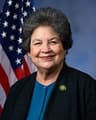 Lois Frankel
Democrat · Florida
 Lizzie Fletcher
Democrat · Texas
 Valerie Foushee
Democrat · North Carolina
 John Garamendi
Democrat · California
 Josh Gottheimer
Democrat · New Jersey
 Jimmy Gomez
Democrat · California
 Sylvia Garcia
Democrat · Texas
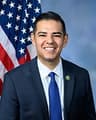 Robert Garcia
Democrat · California
 Daniel Goldman
Democrat · New York
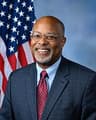 Glenn Ivey
Democrat · Maryland
 Henry Johnson
Democrat · Georgia
 John Larson
Democrat · Connecticut
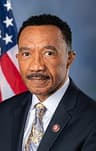 Kweisi Mfume
Democrat · Maryland
 Betty McCollum
Democrat · Minnesota
 Doris Matsui
Democrat · California
 Seth Moulton
Democrat · Massachusetts
 Jennifer McClellan
Democrat · Virginia
 Analilia Mejia
Democrat · New Jersey
 Eleanor Norton
Democrat · District of Columbia
 Ilhan Omar
Democrat · Minnesota
 Mark Pocan
Democrat · Wisconsin
 Delia Ramirez
Democrat · Illinois
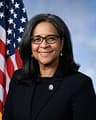 Marilyn Strickland
Democrat · Washington
 Terri Sewell
Democrat · Alabama
 Eric Swalwell
Democrat · California
 Mary Gay Scanlon
Democrat · Pennsylvania
 Mikie Sherrill
Democrat · New Jersey
 Melanie Stansbury
Democrat · New Mexico
 Andrea Salinas
Democrat · Oregon
 Paul Tonko
Democrat · New York
 Rashida Tlaib
Democrat · Michigan
 Lori Trahan
Democrat · Massachusetts
 Shri Thanedar
Democrat · Michigan
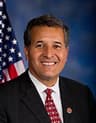 Juan Vargas
Democrat · California
 Marc Veasey
Democrat · Texas
 Nikema Williams
Democrat · Georgia