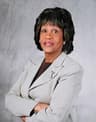
Maxine Waters (D-CA)
Downpayment Toward Equity Act of 2025
A Democratic bill with 29 Democratic cosponsors · See all 29 cosponsors
Last activity — Referred to the House Committee on Financial Services.
In committee
Introduced and handed to a committee in the chamber it started in.
The committee holds it, and most bills are never heard from again. A hearing or a committee vote would be news; silence is the usual outcome, and it kills the bill without anyone voting against it.
Its path through Congress
- Introduced
- In Committee
What this bill would do
The Downpayment Toward Equity Act of 2025 establishes a program where the Secretary of Housing and Urban Development provides grants to States and eligible entities. These funds are intended to provide financial assistance to first-generation homebuyers for acquiring owner-occupied primary residences. The assistance covers costs such as downpayments, closing costs, interest rate reductions, and certain home modifications. Eligibility is based on income limits and the homebuyer's status as a first-generation purchaser. The bill aims to address multigenerational inequities and close the racial homeownership gap in the United States.
Yes· 3 of 22
- Scored +9
Does this make housing cost less?
The bill provides significant financial assistance for downpayments and closing costs to help people acquire primary residences.
- Scored +8
Would households on low incomes be better off under this?
The bill provides direct financial assistance to households meeting specific income thresholds.
- Scored +8
Does this narrow racial gaps in how people are treated?
The bill specifically targets closing the racial homeownership gap through targeted assistance for first-generation homebuyers.
The opposite
No question was scored the opposite.
Who it would affect, and how
Potential Positive Impacts for People
-
Financial Assistance for Home Acquisition: Qualified homebuyers can receive assistance for downpayments, closing costs, and costs to reduce mortgage interest rates (Section 2(c)(2)(A)).
-
Support for Home Accessibility: The bill allows for funds to be used for pre-occupancy home modifications to accommodate qualified homebuyers or household members with disabilities (Section 2(c)(2)(C)).
-
Affordability through Shared Equity: Assistance can be used for subsidies in shared equity homes to discount the sale price and preserve affordability for future buyers (Section 2(c)(2)(B)).
-
Increased Assistance for Specific Needs: The Secretary has the authority to increase maximum assistance limits for homebuyers who are socially and economically disadvantaged or living in high-cost areas (Section 2(d)(2)).
-
Flexibility for Homebuyers: Assistance can be layered with other financial help from various State, Federal, local, or private sources (Section 2(e)).
Potential Negative Impacts for People
-
Repayment Obligations: If a homebuyer fails to occupy the property as their primary residence for at least five years, they may be required to repay a proportional amount of the assistance received (Section s4(b)(1)).
-
Mandatory Counseling Requirements: To receive assistance, homebuyers must complete a housing counseling program regarding financial management and responsibilities (Section 6(a)).
Groups and Interests Ranking
Every group the model scored this bill for, from -10 to +10. Tap or hover a score for the reason it gave.
- Demographic And Interest Groups
- Would households on low incomes be better off under this? — The bill provides direct financial assistance to households meeting specific income thresholds. Would Black Americans be better off under this? — The bill explicitly targets groups that have faced historic obstacles to homeownership, including Black Americans. Would Asian Americans be better off under this? — The bill targets racial/ethnic groups that have faced historic obstacles to homeownership, including Asian Americans. Would Hispanic Americans be better off under this? — The bill targets racial/ethnic groups that have faced historic obstacles to homeownership, including Hispanic Americans. Would Native Americans be better off under this? — The bill targets racial/ethnic groups that have faced historic obstacles to homeownership, including Native Americans. Would people with disabilities be better off under this? — The bill allows for funds to be used for home modifications to accommodate disabilities. Would middle-income households be better off under this? — The program provides a pathway to homeownership for those near the median income. Would veterans be better off under this, taking everything together? — The bill includes mortgage options that can be guaranteed for the benefit of a veteran. Would people in their twenties and thirties be better off under this? — First-generation homebuyers are often younger adults looking to establish roots. Would people in cities be better off under this? — The bill provides assistance for residents in high-cost areas, which are often urban. Would people in rural areas be better off under this? — The bill includes support through the Rural Housing Administrator.
- Social Issues And Justice
- Does this make housing cost less? — The bill provides significant financial assistance for downpayments and closing costs to help people acquire primary residences. Does this narrow racial gaps in how people are treated? — The bill specifically targets closing the racial homeownership gap through targeted assistance for first-generation homebuyers. Does this expand the rights of people with disabilities? — The bill allows grant funds to be used for pre-occupancy home modifications to accommodate members of the household with disabilities. Is this likely to lift people out of poverty? — By facilitating homeownership, the bill aims to build equity and wealth for lower-income households. Is this likely to reduce homelessness? — Increasing homeownership opportunities can provide stability that helps reduce housing insecurity.
- Governance And Ideology
- Does this make what the government does easier for the public to see? — The bill requires the Secretary to submit and make public annual reports including demographic data. Does this give the federal government more power? — The bill grants the Secretary of HUD significant authority to establish requirements and allocate funds to states. Does this protect people from being watched or searched? — The bill includes specific privacy protections for sensitive applicant data.
- National Security And Foreign Policy
- Does this increase the pay, pensions or support veterans receive? — The bill allows assistance to be used for mortgages that are guaranteed for the benefit of a veteran.
- Education And Technology
- Does this give people more control over their personal data? — The bill mandates that states establish data privacy and security requirements for applicant information.
- Environment Energy And Infrastructure
- Does this invest in rural communities? — The bill includes provisions for the Rural Housing Administrator to assist in mortgage guarantees.
- 10/29/2026
- 1 Cosponsor added.
- 10/9/2026
- 1 Cosponsor added.
- 10/5/2026
- 2 Cosponsors added.
- 7/22/2026
- 1 Cosponsor added.
- 6/3/2026
- 1 Cosponsor added.
- 4/27/2026
- 1 Cosponsor added.
- 4/20/2026
- 1 Cosponsor added.
- 3/26/2026
- 1 Cosponsor added.
- 10/17/2025
- 1 Cosponsor added.
- 9/18/2025
- 1 Cosponsor added.
- 7/22/2025
- 1 Cosponsor added.
- 7/2/2025
- 3 Cosponsors added.
- 6/26/2025
- 11 Cosponsors added.
- 6/23/2025
- Referred to the House Committee on Financial Services.
- 3 Cosponsors added.
- Introduced in House
One bill Congress.gov lists as related to this one — companions in the other chamber, earlier versions, and bills this one absorbed or was folded into.
 Yassamin Ansari
Democrat · Arizona
 Joyce Beatty
Democrat · Ohio
 Everton Blair
Democrat · Georgia
 Emanuel Cleaver
Democrat · Missouri
 André Carson
Democrat · Indiana
 Salud Carbajal
Democrat · California
 Dwight Evans
Democrat · Pennsylvania
 Cleo Fields
Democrat · Louisiana
 Valerie Foushee
Democrat · North Carolina
 Al Green
Democrat · Texas
 Sylvia Garcia
Democrat · Texas
 Adelita Grijalva
Democrat · Arizona
 Teresa Leger Fernandez
Democrat · New Mexico
 James McGovern
Democrat · Massachusetts
 Seth Moulton
Democrat · Massachusetts
 Seth Magaziner
Democrat · Rhode Island
 Eleanor Norton
Democrat · District of Columbia
 Ilhan Omar
Democrat · Minnesota
 Ayanna Pressley
Democrat · Massachusetts
 Brittany Pettersen
Democrat · Colorado
 Delia Ramirez
Democrat · Illinois
 Emily Randall
Democrat · Washington
 Emilia Sykes
Democrat · Ohio
 Rashida Tlaib
Democrat · Michigan
 Ritchie Torres
Democrat · New York
 Lauren Underwood
Democrat · Illinois
 Juan Vargas
Democrat · California
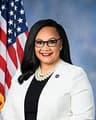 Nikema Williams
Democrat · Georgia
 Frederica Wilson
Democrat · Florida