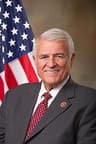
John Carter (R-TX)· Jun 25, 2025
H.Amdt. 34: Its purpose is not yet published.
Adopted
By voice vote, no names recorded
John Carter (R-TX)
A Republican bill with no cosponsors
Last activity — Message on House action received in Senate and at desk: House requests a conference.
Passed both chambers, not yet sent to the President
Both the House and the Senate have passed it, though not necessarily the same text.
If the two chambers passed identical wording, the final copy is being prepared for the President. If they did not, one chamber must accept the other's version or the two negotiate a single one — nothing goes to the President until the text is identical.
This bill, the "Military Construction and Veterans Affairs, Agriculture, and Legislative Branch Appropriations Act, 2026," provides comprehensive funding for various government departments. It includes appropriations for military construction across the Army, Navy, Air Force, and National Guard, alongside significant support for the Department of Veterans Affairs. The legislation allocates resources for agricultural research, rural development, food safety, and national nutrition programs like SNAP and WIC. Additionally, it funds the Legislative Branch, including the Capitol Police and the Library of Congress, and addresses rural housing, water systems, and broadband access. Various restrictions are placed on how funds may be used, particularly regarding foreign-sourced products and specific agency movements.
Does this make mental health care easier to get?
The bill funds suicide prevention outreach programs and the operation of the Veterans Crisis Line.
Would households on low incomes be better off under this?
The bill increases support through SNAP, WIC, and rural housing assistance programs.
Would women be better off under this?
The bill provides funding for prosthetic research specifically for female veterans and WIC support.
No question was scored the opposite.
7 recorded votes have been taken on this bill. 3 of them decided something; the rest moved it along.
06/25/2025 · Roll call 182 · recorded as “On Passage”
08/01/2025 · Roll call 480 · recorded as “On Passage of the Bill H.R. 3944”
09/11/2025 · Roll call 263 · recorded as “On Motion to Instruct Conferees”
06/25/2025 · Roll call 181 · recorded as “On Motion to Recommit”
07/22/2025 · Roll call 422 · recorded as “On the Motion to Proceed H.R. 3944”
07/22/2025 · Roll call 423 · recorded as “On Cloture on the Motion to Proceed H.R. 3944”
07/23/2025 · Roll call 428 · recorded as “On the Motion to Proceed H.R. 3944”
Support for Military Housing: The bill provides significant funds for the construction and operation of family housing for the Army, Navy, Air Force, and Defense-Wide agencies, which supports the quality of life for military families. (Sec. 2, Division A)
Veterans Health Care: Large sums are allocated for medical services, community care, and research, including specific funds for prosthetic research for female veterans and toxic exposure research. (Sec. 2, Division A)
Veterans Benefits: Funding is provided for compensation, pensions, readjustment benefits, and various insurance and housing assistance programs for veterans. (Sec. 2, Division A)
Suicide Prevention and Mental Health: The bill includes specific funding for suicide prevention outreach programs and the operation of the Veterans Crisis Line. (Sec. 2, Division A)
Fertility and Adoption Support: Funds are made available to provide fertility counseling, treatment using assisted reproductive technology, and adoption reimbursement to covered veterans. (Sec. 2, Division A)
Indigenous Food Sovereignty and Education: Funds are set aside to continue a Tribal Public Health Resource Center to improve public health services in American Indian communities (Division B, Title I), as well as $11,880,000 for the Native American Institutions Endowment Fund and education grants for Alaska Native and Native Hawaiian-serving institutions (National Institute of Food and Agriculture).
Food Security for Low-Income Families: Large sums are allocated to the Supplemental Nutrition Assistance Program ($118,139,341,000) and the Special Supplemental Nutrition Program for Women, Infants, and Children ($8,200,000,000) to assist those in need (Food and Nutrition Service).
Support for Tribal Education and Food Security: A $2,000,000 pilot program provides grants to Indian tribes and organizations to operate and implement school lunch, breakfast, and child care programs (Sec. 751), while requirements for adequate monitoring ensure emergency food aid reaches intended beneficiaries (Sec. 741).
Bison Production and Processing Support: A $2,000,000 grant program supports the production and marketing of bison (Sec. 753), and $700,000 is provided to cover costs for slaughtering, processing, and meat inspection for bison owned by Tribal governments and members (Sec. 754).
Rural Infrastructure and Housing: Significant funds are directed toward rural housing insurance, including loans for single-family homes and assistance for multi-family rental housing (Rural Housing Service), a $2,000,000 pilot program to help non-profits and public housing authorities acquire multi-family properties to prevent loss of affordable housing (Sec. 740), and a broadband loan and grant pilot program to increase internet access in rural areas (Distance Learning, Telemedicine, and Broadband Program).
Rural Energy Assistance: A $4,000,000 pilot program supports "Energy Circuit Riders" to help rural communities with energy planning and projects that reduce emissions (Sec. 778).
Economic Development in Poor Areas: At least 10 percent of funds for various rural programs must be allocated to assistance in persistent poverty counties (General Provisions).
Protection of Congressional Staff and the Blind: The act extends protections provided by the Pump Act to congressional staff (Sec. 212) and includes $650,000 to provide newspapers to blind and print disabled residents at no cost (Legislative Branch - Library of Congress).
Restrictions on Land and Construction: Limitations on the purchase of land or land easements could impact project planning if values exceed 100 percent of the determined value (Sec. 105, Division A), and funds for major construction cannot be used for projects not previously notified to or approved by Congress, which could delay developments (Sec. 124, Division A).
Information Technology and Information Sharing Constraints: The bill prohibits the procurement of certain information technology equipment from specific entities (Sec. 257, Division A) and prohibits using funds to respond to questions or reports resulting from the congressional appropriations hearing process (General Provisions).
Restrictions on Research and Health Information: The use of canines, felines, or non-human primates in research is heavily restricted and requires specific approval (Sec. 246, Division A), and funds cannot be used to implement rules requiring health care professionals to receive drug or biological product information electronically instead of on paper (General Provisions).
Restrictions on Food Variety and Safety: The bill prevents the use of funds to implement rules restricting the substitution of certain vegetable subgroups for fruits in school breakfast programs (General Provisions), and funds cannot be used to enforce specific standards regarding the growing, harvesting, packing, and holding of wine grapes, hops, pulse crops, or almonds (General Provisions).
Food Sourcing and FDA Guideline Restrictions: The bill prohibits using funds to procure poultry or seafood imported from the People's Republic of China for school lunch, breakfast, or child and adult care programs (Sec. 742). Additionally, the FDA is prohibited from issuing new guidelines for low-risk ready-to-eat foods regarding Listeria monocytogenes until new science is considered (Sec. 752), and cannot develop or promote new guidelines for population-wide sodium reduction until specific survey results are published (Sec. 776).
Agency and Personnel Restrictions: The bill prevents the Secretary of Agriculture from moving staff offices or agencies to different mission areas without specific legislation (Sec. 745), and no cost of living adjustments are permitted for Members of Congress during fiscal year 2026 (Sec. 211).
Every group the model scored this bill for, from -10 to +10. Tap or hover a score for the reason it gave.
The changes one chamber made to the other chamber’s version, as it passed them
John Carter (R-TX)· Jun 25, 2025
Adopted
By voice vote, no names recorded
John Carter (R-TX)· Jun 25, 2025
Adopted
219206
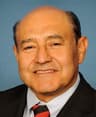
J. Correa (D-CA)· Jun 25, 2025
Adopted
By voice vote, no names recorded
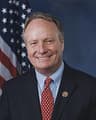
David Joyce (R-OH)· Jun 25, 2025
Adopted
By voice vote, no names recorded

Tina Smith (D-MN)· Aug 1, 2025
Adopted
With no one objecting, no names recorded

Rand Paul (R-KY)· Aug 1, 2025
Adopted
With no one objecting, no names recorded

John Cornyn (R-TX)· Aug 1, 2025
Adopted
With no one objecting, no names recorded
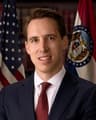
Josh Hawley (R-MO)· Aug 1, 2025
Adopted
With no one objecting, no names recorded
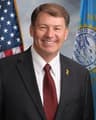
Mike Rounds (R-SD)· Aug 1, 2025
Adopted
With no one objecting, no names recorded
Mike Rounds (R-SD)· Aug 1, 2025
Adopted
With no one objecting, no names recorded
6 bills Congress.gov lists as related to this one — companions in the other chamber, earlier versions, and bills this one absorbed or was folded into.