A Republican bill with 24 Republican cosponsors · See all 24 cosponsors
Last activity — Referred to the Subcommittee on Highways and Transit.
In committee
Introduced and handed to a committee in the chamber it started in.
The committee holds it, and most bills are never heard from again. A hearing or a committee vote would be news; silence is the usual outcome, and it kills the bill without anyone voting against it.
Its path through Congress
- Introduced
- In Committee
What this bill would do
This bill, known as "Connor's Law," seeks to amend title 49 of the United States Code regarding commercial motor vehicle drivers. It aims to establish specific English language requirements for these operators. Drivers would need to be able to read and speak English well enough to talk to the public, understand road signs, answer official questions, and complete records. If a driver is found to be noncompliant with these standards, an enforcement officer can declare them out of service.
Yes
- Scored +2
Does this give the federal government more power?
The bill expands federal oversight regarding the linguistic qualifications of commercial drivers.
- Scored +1
Would people in cities be better off under this?
Increased driver communication proficiency may improve safety in high-traffic urban areas.
- Scored +1
Does this give people more protection from unfair business practices?
Enhanced communication standards for commercial drivers may improve safety and consumer protection on public roads.
The opposite· 3 of 4
- Scored -5
Would immigrants be better off under this?
The bill creates potential barriers to employment for immigrant populations who may not meet English proficiency standards.
- Scored -4
Would Hispanic Americans be better off under this?
The English proficiency requirements may disproportionately negatively impact Hispanic American drivers.
- Scored -3
Does this narrow racial gaps in how people are treated?
Language requirements may disproportionately affect non-native English speaking populations and immigrant communities.
Who it would affect, and how
Potential Positive Impacts for People
-
Improved Communication and Safety: The bill requires drivers to be able to converse with the general public and understand highway traffic signs and signals (Section 2(a)(3)). This could ensure clearer communication on the roads.
-
Enhanced Documentation Accuracy: The requirement for drivers to be able to make entries on reports and records (Section 2(a)(3)) may ensure that important motor vehicle documentation is completed correctly.
-
Ability to Interact with Authorities: By requiring drivers to respond to official inquiries (Section 2(a)(3)), the law ensures drivers can communicate effectively during official interactions.
Potential Negative Impacts for People
-
Driver Penalties: Drivers who cannot meet the specific English language requirements can be declared out of service by an authorized enforcement officer (Section 2(b)(1)).
-
Increased Enforcement Actions: The law establishes that a driver can be declared out of service if they are determined to be noncompliant with specific federal regulations regarding language (Section 2(b)(1)).
Groups and Interests Ranking
Every group the model scored this bill for, from -10 to +10. Tap or hover a score for the reason it gave.
- Demographic And Interest Groups
- Would people in cities be better off under this? — Increased driver communication proficiency may improve safety in high-traffic urban areas. Would immigrants be better off under this? — The bill creates potential barriers to employment for immigrant populations who may not meet English proficiency standards. Would Hispanic Americans be better off under this? — The English proficiency requirements may disproportionately negatively impact Hispanic American drivers. Would business owners be better off under this? — The bill may increase operational costs or labor shortages for trucking businesses due to stricter driver requirements.
- Social Issues And Justice
- Does this narrow racial gaps in how people are treated? — Language requirements may disproportionately affect non-native English speaking populations and immigrant communities.
- Governance And Ideology
- Does this give the federal government more power? — The bill expands federal oversight regarding the linguistic qualifications of commercial drivers.
- Economy And Finance
- Does this give people more protection from unfair business practices? — Enhanced communication standards for commercial drivers may improve safety and consumer protection on public roads.
- 4/16/2026
- 1 Cosponsor added.
- 3/18/2026
- 1 Cosponsor added.
- 3/5/2026
- 1 Cosponsor added.
- 3/4/2026
- 1 Cosponsor added.
- 3/3/2026
- 2 Cosponsors added.
- 12/19/2025
- 1 Cosponsor added.
- 11/21/2025
- 1 Cosponsor added.
- 9/8/2025
- 1 Cosponsor added.
- 9/2/2025
- 1 Cosponsor added.
- 8/26/2025
- 2 Cosponsors added.
- 7/2/2025
- 1 Cosponsor added.
- 6/25/2025
- 1 Cosponsor added.
- 6/9/2025
- 1 Cosponsor added.
- 6/5/2025
- 2 Cosponsors added.
- 6/3/2025
- 1 Cosponsor added.
- 6/2/2025
- 1 Cosponsor added.
- 5/24/2025
- Referred to the Subcommittee on Highways and Transit.
- 5/23/2025
- Referred to the House Committee on Transportation and Infrastructure.
- 5 Cosponsors added.
- Introduced in House
 James Baird
Republican · Indiana
 Tom Barrett
Republican · Michigan
 Sheri Biggs
Republican · South Carolina
 Ken Calvert
Republican · California
 Mike Collins
Republican · Georgia
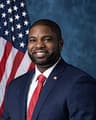 Byron Donalds
Republican · Florida
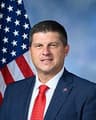 Brad Finstad
Republican · Minnesota
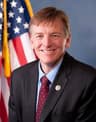 Paul Gosar
Republican · Arizona
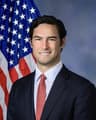 Brandon Gill
Republican · Texas
 Harriet Hageman
Republican · Wyoming
 Doug LaMalfa
Republican · California
 Julia Letlow
Republican · Louisiana
 Mary Miller
Republican · Illinois
 Barry Moore
Republican · Alabama
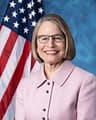 Mariannette Miller-Meeks
Republican · Iowa
 Mark Messmer
Republican · Indiana
 Addison McDowell
Republican · North Carolina
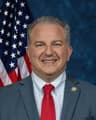 Jimmy Patronis
Republican · Florida
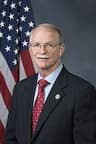 John Rutherford
Republican · Florida
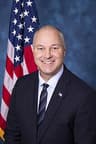 Pete Stauber
Republican · Minnesota
 W. Steube
Republican · Florida
 Derek Schmidt
Republican · Kansas
 Beth Van Duyne
Republican · Texas
 Derrick Van Orden
Republican · Wisconsin