
A Republican bill with 12 Democratic cosponsors · See all 25 cosponsors
Last activity — Referred to the Committee on Ways and Means, and in addition to the Committees on Energy and Commerce, and Science, Space, and Technology, for a period to be subsequently determined by the Speaker, in each case for consideration of such provisions as fall within the jurisdiction of the committee concerned.
In committee
Introduced and handed to a committee in the chamber it started in.
The committee holds it, and most bills are never heard from again. A hearing or a committee vote would be news; silence is the usual outcome, and it kills the bill without anyone voting against it.
Its path through Congress
- Introduced
- In Committee
What this bill would do
The Protecting Circuit Boards and Substrates Act aims to encourage the domestic manufacturing of printed circuit boards and integrated circuit substrates. It establishes a tax credit for taxpayers who purchase or acquire these components fabricated within the United States. Additionally, the bill creates a financial assistance program managed by the Secretary of Commerce to fund the construction, expansion, or modernization of domestic manufacturing and research facilities. This program includes specific requirements for workforce training and community investment for larger entities. The act also sets aside $3,000,000,000 for fiscal year 2026 to support these industrial goals.
Yes· 3 of 19
- Scored +7
Does this make it easier to run a small business?
The bill provides specific preferences for small businesses in the financial assistance program.
- Scored +7
Does this put more money into scientific research?
The bill provides significant funding for manufacturing and research and development.
- Scored +6
Would business owners be better off under this?
Provides tax credits and direct financial assistance for industry investments.
The opposite
No question was scored the opposite.
Who it would affect, and how
Potential Positive Impacts for People
-
Tax Savings for Businesses: Under Section 2(a), taxpayers can receive a credit equal to 25 percent of the cost paid for printed circuit boards and integrated circuit substrates fabricated in the United States.
-
Job Creation and Training: Section 3(b)(2)(ii) encourages covered entities to make commitments to worker and community investment, specifically through training and education benefits, which can expand employment opportunities for economically disadvantaged individuals.
-
Support for Diverse Businesses: Section 3(b)(2)(F)(i) states that the Secretary shall give preference to applications from small businesses, minority-owned businesses, women-owned businesses, or veteran-owned businesses.
-
Support for Educational Institutions: Section 3(b)(2)(F)(iv) provides preference for workforce training programs that include historically Black colleges or universities, Hispanic-serving institutions, Tribal Colleges or Universities, minority-serving institutions, or rural-serving institutions of higher education.
-
Workforce Advancement: Section 3(b)(2)(F)(iv)(v) promotes the use of workforce training organizations that offer industry-recognized, stackable, and portable credentialing programs.
Potential Negative Impacts for People
-
Financial Risk Due to Delays: Under Section 3(b)(5)(A)(ii), if a project is not commenced and completed by the target dates set by the Secretary, the recipient may have to pay back the award through progressive recovery of up to the full amount.
-
Loss of Funding Due to Research Activities: Section 3(b)(5)(B) allows the Secretary to recover the full amount of an award if a recipient knowingly engages in joint research or technology licensing with a foreign entity of concern related to national security concerns.
-
Strict Requirements for Larger Entities: Under Section 3(b)(2)(ii), covered entities must prove they have a plan to sustain incentives without additional Federal assistance and must secure commitments from regional educational or training entities, which may pose an administrative burden.
Groups and Interests Ranking
Every group the model scored this bill for, from -10 to +10. Tap or hover a score for the reason it gave.
- Demographic And Interest Groups
- Would business owners be better off under this? — Provides tax credits and direct financial assistance for industry investments. Would Black Americans be better off under this? — Preference is given to HBCUs and minority-serving institutions. Would Hispanic Americans be better off under this? — Preference is given to Hispanic-serving institutions. Would Native Americans be better off under this? — Preference is given to Tribal Colleges and Universities. Would veterans be better off under this, taking everything together? — The bill provides preference for veteran-owned businesses. Would women be better off under this? — The bill provides preference for women-owned businesses. Would students be better off under this? — Investment in educational partnerships benefits students through training and placement. Would households on low incomes be better off under this? — The bill includes provisions to expand employment opportunities for economically disadvantaged individuals. Would people in rural areas be better off under this? — The bill provides preference for rural-serving institutions.
- Economy And Finance
- Does this make it easier to run a small business? — The bill provides specific preferences for small businesses in the financial assistance program. Is this likely to grow the economy? — By incentivizing domestic production and R&D, the bill aims to strengthen the US industrial base. Is this likely to create jobs? — The bill incentivizes domestic manufacturing and workforce training which promotes job growth.
- Social Issues And Justice
- Does this narrow the gap between how men and women are treated? — The bill provides preference to women-owned businesses. Does this narrow racial gaps in how people are treated? — The bill gives preference to minority-owned businesses and institutions like HBCUs.
- Education And Technology
- Does this put more money into scientific research? — The bill provides significant funding for manufacturing and research and development.
- Governance And Ideology
- Does this make what the government does easier for the public to see? — The bill requires GAO reviews and reporting to Congress. Does this give the federal government more power? — The bill expands federal involvement in industrial policy through financial assistance and tax credits.
- National Security And Foreign Policy
- Does this better protect the country from computer attacks? — Securing domestic supply chains for circuit boards enhances technological and national security.
- Environment Energy And Infrastructure
- Does this invest in rural communities? — The bill provides preference for rural-serving institutions of higher education.
- 9/16/2026
- 1 Cosponsor added.
- 7/22/2026
- 1 Cosponsor added.
- 6/30/2026
- 1 Cosponsor added.
- 6/2/2026
- 6 Cosponsors added.
- 5/21/2026
- 1 Cosponsor added.
- 5/20/2026
- 1 Cosponsor added.
- 5/19/2026
- 2 Cosponsors added.
- 5/14/2026
- 1 Cosponsor added.
- 5/13/2026
- 1 Cosponsor added.
- 4/16/2026
- 1 Cosponsor added.
- 11/20/2025
- 1 Cosponsor added.
- 11/12/2025
- 1 Cosponsor added.
- 11/7/2025
- 1 Cosponsor added.
- 9/17/2025
- 1 Cosponsor added.
- 9/15/2025
- 1 Cosponsor added.
- 9/3/2025
- 1 Cosponsor added.
- 6/10/2025
- 2 Cosponsors added.
- 5/23/2025
- Referred to the Committee on Ways and Means, and in addition to the Committees on Energy and Commerce, and Science, Space, and Technology, for a period to be subsequently determined by the Speaker, in each case for consideration of such provisions as fall within the jurisdiction of the committee concerned.
- 1 Cosponsor added.
- Introduced in House
 Jack Bergman
Republican · Michigan
 Salud Carbajal
Democrat · California
 Herbert Conaway
Democrat · New Jersey
 Donald Davis
Democrat · North Carolina
 Pat Fallon
Republican · Texas
 Brad Finstad
Republican · Minnesota
 Lance Gooden
Republican · Texas
 Pat Harrigan
Republican · North Carolina
 Raja Krishnamoorthi
Democrat · Illinois
 Nick LaLota
Republican · New York
 James Moylan
Republican · Guam
 Seth Magaziner
Democrat · Rhode Island
 Tim Moore
Republican · North Carolina
 Sarah McBride
Democrat · Delaware
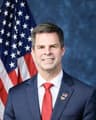 John McGuire
Republican · Virginia
 Joe Neguse
Democrat · Colorado
 Mike Rogers
Republican · Alabama
 Patrick Ryan
Democrat · New York
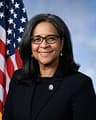 Marilyn Strickland
Democrat · Washington
 Eric Sorensen
Democrat · Illinois
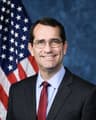 Derek Schmidt
Republican · Kansas
 Suhas Subramanyam
Democrat · Virginia
 Derrick Van Orden
Republican · Wisconsin
 Eugene Vindman
Democrat · Virginia
 Robert Wittman
Republican · Virginia