A Republican bill with 9 Democratic cosponsors · See all 36 cosponsors
Last activity — Became Public Law No: 119-94.
Became law
Passed both chambers and was signed by the President, or became law without a signature.
Nothing more in Congress: it is law. When it takes effect depends on the dates written into it — some parts start at once, others a year or more later.
Its path through Congress
- Introduced
- Passed House voice vote
- Passed Senate unanimous consent
- To President
- Became Law
No one's position on it was recorded: the House by voice vote (members called out yes or no together), and the Senate by unanimous consent (no one objected, so there was no vote).
What this bill would do
The Medal of Sacrifice Act of 2025 establishes a medal to honor law enforcement officers and first responders who were killed in the line of duty. The President is tasked with issuing this medal to eligible local, State, Tribal, territorial, or Federal personnel. A Commission will be created to oversee the design, promotion, and presentation of the medal. This Commission will also investigate cases where there is an official finding of wrongdoing to make a final determination on eligibility. The Act specifically identifies three deputies to receive the initial award.
Yes· 3 of 7
- Scored +1
Would white Americans be better off under this?
The bill provides honor and recognition for specific fallen deputies.
- Scored +1
Would veterans be better off under this, taking everything together?
The bill honors the service and sacrifice of first responders and law enforcement personnel.
- Scored +1
Would people in cities be better off under this?
The bill honors law enforcement and first responders who serve various jurisdictions.
The opposite
- Scored -1
Does this change how police departments operate?
The bill requires a Commission to investigate the circumstances of death and eligibility based on findings of wrongdoing.
Who it would affect, and how
Potential Positive Impacts for People
-
Recognition of Sacrifice: The President shall issue a medal of sacrifice for law enforcement officers and first responders who were killed in the line of duty (Section 2(a)). This provides a formal way to honor those who died while serving.
-
Initial Honorees: The Commission is directed to award the medal to specific individuals: Deputy Ralph
Butch'' Waller, Deputy IgnacioDan'' Diaz, and Deputy Luis Paez (Section 2(c)(6)). -
Symbolism of Honor: The design of the medal uses silver and gold to signify the value and honor associated with the service of the fallen (Section 2(d)).
Potential Negative Impacts for People
-
Exclusion due to Wrongdoing: An officer or first responder who is subject to an official finding of wrongdoing is not eligible for the medal (Section 2(b)(2)(A)).
-
Investigation of Death: In cases of alleged wrongdoing, a Commission must investigate the circumstances surrounding the death, which includes considering findings by the officer's specific agency (Section 2(b)(2)(B)).
-
Definition of Wrongdoing: Eligibility can be denied if a superior officer or agency determines the individual acted outside the scope of their duties or failed to follow official policies and procedures (Section 2(b)(2)(C)).
Groups and Interests Ranking
Every group the model scored this bill for, from -10 to +10. Tap or hover a score for the reason it gave.
- Demographic And Interest Groups
- Would people in cities be better off under this? — The bill honors law enforcement and first responders who serve various jurisdictions. Would veterans be better off under this, taking everything together? — The bill honors the service and sacrifice of first responders and law enforcement personnel. Would white Americans be better off under this? — The bill provides honor and recognition for specific fallen deputies.
- Governance And Ideology
- Does this make what the government does easier for the public to see? — The establishment of a Commission to oversee and determine eligibility creates a formal process for honoring public servants.
- National Security And Foreign Policy
- Does this increase the pay, pensions or support veterans receive? — The bill provides a formal method for honoring the sacrifice of first responders.
- Social Issues And Justice
- Is this likely to lift people out of poverty? — The medal's design includes elements intended to honor the families and widows of the fallen. Does this narrow racial gaps in how people are treated? — The bill provides formal recognition for fallen officers which can include diverse members of the community. Does this change how police departments operate? — The bill requires a Commission to investigate the circumstances of death and eligibility based on findings of wrongdoing.
- Public Law (5/29/2026)
The text as it became law
- Enrolled Bill
The final version, on its way to the President
- 5/28/2026
- Signed by President.
- Became Public Law No: 119-94.
- 5/20/2026
- Presented to President.
- 5/12/2026
- Message on Senate action sent to the House.
- 5/11/2026
- Senate Committee on Homeland Security and Governmental Affairs discharged by Unanimous Consent.
- Passed/agreed to in Senate: Passed Senate without amendment by Unanimous Consent.
- Passed Senate without amendment by Unanimous Consent. (consideration: CR S2204; text: CR S2204)
- 2/3/2026
- Received in the Senate and Read twice and referred to the Committee on Homeland Security and Governmental Affairs.
- 2/2/2026
- Motion to reconsider laid on the table Agreed to without objection.
- Passed/agreed to in House: On motion to suspend the rules and pass the bill, as amended Agreed to by voice vote. (text: CR H1925-1926)
- On motion to suspend the rules and pass the bill, as amended Agreed to by voice vote. (text: CR H1925-1926)
- DEBATE - The House proceeded with forty minutes of debate on H.R. 3497.
- Considered under suspension of the rules. (consideration: CR H1925-1927)
- Mr. Jordan moved to suspend the rules and pass the bill, as amended.
- 1/27/2026
- Reported (Amended) by the Committee on Judiciary. H. Rept. 119-466.
- Placed on the Union Calendar, Calendar No. 399.
- 1/21/2026
- 1 Cosponsor added.
- 1/20/2026
- 1 Cosponsor added.
- 1/16/2026
- 1 Cosponsor added.
- 1/13/2026
- 1 Cosponsor added.
- 1/8/2026
- 1 Cosponsor added.
- 12/23/2025
- 3 Cosponsors added.
- 12/18/2025
- Committee Consideration and Mark-up Session Held
- Ordered to be Reported in the Nature of a Substitute by Voice Vote.
- 2 Cosponsors added.
- 12/17/2025
- 7 Cosponsors added.
- 12/16/2025
- 6 Cosponsors added.
- 12/15/2025
- 4 Cosponsors added.
- 12/12/2025
- 1 Cosponsor added.
- 12/11/2025
- 5 Cosponsors added.
- 11/10/2025
- 1 Cosponsor added.
- 10/3/2025
- 1 Cosponsor added.
- 7/21/2025
- 1 Cosponsor added.
- 5/19/2025
- Referred to the House Committee on the Judiciary.
- Introduced in House
One bill Congress.gov lists as related to this one — companions in the other chamber, earlier versions, and bills this one absorbed or was folded into.
 Andy Barr
Republican · Kentucky
 Tom Barrett
Republican · Michigan
 Ken Calvert
Republican · California
 J. Correa
Democrat · California
 Salud Carbajal
Democrat · California
 Ben Cline
Republican · Virginia
 Byron Donalds
Republican · Florida
 Donald Davis
Democrat · North Carolina
 Neal Dunn
Republican · Florida
 Mike Ezell
Republican · Mississippi
 Lois Frankel
Democrat · Florida
 Brian Fitzpatrick
Republican · Pennsylvania
 Scott Fitzgerald
Republican · Wisconsin
 Tony Gonzales
Republican · Texas
 Marie Perez
Democrat · Washington
 Brandon Gill
Republican · Texas
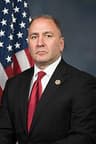 Clay Higgins
Republican · Louisiana
 Laurel Lee
Republican · Florida
 Michael Lawler
Republican · New York
 Jared Moskowitz
Democrat · Florida
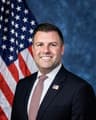 Ryan Mackenzie
Republican · Pennsylvania
 Mark Messmer
Republican · Indiana
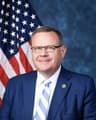 Tim Moore
Republican · North Carolina
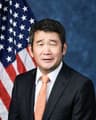 Dave Min
Democrat · California
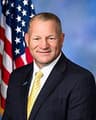 Troy Nehls
Republican · Texas
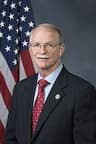 John Rutherford
Republican · Florida
 Maria Salazar
Republican · Florida
 Victoria Spartz
Republican · Indiana
 Thomas Suozzi
Democrat · New York
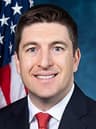 Bryan Steil
Republican · Wisconsin
 W. Steube
Republican · Florida
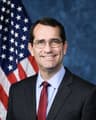 Derek Schmidt
Republican · Kansas
 David Taylor
Republican · Ohio
 Jefferson Van Drew
Republican · New Jersey
 Eugene Vindman
Democrat · Virginia
 Daniel Webster
Republican · Florida