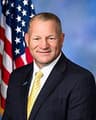
Troy Nehls (R-TX)
Supersonic Aviation Modernization Act
A Republican bill with 1 Democratic cosponsor · See all 10 cosponsors
Last activity — Received in the Senate and Read twice and referred to the Committee on Commerce, Science, and Transportation.
In the other chamber's committee
Passed one chamber and has been handed to a committee in the other.
The committee decides whether it goes any further, and most bills that reach a committee never leave it. A committee that simply does nothing kills a bill without anyone ever voting against it, so no news from here is usually the news.
Its path through Congress
- Introduced
- Passed House voice vote
- In Senate committee
The House by voice vote (members called out yes or no together): no member's position on it was recorded.
What this bill would do
The Supersonic Aviation Modernization Act aims to allow civil aircraft to fly at speeds greater than Mach 1 within the national airspace system. This operation is permitted without special authorization as long as no sonic boom reaches the ground in the United States. The FAA Administrator is tasked with updating regulations to facilitate this change within one year. Additionally, the Administrator must establish noise standards for takeoff and landing by April 1, 2027. These standards require aircraft to meet current subsonic noise levels. The rule will also include a process for periodic updates as technology advances.
Yes· 3 of 9
- Scored +2
Is this likely to create jobs?
The expansion of supersonic travel could stimulate job growth in the aviation and aerospace sectors.
- Scored +2
Is this likely to grow the economy?
Increased aviation efficiency and technology modernization can contribute to broader economic growth.
- Scored +1
Would high-income households be better off under this?
Increased speed of travel may benefit high-income travelers who utilize supersonic aircraft.
The opposite
No question was scored the opposite.
Who it would affect, and how
Potential Positive Impacts for People
-
Increased Speed of Travel: The bill allows civil aircraft to operate at a Mach number greater than 1, provided no sonic boom reaches the ground (Section 2(a)).
-
Technology Updates: The Administrator will establish a process for periodic review and updates to noise standards to reflect future advances in aircraft noise reduction technology (Section 2(c)).
Potential Negative Impacts for People
- Noise Level Restrictions: Civil aircraft must comply with noise standards that prevent them from exceeding the most recent takeoff and landing noise levels required for subsonic aircraft currently in operation (Section 2(b)).
Groups and Interests Ranking
Every group the model scored this bill for, from -10 to +10. Tap or hover a score for the reason it gave.
- Demographic And Interest Groups
- Would billionaires be better off under this? — Potential time-saving benefits for high-value travelers. Would business owners be better off under this? — The bill benefits aviation industry stakeholders and business travelers. Would high-income households be better off under this? — Increased speed of travel may benefit high-income travelers who utilize supersonic aircraft. Would people with substantial wealth be better off under this? — Potential time-saving benefits for high-value travelers. Would the very wealthiest people be better off under this? — Potential time-saving benefits for high-value travelers.
- Economy And Finance
- Is this likely to grow the economy? — Increased aviation efficiency and technology modernization can contribute to broader economic growth. Is this likely to create jobs? — The expansion of supersonic travel could stimulate job growth in the aviation and aerospace sectors.
- Education And Technology
- Does this put more money into scientific research? — The bill encourages technological advancement through periodic updates to noise standards.
- Governance And Ideology
- Does this give the federal government more power? — The bill expands FAA regulatory authority over supersonic flight operations.
- 3/25/2026
- Received in the Senate and Read twice and referred to the Committee on Commerce, Science, and Transportation.
- 3/24/2026
- Motion to reconsider laid on the table Agreed to without objection.
- Passed/agreed to in House: On motion to suspend the rules and pass the bill, as amended Agreed to by voice vote.
- On motion to suspend the rules and pass the bill, as amended Agreed to by voice vote. (text: CR H2661)
- DEBATE - The House proceeded with forty minutes of debate on H.R. 3410.
- Considered under suspension of the rules. (consideration: CR H2661-2662)
- Mr. Taylor moved to suspend the rules and pass the bill, as amended.
- 3/16/2026
- Reported (Amended) by the Committee on Transportation and Infrastructure. H. Rept. 119-550.
- Placed on the Union Calendar, Calendar No. 473.
- 12/18/2025
- Subcommittee on Aviation Discharged
- Committee Consideration and Mark-up Session Held
- Ordered to be Reported (Amended) by Voice Vote.
- 9/3/2025
- 2 Cosponsors added.
- 7/14/2025
- 1 Cosponsor added.
- 7/2/2025
- 1 Cosponsor added.
- 6/25/2025
- 1 Cosponsor added.
- 6/11/2025
- 1 Cosponsor added.
- 6/10/2025
- 1 Cosponsor added.
- 5/29/2025
- 1 Cosponsor added.
- 5/14/2025
- Referred to the House Committee on Transportation and Infrastructure.
- Referred to the Subcommittee on Aviation.
- 2 Cosponsors added.
- Introduced in House
One bill Congress.gov lists as related to this one — companions in the other chamber, earlier versions, and bills this one absorbed or was folded into.
 Sharice Davids
Democrat · Kansas
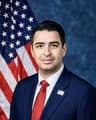 Gabe Evans
Republican · Colorado
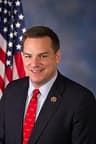 Richard Hudson
Republican · North Carolina
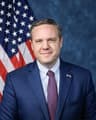 Jeff Hurd
Republican · Colorado
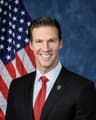 Pat Harrigan
Republican · North Carolina
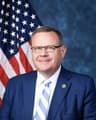 Tim Moore
Republican · North Carolina
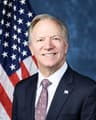 Robert Onder
Republican · Missouri
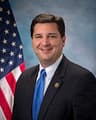 David Rouzer
Republican · North Carolina
 Jefferson Shreve
Republican · Indiana
 David Valadao
Republican · California