
Debbie Dingell (D-MI)
Local Communities & Bird Habitat Stewardship Act of 2026
A Democratic bill with 3 Republican cosponsors · See all 21 cosponsors
Last activity — Received in the Senate and Read twice and referred to the Committee on Environment and Public Works.
In the other chamber's committee
Passed one chamber and has been handed to a committee in the other.
The committee decides whether it goes any further, and most bills that reach a committee never leave it. A committee that simply does nothing kills a bill without anyone ever voting against it, so no news from here is usually the news.
Its path through Congress
- Introduced
- Passed House 345–60
- In Senate committee
What this bill would do
This bill is known as the Local Communities & Bird Habitat Stewardship Act of 2026. It directs the Secretary of the Interior to establish a voluntary Urban Bird Treaty Program for conserving birds and their habitats in urban areas. The program involves protecting and restoring urban bird habitats, reducing urban hazards, and engaging communities through science and education. It also sets up a competitive grant program to help fund research, planning, workforce training, and management projects. The bill authorizes appropriations of $200,000 for each of fiscal years 2027 through 2033 to carry out these activities.
Yes· 3 of 22
- Scored +8
Would people in cities be better off under this?
Directly targets the improvement of urban bird habitats and community engagement in cities.
- Scored +7
Does this better protect air, water and wildlife?
Directly focuses on protecting, restoring, and enhancing urban bird habitats.
- Scored +5
Does this better protect public land such as parks and forests?
Improves the management of bird habitats within urban areas.
The opposite
No question was scored the opposite.
What Congress actually voted on
One recorded vote has been taken on this bill.
- The House: a fast-track vote, needing two-thirds to pass The House sets aside its normal procedure to move quickly: no amendments, little debate, and a two-thirds bar instead of a simple majority. It is used for measures expected to be uncontroversial, so a bill that fails here failed despite broad expectations that it would not. Passed 345 yes · 60 no
09/14/2026 · Roll call 297 · recorded as “On Motion to Suspend the Rules and Pass, as Amended”
Who it would affect, and how
Potential Positive Impacts for People
-
Section 2(a)(2)(A): This section directs the program to work with groups to educate and engage communities in caring about birds and their habitats, and to involve people in scientific monitoring activities. This is positive because it gets everyday citizens involved in local science and community education.
-
Section 2(a)(2)(B): This section provides technical and financial assistance through partnerships to build capacity and carry out bird conservation projects. This is beneficial because it helps local organizations get the actual resources and funding they need to do the work on the ground.
-
Section 2(a)(3)(A): This section establishes a competitive grant program for research, planning, management, and workforce training related to urban birds. This is a positive step because it can create training and job opportunities while helping communities improve their local environments.
Potential Negative Impacts for People
Based strictly on the provided text, there are no specific sections or provisions identified that create negative consequences, burdens, or harms for individuals or groups of people in the United States.
Groups and Interests Ranking
Every group the model scored this bill for, from -10 to +10. Tap or hover a score for the reason it gave.
- Demographic And Interest Groups
- Would people in cities be better off under this? — Directly targets the improvement of urban bird habitats and community engagement in cities. Would students be better off under this? — Supports academic institutions and provides scientific monitoring and research opportunities. Would children be better off under this? — Provides educational opportunities and improved urban nature environments. Would households on low incomes be better off under this? — Equitable distribution of grants can improve nature access in disadvantaged urban areas. Would Native Americans be better off under this? — Includes Tribal agencies as covered and eligible entities for grants. Would people in their twenties and thirties be better off under this? — Provides workforce training and scientific engagement opportunities. Would Black Americans be better off under this? — Potential for improved green spaces in urban areas through equitable grant distribution. Would Asian Americans be better off under this? — Potential for improved green spaces in urban areas through equitable grant distribution. Would high-income households be better off under this? — Improves local urban environment. Would Hispanic Americans be better off under this? — Potential for improved green spaces in urban areas through equitable grant distribution. Would people in middle age be better off under this? — Enhances urban living environments. Would middle-income households be better off under this? — Improves local urban environment. Would retired people be better off under this? — Improves local urban nature and environment. Would people over 65 be better off under this? — Enhances urban living environments. Would white Americans be better off under this? — Improves local urban environment.
- Environment Energy And Infrastructure
- Does this better protect air, water and wildlife? — Directly focuses on protecting, restoring, and enhancing urban bird habitats. Does this better protect public land such as parks and forests? — Improves the management of bird habitats within urban areas. Does this cut the pollution that drives climate change? — Restoration of native plants can contribute to minor carbon sequestration.
- Education And Technology
- Does this put more money into scientific research? — Funds scientific monitoring and research of urban bird populations.
- Healthcare
- Does this put more money into medical research? — Establishes grants for conducting research related to urban bird conservation.
- Economy And Finance
- Is this likely to create jobs? — Provides funding for workforce training and capacity building through competitive grants.
- Governance And Ideology
- Does this give the federal government more power? — Creates a new federal program under the Secretary of the Interior.
- 9/15/2026
- Received in the Senate and Read twice and referred to the Committee on Environment and Public Works.
- 9/14/2026
- Motion to reconsider laid on the table Agreed to without objection.
- Passed/agreed to in House: On motion to suspend the rules and pass the bill, as amended Agreed to by the Yeas and Nays: (2/3 required): 345 - 60 (Roll no. 297).
- On motion to suspend the rules and pass the bill, as amended Agreed to by the Yeas and Nays: (2/3 required): 345 - 60 (Roll no. 297). (text: CR H5578-5579)
- Considered as unfinished business. (consideration: CR H5599)
- At the conclusion of debate, the Yeas and Nays were demanded and ordered. Pursuant to the provisions of clause 8, rule XX, the Chair announced that further proceedings on the motion would be postponed.
- DEBATE - The House proceeded with forty minutes of debate on H.R. 3276.
- Considered under suspension of the rules. (consideration: CR H5578-5580)
- Mr. Westerman moved to suspend the rules and pass the bill, as amended.
- 8/20/2026
- Reported (Amended) by the Committee on Natural Resources. H. Rept. 119-758.
- Placed on the Union Calendar, Calendar No. 659.
- 8/17/2026
- 1 Cosponsor added.
- 6/22/2026
- 1 Cosponsor added.
- 6/10/2026
- Subcommittee on Water, Wildlife and Fisheries Discharged
- Committee Consideration and Mark-up Session Held
- Ordered to be Reported in the Nature of a Substitute (Amended) by Unanimous Consent.
- 5/12/2026
- 1 Cosponsor added.
- 5/7/2026
- 1 Cosponsor added.
- 4/22/2026
- 1 Cosponsor added.
- 4/15/2026
- 1 Cosponsor added.
- 3/25/2026
- 2 Cosponsors added.
- 3/24/2026
- 2 Cosponsors added.
- 2/11/2026
- 1 Cosponsor added.
- 2/4/2026
- Subcommittee Hearings Held
- 1 Cosponsor added.
- 1/28/2026
- Referred to the Subcommittee on Water, Wildlife and Fisheries.
- 1/27/2026
- 1 Cosponsor added.
- 12/9/2025
- 2 Cosponsors added.
- 12/2/2025
- 1 Cosponsor added.
- 7/21/2025
- 1 Cosponsor added.
- 7/2/2025
- 1 Cosponsor added.
- 6/9/2025
- 2 Cosponsors added.
- 5/8/2025
- Referred to the House Committee on Natural Resources.
- 1 Cosponsor added.
- Introduced in House
 Wesley Bell
Democrat · Missouri
 Emanuel Cleaver
Democrat · Missouri
 Ben Cline
Republican · Virginia
 Christopher Deluzio
Democrat · Pennsylvania
 Maxine Dexter
Democrat · Oregon
 Sarah Elfreth
Democrat · Maryland
 Brian Fitzpatrick
Republican · Pennsylvania
 Sylvia Garcia
Democrat · Texas
 Jahana Hayes
Democrat · Connecticut
 Pablo Hernández
Democrat · Puerto Rico
 Ro Khanna
Democrat · California
 Zoe Lofgren
Democrat · California
 John Larson
Democrat · Connecticut
 George Latimer
Democrat · New York
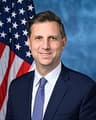 Seth Magaziner
Democrat · Rhode Island
 Eleanor Norton
Democrat · District of Columbia
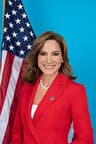 Maria Salazar
Republican · Florida
 Dina Titus
Democrat · Nevada
 Rashida Tlaib
Democrat · Michigan
 Shri Thanedar
Democrat · Michigan
 Eugene Vindman
Democrat · Virginia