
A Democratic bill with 13 Democratic cosponsors · See all 13 cosponsors
Last activity — Referred to the House Committee on Energy and Commerce.
In committee
Introduced and handed to a committee in the chamber it started in.
The committee holds it, and most bills are never heard from again. A hearing or a committee vote would be news; silence is the usual outcome, and it kills the bill without anyone voting against it.
Its path through Congress
- Introduced
- In Committee
What this bill would do
This bill, known as "Anna's Law of 2025," seeks to amend the Public Health Service Act. It aims to expand trauma-informed training for law enforcement personnel and emergency medical technicians. The training specifically focuses on cases involving sexual assault, domestic violence, dating violence, and stalking. The Secretary may award grants to help establish or expand these training programs. These grants are intended to increase awareness of trauma and implement better response strategies.
Yes· 3 of 8
- Scored +5
Does this change how police departments operate?
The bill mandates trauma-informed training for law enforcement to improve interactions with survivors of violence.
- Scored +5
Would women be better off under this?
The bill addresses training for sexual assault, domestic violence, and dating violence which are key issues for women's safety.
- Scored +4
Does this narrow the gap between how men and women are treated?
The bill targets training for sexual assault, domestic violence, and dating violence which disproportionately affect women.
The opposite
No question was scored the opposite.
Who it would affect, and how
Potential Positive Impacts for People
-
Improved interactions for survivors: The bill aims to increase understanding of the impact of trauma and develop strategies for trauma-informed responses (Section 2, subsection a).
-
Prevention of further harm: Training is intended to teach how contact with responders can lead to the retraumatization of sexual assault victims (Section 2, subsection c, part 3, B).
-
Better communication and support: The training includes instruction on communicating with survivors in a trauma-informed manner and how responders can best support victims during interactions (Section 2, subsection c, part 3, E and F).
-
Diverse representation in training: Grant recipients are encouraged to use trainers with diverse professional backgrounds and inclusive racial, ethnic, and gender representation (Section 2, subsection e).
-
Increased accountability and feedback: The Secretary is required to submit annual reports to Congress that include an evaluation of grant effectiveness and survivor feedback regarding their experiences with law enforcement and emergency medical technicians (Section 2, subsection g).
Potential Negative Impacts for People
- No specific negative impacts or burdens are explicitly mentioned in the provided text.
Groups and Interests Ranking
Every group the model scored this bill for, from -10 to +10. Tap or hover a score for the reason it gave.
- Social Issues And Justice
- Does this change how police departments operate? — The bill mandates trauma-informed training for law enforcement to improve interactions with survivors of violence. Does this narrow the gap between how men and women are treated? — The bill targets training for sexual assault, domestic violence, and dating violence which disproportionately affect women. Does this narrow racial gaps in how people are treated? — The bill encourages grant recipients to utilize trainers with inclusive racial and ethnic representation. Is this likely to lift people out of poverty? — By improving support for survivors of violence, the bill may help mitigate social disruptions caused by trauma.
- Demographic And Interest Groups
- Would women be better off under this? — The bill addresses training for sexual assault, domestic violence, and dating violence which are key issues for women's safety. Would households on low incomes be better off under this? — Improved emergency response and law enforcement interactions may benefit vulnerable low-income populations.
- Governance And Ideology
- Does this make what the government does easier for the public to see? — The bill requires the Secretary to submit annual reports to Congress including survivor feedback and grant effectiveness.
- Healthcare
- Does this make health care easier to get in general? — The bill improves emergency medical services through trauma-informed training for EMTs.
- 8/31/2026
- 1 Cosponsor added.
- 6/3/2026
- 1 Cosponsor added.
- 11/17/2025
- 1 Cosponsor added.
- 10/28/2025
- 1 Cosponsor added.
- 10/17/2025
- 2 Cosponsors added.
- 9/26/2025
- 1 Cosponsor added.
- 6/25/2025
- 2 Cosponsors added.
- 4/30/2025
- Referred to the House Committee on Energy and Commerce.
- 4 Cosponsors added.
- Introduced in House
 André Carson
Democrat · Indiana
 Debbie Dingell
Democrat · Michigan
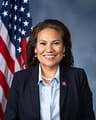 Veronica Escobar
Democrat · Texas
 Jesús García
Democrat · Illinois
 Henry Johnson
Democrat · Georgia
 Raja Krishnamoorthi
Democrat · Illinois
 Sydney Kamlager-Dove
Democrat · California
 Ted Lieu
Democrat · California
 Gwen Moore
Democrat · Wisconsin
 Eleanor Norton
Democrat · District of Columbia
 Deborah Ross
Democrat · North Carolina
 Rashida Tlaib
Democrat · Michigan
 Shri Thanedar
Democrat · Michigan