
Mike Flood (R-NE)
Housing Supply Frameworks Act
A Republican bill with 13 Democratic cosponsors · See all 25 cosponsors
Last activity — Referred to the House Committee on Financial Services.
In committee
Introduced and handed to a committee in the chamber it started in.
The committee holds it, and most bills are never heard from again. A hearing or a committee vote would be news; silence is the usual outcome, and it kills the bill without anyone voting against it.
Its path through Congress
- Introduced
- In Committee
What this bill would do
The Housing Supply Frameworks Act directs the Secretary of Housing and Urban Development to publish guidelines and best practices for State and local zoning frameworks. These guidelines aim to support the production of adequate housing to meet community needs across all income levels. The Assistant Secretary will develop these documents by consulting a diverse task force and opening the draft guidelines to public comment. The guidelines will address various regulatory measures, such as building heights, lot sizes, and accessory dwelling units. Additionally, the Act mandates a report to Congress regarding the adoption of these recommendations by States and localities. Finally, the bill abolishes the Regulatory Barriers Clearinghouse.
Yes· 3 of 8
- Scored +7
Does this make housing cost less?
The bill provides guidelines to increase housing supply and reduce regulatory barriers to improve affordability.
- Scored +6
Would households on low incomes be better off under this?
The bill aims to increase the supply of housing at various levels of affordability.
- Scored +5
Would people with disabilities be better off under this?
The bill includes provisions to improve communication accessibility for people with disabilities.
The opposite
No question was scored the opposite.
Who it would affect, and how
Potential Positive Impacts for People
-
Increased Housing Opportunities: The guidelines aim to support the production of adequate housing to meet the needs of communities and provide opportunities for individuals at every income level (Section 4(a)).
-
Reduced Regulatory Obstacles: The bill recommends several ways to make housing more accessible, such as reducing or eliminating parking minimums, increasing maximum building heights, and eliminating restrictions against accessory dwelling units (Section 4(c)(2)).
-
Increased Housing Types: Recommendations include increasing "by-right" uses for buildings like duplexes, triplexes, or quadplexes (Section 4(c)(2)(D)).
-
Improved Accessibility in Public Engagement: The guidelines will consider potential reforms to the public engagement process, including providing meaningful access for persons with limited English proficiency and effective communication for persons with disabilities (Section 4(c)(2)(I)).
-
Affordability Preservation: The guidelines will include mechanisms to preserve affordability, limit disruption to low-income communities, and prevent the displacement of existing residents (Section 4(c)(2)(N)).
Potential Negative Impacts for People
-
Impact on Existing Residents: The bill notes that the guidelines should consider mechanisms to limit the disruption of low-income communities and prevent the displacement of existing residents (Section 4(c)(2)(N)).
-
Potential Economic Burdens: The bill directs the consideration of the long-term cost to residents and businesses if more housing is not constructed (Section 4(c)(3)(F)).
Groups and Interests Ranking
Every group the model scored this bill for, from -10 to +10. Tap or hover a score for the reason it gave.
- Demographic And Interest Groups
- Would households on low incomes be better off under this? — The bill aims to increase the supply of housing at various levels of affordability. Would people with disabilities be better off under this? — The bill includes provisions to improve communication accessibility for people with disabilities. Would middle-income households be better off under this? — Increased housing supply may help mitigate cost burdens for middle-income residents. Would people in cities be better off under this? — Urban density and transit-oriented development are key components of the proposed guidelines.
- Social Issues And Justice
- Does this make housing cost less? — The bill provides guidelines to increase housing supply and reduce regulatory barriers to improve affordability. Does this expand the rights of people with disabilities? — The bill promotes better accessibility and communication for persons with disabilities within the public engagement process.
- Environment Energy And Infrastructure
- Does this improve buses, trains and other public transport? — The bill encourages transit-oriented development through its zoning guidelines.
- Governance And Ideology
- Does this give the federal government more power? — The bill increases federal involvement in providing guidelines for state and local land use.
- 1/30/2026
- 2 Cosponsors added.
- 10/28/2025
- 2 Cosponsors added.
- 10/14/2025
- 2 Cosponsors added.
- 7/22/2025
- 2 Cosponsors added.
- 6/20/2025
- 2 Cosponsors added.
- 6/10/2025
- 4 Cosponsors added.
- 6/5/2025
- 4 Cosponsors added.
- 6/4/2025
- 4 Cosponsors added.
- 5/29/2025
- 2 Cosponsors added.
- 4/10/2025
- Referred to the House Committee on Financial Services.
- 1 Cosponsor added.
- Introduced in House
One bill Congress.gov lists as related to this one — companions in the other chamber, earlier versions, and bills this one absorbed or was folded into.
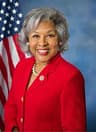 Joyce Beatty
Democrat · Ohio
 Ami Bera
Democrat · California
 Tom Barrett
Republican · Michigan
 Henry Cuellar
Democrat · Texas
 Angie Craig
Democrat · Minnesota
 Christopher Deluzio
Democrat · Pennsylvania
 Chuck Edwards
Republican · North Carolina
 Brian Fitzpatrick
Republican · Pennsylvania
 Laura Friedman
Democrat · California
 Al Green
Democrat · Texas
 Thomas Kean
Republican · New Jersey
 Zoe Lofgren
Democrat · California
 Michael Lawler
Republican · New York
 Tracey Mann
Republican · Kansas
 Daniel Meuser
Republican · Pennsylvania
 James Moylan
Republican · Guam
 Brittany Pettersen
Democrat · Colorado
 Mike Quigley
Democrat · Illinois
 Michael Simpson
Republican · Idaho
 Darren Soto
Democrat · Florida
 Thomas Suozzi
Democrat · New York
 Jefferson Van Drew
Republican · New Jersey
 Eugene Vindman
Democrat · Virginia
 Robert Wittman
Republican · Virginia
 Randy Weber
Republican · Texas