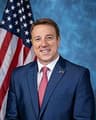
Pat Fallon (R-TX)
Special District Fairness and Accessibility Act
A Republican bill with 19 Democratic cosponsors · See all 28 cosponsors
Last activity — Ordered to be Reported (Amended) by the Yeas and Nays: 32 - 8.
Introduced, nothing more yet
Formally proposed, and not yet handed to a committee.
Nearly every bill is sent to a committee within days. Introduction alone is not a sign of support, of momentum, or of any likelihood of passing — any member may introduce any bill.
Its path through Congress
- Introduced
What this bill would do
This bill, known as the ``Special District Fairness and Accessibility Act'', directs the Director of the Office of Management and Budget to issue new guidance. This guidance will clarify how agencies recognize special districts as units of local government. This clarification is intended to help these districts become eligible to receive Federal financial assistance. After the guidance is issued, agency heads must update their policies and practices to match these new rules. Finally, the Director must submit a report to specific Congressional committees evaluating how agencies have implemented this guidance.
Yes· 3 of 6
- Scored +2
Would people in rural areas be better off under this?
Special districts often serve specific localized functions that can include rural community needs.
- Scored +2
Does this make what the government does easier for the public to see?
The bill requires a report to Congressional committees evaluating how agencies have implemented the new guidance.
- Scored +2
Is this likely to grow the economy?
The bill may stimulate local economic activity by making special districts more eligible for federal financial assistance.
The opposite
No question was scored the opposite.
Who it would affect, and how
Potential Positive Impacts for People
-
Increased accessibility to Federal financial assistance: By requiring the Director of the Office of Management and Budget to clarify how a special district is recognized as a unit of local government (Section 2(a)(1)), special districts may more easily become eligible to receive Federal financial assistance (Section 2(b)(3)).
-
Standardization of agency policies: The bill requires agency heads to conform any policy, principle, practice, procedure, or guideline to the new guidance (Section 2(a)(2)), which ensures consistent treatment of special districts across different agencies.
Potential Negative Impacts for People
- No negative impacts are explicitly mentioned in the text provided.
Groups and Interests Ranking
Every group the model scored this bill for, from -10 to +10. Tap or hover a score for the reason it gave.
- Demographic And Interest Groups
- Would people in rural areas be better off under this? — Special districts often serve specific localized functions that can include rural community needs. Would households on low incomes be better off under this? — Increased federal funding for special districts can lead to better provision of local public services.
- Governance And Ideology
- Does this make what the government does easier for the public to see? — The bill requires a report to Congressional committees evaluating how agencies have implemented the new guidance. Does this give the federal government more power? — The bill directs the OMB to issue new guidance and requires agencies to conform their policies to these federal standards.
- Economy And Finance
- Is this likely to grow the economy? — The bill may stimulate local economic activity by making special districts more eligible for federal financial assistance.
- Environment Energy And Infrastructure
- Does this invest in rural communities? — By facilitating federal aid to special districts, the bill may support infrastructure and services in rural or specific-purpose areas managed by those districts.
- 10/22/2026
- 1 Cosponsor added.
- 10/19/2026
- 1 Cosponsor added.
- 10/6/2026
- 1 Cosponsor added.
- 8/31/2026
- 1 Cosponsor added.
- 6/8/2026
- 1 Cosponsor added.
- 4/22/2026
- 1 Cosponsor added.
- 4/14/2026
- 1 Cosponsor added.
- 3/18/2026
- Committee Consideration and Mark-up Session Held
- Ordered to be Reported (Amended) by the Yeas and Nays: 32 - 8.
- 3/17/2026
- 1 Cosponsor added.
- 2/23/2026
- 1 Cosponsor added.
- 1/7/2026
- 1 Cosponsor added.
- 11/7/2025
- 1 Cosponsor added.
- 10/21/2025
- 1 Cosponsor added.
- 10/3/2025
- 1 Cosponsor added.
- 9/23/2025
- 1 Cosponsor added.
- 9/8/2025
- 1 Cosponsor added.
- 8/15/2025
- 2 Cosponsors added.
- 8/5/2025
- 1 Cosponsor added.
- 6/23/2025
- 1 Cosponsor added.
- 6/3/2025
- 1 Cosponsor added.
- 5/8/2025
- 1 Cosponsor added.
- 4/24/2025
- 1 Cosponsor added.
- 4/9/2025
- Referred to the House Committee on Oversight and Government Reform.
- 6 Cosponsors added.
- Introduced in House
One bill Congress.gov lists as related to this one — companions in the other chamber, earlier versions, and bills this one absorbed or was folded into.
 Suzanne Bonamici
Democrat · Oregon
 Julia Brownley
Democrat · California
 Janelle Bynum
Democrat · Oregon
 Ken Calvert
Republican · California
 Salud Carbajal
Democrat · California
 Gilbert Cisneros
Democrat · California
 Suzan DelBene
Democrat · Washington
 Gabe Evans
Republican · Colorado
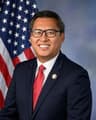 Vince Fong
Republican · California
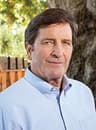 John Garamendi
Democrat · California
 Josh Harder
Democrat · California
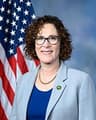 Val Hoyle
Democrat · Oregon
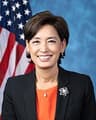 Young Kim
Republican · California
 Doug LaMalfa
Republican · California
 Sam Liccardo
Democrat · California
 Kevin Mullin
Democrat · California
 Dan Newhouse
Republican · Washington
 Jay Obernolte
Republican · California
 Burgess Owens
Republican · Utah
 Jimmy Panetta
Democrat · California
 Brittany Pettersen
Democrat · Colorado
 Raul Ruiz
Democrat · California
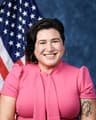 Emily Randall
Democrat · Washington
 Kim Schrier
Democrat · Washington
 Andrea Salinas
Democrat · Oregon
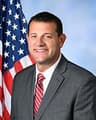 David Valadao
Republican · California
 Eugene Vindman
Democrat · Virginia
 George Whitesides
Democrat · California