
A Democratic bill with 18 Democratic cosponsors · See all 18 cosponsors
Last activity — Referred to the House Committee on Ways and Means.
In committee
Introduced and handed to a committee in the chamber it started in.
The committee holds it, and most bills are never heard from again. A hearing or a committee vote would be news; silence is the usual outcome, and it kills the bill without anyone voting against it.
Its path through Congress
- Introduced
- In Committee
What this bill would do
This bill, known as the "Tax Cut for Workers Act of 2025," aims to expand and make permanent certain changes to the earned income credit. It lowers the minimum age required to receive the credit for certain individuals, including students and former foster or homeless youth. The legislation also removes the maximum age limit for the credit. Additionally, it increases credit and phaseout percentages, as well as earned income and phaseout amounts. The bill includes provisions for inflation adjustments and extends the application of the credit to certain U.S. possessions. Finally, it allows taxpayers to elect to use their prior year's earned income to determine their credit.
Yes· 3 of 15
- Scored +9
Would households on low incomes be better off under this?
The bill significantly increases the income thresholds and credit amounts for low-income taxpayers.
- Scored +8
Is this likely to lift people out of poverty?
The expansion of the earned income credit is a direct mechanism for lifting low-income individuals out of poverty.
- Scored +7
Would people in their twenties and thirties be better off under this?
The lower minimum age requirements significantly benefit students and former foster youth.
The opposite
- Scored -2
Does this reduce what the federal government owes?
Expanding tax credits and increasing benefit amounts typically increases federal spending and may increase the deficit.
- Scored -2
Does this reduce what the federal government spends?
Increasing the scope and amount of the earned income credit increases government outlays.
Who it would affect, and how
Potential Positive Impacts for People
- Lowering age requirements for the credit: The bill decreases the minimum age for certain groups, such as setting the age at 18 for qualified former foster youth or qualified homeless youth, and age 24 for students (Sec. 2(a)).
- Removing age limits: The legislation eliminates the maximum age of 65 for receiving the credit (Sec. 2(b)).
- Increasing credit amounts: The bill increases credit and phaseout percentages from 7.65 to 15.3 (Sec. 2(c)).
- Increasing income thresholds: The bill increases the earned income and phaseout amounts (Sec. 2(d)).
- Inflation adjustments: The bill implements adjustments for various dollar amounts based on inflation (Sec. 2(e)).
- Expanding coverage to U.S. possessions: The bill makes the application of the credit permanent for Puerto Rico and other possessions (Sec. 3).
- Flexibility for taxpayers: Taxpayers whose income has decreased may elect to use their prior year's earned income to determine their credit (Sec. 4(a)).
Potential Negative Impacts for People
- No negative impacts or burdens are explicitly stated in the provided text.
Groups and Interests Ranking
Every group the model scored this bill for, from -10 to +10. Tap or hover a score for the reason it gave.
- Demographic And Interest Groups
- Would households on low incomes be better off under this? — The bill significantly increases the income thresholds and credit amounts for low-income taxpayers. Would students be better off under this? — The bill specifically lowers the minimum age for students to access the credit. Would people in their twenties and thirties be better off under this? — The lower minimum age requirements significantly benefit students and former foster youth. Would people over 65 be better off under this? — The elimination of the maximum age limit provides financial support to older low-income workers. Would retired people be better off under this? — Eliminating the maximum age limit allows older working retirees to access the credit. Would Black Americans be better off under this? — The expansion of benefits for low-income individuals and U.S. possessions can disproportionately benefit diverse populations. Would Hispanic Americans be better off under this? — Expanded credit amounts and thresholds provide significant relief to working Hispanic households. Would middle-income households be better off under this? — The higher income thresholds and phaseout amounts may provide benefits to some middle-income workers.
- Social Issues And Justice
- Is this likely to lift people out of poverty? — The expansion of the earned income credit is a direct mechanism for lifting low-income individuals out of poverty. Is this likely to reduce homelessness? — By providing more financial support to youth experiencing homelessness, the bill provides a buffer against housing instability. Does this narrow racial gaps in how people are treated? — Expanding tax credits to U.S. possessions and low-income groups can help reduce racial wealth gaps.
- Education And Technology
- Does this make college cost less? — By lowering the minimum age for students to receive the credit, the bill provides financial relief for those in higher education.
- Economy And Finance
- Does this cut taxes for middle-income families? — The bill increases the earned income credit and its phaseout amounts, providing tax relief to many working households. Is this likely to grow the economy? — Increasing the disposable income of low-income workers can stimulate local economic activity. Does this reduce what the federal government spends? — Increasing the scope and amount of the earned income credit increases government outlays. Does this reduce what the federal government owes? — Expanding tax credits and increasing benefit amounts typically increases federal spending and may increase the deficit.
- Governance And Ideology
- Does this give the federal government more power? — The bill expands the scope of a federal tax program through federal legislative action.
- 4/9/2025
- Referred to the House Committee on Ways and Means.
- 18 Cosponsors added.
- Introduced in House
3 bills Congress.gov lists as related to this one — companions in the other chamber, earlier versions, and bills this one absorbed or was folded into.
 Yassamin Ansari
Democrat · Arizona
 Jasmine Crockett
Democrat · Texas
 Rosa DeLauro
Democrat · Connecticut
 Valerie Foushee
Democrat · North Carolina
 Steven Horsford
Democrat · Nevada
 Ro Khanna
Democrat · California
 James McGovern
Democrat · Massachusetts
 Jerrold Nadler
Democrat · New York
 Eleanor Norton
Democrat · District of Columbia
 Alexandria Ocasio-Cortez
Democrat · New York
 Delia Ramirez
Democrat · Illinois
 Linda Sánchez
Democrat · California
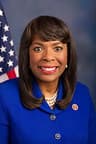 Terri Sewell
Democrat · Alabama
 Mary Gay Scanlon
Democrat · Pennsylvania
 Lateefah Simon
Democrat · California
 Dina Titus
Democrat · Nevada
 Rashida Tlaib
Democrat · Michigan
 Shri Thanedar
Democrat · Michigan