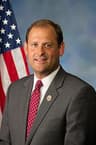
A Republican bill with 1 Democratic cosponsor · See all 19 cosponsors
Last activity — Placed on the Union Calendar, Calendar No. 131.
Cleared committee, waiting for its first floor vote
A committee approved it and it is on the calendar of the chamber it started in.
This is further than most bills get, and still no promise of a vote: the calendar is a queue, and the majority leadership decides what is called. A bill can sit here until the Congress ends.
Its path through Congress
- Introduced
- On Calendar
What this bill would do
The FIRM Act aims to prevent Federal banking agencies from using political influence through the supervision of depository institutions. It seeks to accomplish this by eliminating "reputational risk" from the oversight process. The bill defines reputational risk as potential negative publicity or public opinion affecting an institution. It requires agencies to remove all references to this risk from their guidance and manuals. Furthermore, the act prohibits agencies from using reputational risk to make supervisory decisions or enforcement actions. Finally, it mandates that agencies report their implementation of these changes to Congress.
Yes· 3 of 4
- Scored +2
Would business owners be better off under this?
The bill aims to protect business owners from regulatory actions based on reputational risk and political agendas.
- Scored +1
Does this make what the government does easier for the public to see?
The bill requires agencies to report their implementation of these changes to Congress.
- Scored +1
Is this likely to grow the economy?
By ensuring equal access to financial services, the bill may support economic activity for various industries.
The opposite
- Scored -2
Does this give the federal government more power?
The bill limits the regulatory reach and supervisory authority of Federal banking agencies.
- Scored -2
Does this give people more protection from unfair business practices?
The removal of reputational risk oversight could potentially reduce the ability of agencies to address risks stemming from negative public sentiment or business practices.
Who it would affect, and how
Potential Positive Impacts for People
-
Equal Opportunity for Financial Services: The bill finds that all law-abiding citizens and federally legal businesses should have equal opportunity to obtain financial services regardless of political ideology (Section 2).
-
Protection from Political Influence: By removing reputational risk, the bill intends to stop Federal banking agencies from using subjective negative publicity to implement political agendas (Section 2).
-
Prevention of Unlawful Discrimination: The bill states that financial service providers should make business decisions based on factors free from unlawful prejudice (Section 2).
-
Clarification of Supervisory Focus: The bill aims to ensure that banking agency supervision focuses on the safety and soundness of depository institutions rather than unnecessary uses of authority (Section 2).
Potential Negative Impacts for People
- No negative impacts are explicitly stated within the text provided.
Groups and Interests Ranking
Every group the model scored this bill for, from -10 to +10. Tap or hover a score for the reason it gave.
- Demographic And Interest Groups
- Would business owners be better off under this? — The bill aims to protect business owners from regulatory actions based on reputational risk and political agendas.
- Governance And Ideology
- Does this make what the government does easier for the public to see? — The bill requires agencies to report their implementation of these changes to Congress. Does this give the federal government more power? — The bill limits the regulatory reach and supervisory authority of Federal banking agencies.
- Economy And Finance
- Is this likely to grow the economy? — By ensuring equal access to financial services, the bill may support economic activity for various industries. Does this make it easier to run a small business? — The bill aims to prevent regulatory agencies from using political agendas to limit access to financial services for legal businesses. Does this give people more protection from unfair business practices? — The removal of reputational risk oversight could potentially reduce the ability of agencies to address risks stemming from negative public sentiment or business practices.
- 6/20/2025
- Reported (Amended) by the Committee on Financial Services. H. Rept. 119-164.
- Placed on the Union Calendar, Calendar No. 131.
- 5/21/2025
- Committee Consideration and Mark-up Session Held
- Ordered to be Reported (Amended) by the Yeas and Nays: 33 - 19.
- 5/19/2025
- 1 Cosponsor added.
- 5/5/2025
- 2 Cosponsors added.
- 4/8/2025
- Referred to the House Committee on Financial Services.
- 16 Cosponsors added.
- Introduced in House
2 bills Congress.gov lists as related to this one — companions in the other chamber, earlier versions, and bills this one absorbed or was folded into.
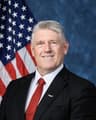 Troy Downing
Republican · Montana
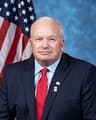 Scott Fitzgerald
Republican · Wisconsin
 Glenn Grothman
Republican · Wisconsin
 Andrew Garbarino
Republican · New York
 Frank Lucas
Republican · Oklahoma
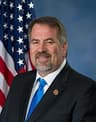 Doug LaMalfa
Republican · California
 Barry Loudermilk
Republican · Georgia
 Lisa McClain
Republican · Michigan
 Mark Messmer
Republican · Indiana
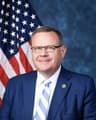 Tim Moore
Republican · North Carolina
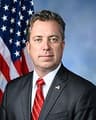 Andrew Ogles
Republican · Tennessee
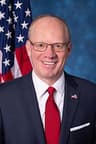 John Rose
Republican · Tennessee
 Pete Sessions
Republican · Texas
 Marlin Stutzman
Republican · Indiana
 Derek Schmidt
Republican · Kansas
 William Timmons
Republican · South Carolina
 Ritchie Torres
Democrat · New York
 Ann Wagner
Republican · Missouri
 Roger Williams
Republican · Texas