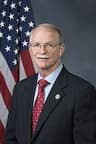
A Republican bill with 14 Democratic cosponsors · See all 27 cosponsors
Last activity — Referred to the House Committee on Education and Workforce.
In committee
Introduced and handed to a committee in the chamber it started in.
The committee holds it, and most bills are never heard from again. A hearing or a committee vote would be news; silence is the usual outcome, and it kills the bill without anyone voting against it.
Its path through Congress
- Introduced
- In Committee
What this bill would do
This bill, known as the "PLAN for School Safety Act of 2025," seeks to amend the Homeland Security Act of 2002. It proposes the creation of Regional School Safety Development Centers to provide specialized consulting services to schools. These centers would help schools create or improve individualized safety and mental health plans based on evidence-based practices. The program involves making grants or cooperative agreements to eligible entities to establish these centers. Additionally, the bill establishes a Youth Advisory Council to provide advice on implementation.
Yes· 3 of 13
- Scored +6
Would students be better off under this?
The bill directly addresses student safety and mental health support.
- Scored +6
Does this put more money into public schools?
The bill authorizes $25 million annually to establish safety development centers to assist schools.
- Scored +5
Would children be better off under this?
The bill aims to improve safety and mental health for school communities.
The opposite
- Scored -2
Would gun owners be better off under this?
The bill prohibits the use of funds for firearm training or consultation.
Who it would affect, and how
Potential Positive Impacts for People
-
Customized School Safety and Mental Health Plans: The bill allows for the development of individualized safety plans that fit the specific, age-appropriate needs of a school community (Section 2(b)(3)(B)).
-
Support for Vulnerable Communities: The Director is directed to give preference to entities with existing relationships with rural, Tribal, or low-resourced communities, as well as minority-serving institutions (Section 2(b)(2)).
-
Increased Public Awareness: The centers are tasked with creating materials to increase regional awareness regarding school safety and student mental health for parents, educators, and youth (Section 2(b)(3)(A)).
-
Financial and Technical Assistance: The program aims to help schools identify and apply for Federal or State government funding to implement their safety plans (Section 2(b)(3)(C)(i-ii)).
-
Youth Involvement in Safety Policy: The establishment of a Youth Advisory Council ensures that youth, including those who have experienced school violence, can provide advice on how these programs are implemented (Section 2(c)(2)).
Potential Negative Impacts for People
-
Financial Matching Requirement: Eligible entities cannot receive full federal funding, as the Federal share of the cost for activities may not exceed 95 percent, meaning there is a cost-sharing requirement (Section 2(b)(4)).
-
Restrictions on Training: The funds provided by this act cannot be used to consult or train any school or person in the use of firearms (Section 2(f)(2)(A)).
-
Employment Restrictions: Funds may not be used to hire school personnel or contractors for the schools that the Safety Development Centers are currently advising (Section 2(f)(2)(B)).
Groups and Interests Ranking
Every group the model scored this bill for, from -10 to +10. Tap or hover a score for the reason it gave.
- Demographic And Interest Groups
- Would students be better off under this? — The bill directly addresses student safety and mental health support. Would children be better off under this? — The bill aims to improve safety and mental health for school communities. Would people in their twenties and thirties be better off under this? — The bill establishes a Youth Advisory Council to give youth a voice in safety implementation. Would households on low incomes be better off under this? — The bill prioritizes low-resourced communities for safety center development. Would Native Americans be better off under this? — The bill provides preference for entities working with Tribal communities. Would people in rural areas be better off under this? — The bill gives preference to entities with relationships with rural communities. Would gun owners be better off under this? — The bill prohibits the use of funds for firearm training or consultation.
- Education And Technology
- Does this put more money into public schools? — The bill authorizes $25 million annually to establish safety development centers to assist schools.
- Healthcare
- Does this make mental health care easier to get? — The bill promotes student mental health through specialized consulting and development of individualized safety plans.
- Social Issues And Justice
- Does this narrow racial gaps in how people are treated? — The bill gives preference to entities serving minority-serving institutions and low-resourced communities. Does this put more limits on buying or owning guns? — The bill focuses on non-firearm based safety planning and specifically prohibits using funds for firearm training.
- Environment Energy And Infrastructure
- Does this invest in rural communities? — The bill provides preference for entities that have relationships with rural communities.
- Governance And Ideology
- Does this give the federal government more power? — The bill expands federal oversight and grant programs regarding school safety. Does this make what the government does easier for the public to see? — The bill requires an annual report to Congress regarding the actions and effectiveness of the centers.
- 2/2/2026
- 2 Cosponsors added.
- 12/5/2025
- 2 Cosponsors added.
- 11/17/2025
- 2 Cosponsors added.
- 10/31/2025
- 2 Cosponsors added.
- 9/16/2025
- 2 Cosponsors added.
- 9/15/2025
- 2 Cosponsors added.
- 8/29/2025
- 2 Cosponsors added.
- 6/5/2025
- 2 Cosponsors added.
- 5/13/2025
- 2 Cosponsors added.
- 4/28/2025
- 2 Cosponsors added.
- 4/10/2025
- 2 Cosponsors added.
- 4/1/2025
- Referred to the House Committee on Education and Workforce.
- 5 Cosponsors added.
- Introduced in House
 Gus Bilirakis
Republican · Florida
 Don Bacon
Republican · Nebraska
 Becca Balint
Democrat · Vermont
 Ed Case
Democrat · Hawaii
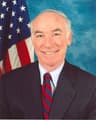 Joe Courtney
Democrat · Connecticut
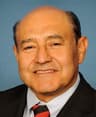 J. Correa
Democrat · California
 Angie Craig
Democrat · Minnesota
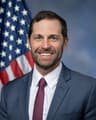 Jason Crow
Democrat · Colorado
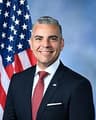 Juan Ciscomani
Republican · Arizona
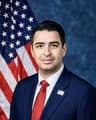 Gabe Evans
Republican · Colorado
 Brian Fitzpatrick
Republican · Pennsylvania
 Josh Gottheimer
Democrat · New Jersey
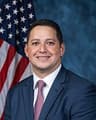 Tony Gonzales
Republican · Texas
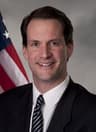 James Himes
Democrat · Connecticut
 Jahana Hayes
Democrat · Connecticut
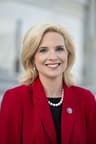 Ashley Hinson
Republican · Iowa
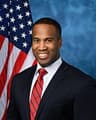 John James
Republican · Michigan
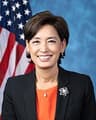 Young Kim
Republican · California
 Michael Lawler
Republican · New York
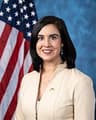 Nicole Malliotakis
Republican · New York
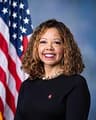 Lucy McBath
Democrat · Georgia
 Joe Neguse
Democrat · Colorado
 Zachary Nunn
Republican · Iowa
 Deborah Ross
Democrat · North Carolina
 Eric Sorensen
Democrat · Illinois
 Claudia Tenney
Republican · New York
 Eugene Vindman
Democrat · Virginia