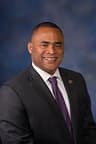
Marc Veasey (D-TX)
Early Detection of Vision Impairments for Children Act of 2025
A Democratic bill with 7 Republican cosponsors · See all 28 cosponsors
Last activity — Referred to the House Committee on Energy and Commerce.
In committee
Introduced and handed to a committee in the chamber it started in.
The committee holds it, and most bills are never heard from again. A hearing or a committee vote would be news; silence is the usual outcome, and it kills the bill without anyone voting against it.
Its path through Congress
- Introduced
- In Committee
What this bill would do
The Early Detection of Vision Impairments for Children Act of 2025 aims to improve children's eye health through federal grants and technical assistance. The bill would allow the Secretary to provide grants to States, territories, and Tribal organizations to build statewide vision detection and intervention systems. These funds are intended for activities like vision screening, data collection, and raising public awareness. Additionally, the bill authorizes grants for technical assistance to improve data systems and conduct research. The legislation also requires regular reporting on the effectiveness of these programs.
Yes· 3 of 11
- Scored +8
Would children be better off under this?
The bill specifically focuses on improving vision and eye health through early detection and intervention for children.
- Scored +5
Would households on low incomes be better off under this?
The bill aims to reduce health disparities and expand access to care for underserved populations.
- Scored +5
Would Native Americans be better off under this?
The bill provides grants and technical assistance that can be used by Tribal organizations and the Indian Health Service.
The opposite
No question was scored the opposite.
Who it would affect, and how
Potential Positive Impacts for People
-
Improved Vision Screening and Care: The bill allows for implementing early detection practices, such as vision screening, to identify concerns in medical, home, educational, or early learning settings (Section 2, subsection a, paragraph 3, subparagraph A).
-
Increased Access for Underserved Populations: Funds can be used to identify strategies to expand access to care and reduce health disparities for children in rural and underserved populations (Section 2, subsection a, paragraph 3, subparagraph C).
-
Better Public Information: The act promotes raising awareness by providing families, guardians, and caregivers with accurate, accessible, and culturally competent information regarding eye health (Section 2, subsection a, paragraph 3, subparagraph D).
-
Enhanced Coordination of Services: The bill supports establishing a coordinated public health system that includes diagnosis, intervention, and follow-up for children (Section 2, subsection a, paragraph 3, subparagraph E).
-
Technical Support for Better Systems: The Secretary can provide technical assistance to help entities improve data collection systems and coordinate best practices for vision and eye health (Section 2, subsection b, paragraph 2).
Potential Negative Impacts for People
-
Reporting and Administrative Requirements: Entities receiving grants are required to submit annual reports to the Secretary describing their activities, scope, and outcomes to demonstrate they have met project goals (Section 2, subsection a, paragraph 5, subparagraph A).
-
Mandatory Evaluations: Recipients of technical assistance grants must evaluate their activities within four years and submit a report to the Secretary regarding outcomes, costs, and effectiveness (Section 2, subsection b, paragraph 3, subparagraph A).
Groups and Interests Ranking
Every group the model scored this bill for, from -10 to +10. Tap or hover a score for the reason it gave.
- Demographic And Interest Groups
- Would children be better off under this? — The bill specifically focuses on improving vision and eye health through early detection and intervention for children. Would households on low incomes be better off under this? — The bill aims to reduce health disparities and expand access to care for underserved populations. Would Native Americans be better off under this? — The bill provides grants and technical assistance that can be used by Tribal organizations and the Indian Health Service. Would people in rural areas be better off under this? — The bill explicitly includes strategies to expand access to care for rural and underserved populations. Would students be better off under this? — Improved vision can positively impact educational outcomes for students in school and early learning settings. Would people with disabilities be better off under this? — Improving childhood vision helps mitigate potential developmental and vision-related disabilities.
- Healthcare
- Does this make health care easier to get in general? — The bill funds statewide early detection and intervention programs to improve children's vision and eye health access. Does this put more money into medical research? — The bill authorizes funding for applied research related to vision screening and intervention outcomes.
- Education And Technology
- Does this put more money into scientific research? — The bill provides grants for applied research related to children's vision screening and intervention programs. Does this put more money into public schools? — The bill facilitates vision screening and intervention programs within public educational and early learning settings.
- Governance And Ideology
- Does this make what the government does easier for the public to see? — The bill requires the Secretary to make annual reports available to the general public.
- 8/3/2026
- 1 Cosponsor added.
- 7/20/2026
- 1 Cosponsor added.
- 6/23/2026
- 4 Cosponsors added.
- 6/9/2026
- 2 Cosponsors added.
- 4/28/2026
- 1 Cosponsor added.
- 4/27/2026
- 4 Cosponsors added.
- 4/21/2026
- 1 Cosponsor added.
- 4/20/2026
- 1 Cosponsor added.
- 4/16/2026
- 2 Cosponsors added.
- 12/17/2025
- 1 Cosponsor added.
- 11/18/2025
- 2 Cosponsors added.
- 11/17/2025
- 3 Cosponsors added.
- 6/23/2025
- 2 Cosponsors added.
- 6/4/2025
- 2 Cosponsors added.
- 3/31/2025
- Referred to the House Committee on Energy and Commerce.
- 1 Cosponsor added.
- Introduced in House
 Gus Bilirakis
Republican · Florida
 Don Bacon
Republican · Nebraska
 Nanette Barragán
Democrat · California
 Troy Balderson
Republican · Ohio
 Janelle Bynum
Democrat · Oregon
 André Carson
Democrat · Indiana
 Angie Craig
Democrat · Minnesota
 Donald Davis
Democrat · North Carolina
 Sharice Davids
Democrat · Kansas
 Valerie Foushee
Democrat · North Carolina
 Al Green
Democrat · Texas
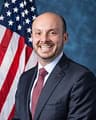 Andrew Garbarino
Republican · New York
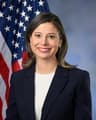 Maggie Goodlander
Democrat · New Hampshire
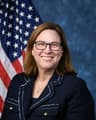 Julie Johnson
Democrat · Texas
 Raja Krishnamoorthi
Democrat · Illinois
 Jennifer Kiggans
Republican · Virginia
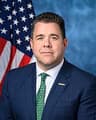 Nick LaLota
Republican · New York
 Michael Lawler
Republican · New York
 Jerrold Nadler
Democrat · New York
 Eleanor Norton
Democrat · District of Columbia
 Mark Pocan
Democrat · Wisconsin
 Mike Quigley
Democrat · Illinois
 Deborah Ross
Democrat · North Carolina
 Melanie Stansbury
Democrat · New Mexico
 Bennie Thompson
Democrat · Mississippi
 Rashida Tlaib
Democrat · Michigan
 Frederica Wilson
Democrat · Florida
 James Walkinshaw
Democrat · Virginia