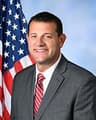
A Republican bill with 4 Democratic cosponsors · See all 9 cosponsors
Last activity — Became Public Law No: 119-129.
Became law
Passed both chambers and was signed by the President, or became law without a signature.
Nothing more in Congress: it is law. When it takes effect depends on the dates written into it — some parts start at once, others a year or more later.
Its path through Congress
- Introduced
- Passed House voice vote
- Passed Senate unanimous consent
- To President
- Became Law
No one's position on it was recorded: the House by voice vote (members called out yes or no together), and the Senate by unanimous consent (no one objected, so there was no vote).
What this bill would do
This bill requires online dating service providers to send fraud ban notifications to members who have communicated with someone whose account was banned for fraud. The notification must include specific details, such as the banned member's username and warnings against sending money or personal financial information. Providers generally must send this notice within 24 hours, though delays are permitted under certain provider judgments or law enforcement requests. The Federal Trade Commission and state attorneys general are granted enforcement powers over violations of this requirement. Additionally, the bill establishes one national standard, preventing states from enforcing their own laws regarding fraud ban notifications on online dating services.
Yes
- Scored +5
Does this give people more protection from unfair business practices?
The bill enhances consumer protection by requiring dating services to notify users of potential fraud risks.
- Scored +3
Does this give people more control over their personal data?
The bill increases user awareness of fraudulent profiles, which indirectly supports digital privacy and security.
- Scored +3
Does this give the federal government more power?
The bill centralizes the standards for dating service notifications under federal authority, preempting state laws.
The opposite
- Scored -4
Does this leave more decisions to the states?
The bill restricts the ability of states and political subdivisions to maintain or enforce their own dating service notification standards.
Who it would affect, and how
Potential Positive Impacts for People
-
Fraud Ban Notification: Section 2(a)(1) requires online dating service providers to notify members if they have received a message from a banned member, which helps alert individuals that they may have been in contact with a scammer.
-
Warning Against Financial Loss: Section 2(a)(2)(C) mandates that the notification include a statement advising members not to send cash, currency, or personal financial information to another member, which protects people from losing money to romance scams.
-
Best Practices and Help Information: Sections 2(a)(2)(D) and 2(a)(2)(E) require the notification to provide best practices for avoiding online fraud and include customer service contact information, giving users practical tools to protect themselves and get help.
Potential Negative Impacts for People
-
Delayed Warnings: Section 2(a)(3)(B)(ii) allows online dating service providers to delay sending the fraud ban notification for up to three days based on their own judgment, which could leave users unaware of a scam threat for a longer period.
-
Law Enforcement Delays: Section 2(a)(3)(B)(iii) permits online dating service providers to delay notifications upon the request of a law enforcement official during an ongoing investigation, meaning users may continue interacting with a compromised environment without immediate knowledge.
Groups and Interests Ranking
Every group the model scored this bill for, from -10 to +10. Tap or hover a score for the reason it gave.
- Economy And Finance
- Does this give people more protection from unfair business practices? — The bill enhances consumer protection by requiring dating services to notify users of potential fraud risks.
- Education And Technology
- Does this give people more control over their personal data? — The bill increases user awareness of fraudulent profiles, which indirectly supports digital privacy and security.
- Governance And Ideology
- Does this give the federal government more power? — The bill centralizes the standards for dating service notifications under federal authority, preempting state laws. Does this leave more decisions to the states? — The bill restricts the ability of states and political subdivisions to maintain or enforce their own dating service notification standards.
- Public Law (10/21/2026)
The text as it became law
What changed from Enrolled Bill: No change to the wording. Only the printed details that record the bill’s progress, such as the heading and dates, are different.
- Enrolled Bill
The final version, on its way to the President
In the queue for a floor vote, with no date set
- 10/20/2026
- Signed by President.
- Became Public Law No: 119-129.
- 10/14/2026
- Presented to President.
- 9/24/2026
- Message on Senate action sent to the House.
- 9/23/2026
- Passed/agreed to in Senate: Passed Senate without amendment by Unanimous Consent. (consideration: CR S4902)
- Passed Senate without amendment by Unanimous Consent. (consideration: CR S4902)
- 6/17/2026
- Read twice. Placed on Senate Legislative Calendar under General Orders. Calendar No. 438.
- 6/24/2025
- Received in the Senate.
- 6/23/2025
- Motion to reconsider laid on the table Agreed to without objection.
- Passed/agreed to in House: On motion to suspend the rules and pass the bill Agreed to by voice vote. (text: CR H2848-2849)
- On motion to suspend the rules and pass the bill Agreed to by voice vote. (text: CR H2848-2849)
- DEBATE - The House proceeded with forty minutes of debate on H.R. 2481.
- Considered under suspension of the rules. (consideration: CR H2848-2850)
- Mr. Bilirakis moved to suspend the rules and pass the bill.
- 6/12/2025
- Reported by the Committee on Energy and Commerce. H. Rept. 119-153.
- Placed on the Union Calendar, Calendar No. 119.
- 6/6/2025
- 2 Cosponsors added.
- 4/8/2025
- Committee Consideration and Mark-up Session Held
- Ordered to be Reported by Voice Vote.
- 4/7/2025
- 2 Cosponsors added.
- 4/1/2025
- 2 Cosponsors added.
- 3/31/2025
- Referred to the House Committee on Energy and Commerce.
- 3 Cosponsors added.
- Introduced in House
One bill Congress.gov lists as related to this one — companions in the other chamber, earlier versions, and bills this one absorbed or was folded into.
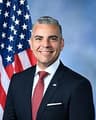 Juan Ciscomani
Republican · Arizona
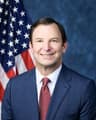 Craig Goldman
Republican · Texas
 Josh Harder
Democrat · California
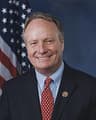 David Joyce
Republican · Ohio
 Susie Lee
Democrat · Nevada
 Michael Lawler
Republican · New York
 Brittany Pettersen
Democrat · Colorado
 Thomas Suozzi
Democrat · New York
 Jefferson Shreve
Republican · Indiana