
David Kustoff (R-TN)
Cellphone Jamming Reform Act of 2025
A Republican bill with 1 Democratic cosponsor · See all 23 cosponsors
Last activity — Referred to the House Committee on Energy and Commerce.
In committee
Introduced and handed to a committee in the chamber it started in.
The committee holds it, and most bills are never heard from again. A hearing or a committee vote would be news; silence is the usual outcome, and it kills the bill without anyone voting against it.
Its path through Congress
- Introduced
- In Committee
What this bill would do
This bill is called the Cellphone Jamming Reform Act of 2025. It stops the Federal Communications Commission from preventing State and Federal correctional facilities from using cell phone jamming equipment. The bill defines what a correctional facility and a jamming system are. It sets rules saying the jamming systems must stay within the housing facilities of the prison or jail. The bill also states that States must pay the full cost for their own facilities' jamming systems. Finally, it requires facilities to talk with local law enforcement and notify the Director of the Bureau of Prisons before turning the system on.
Yes
- Scored +5
Does this leave more decisions to the states?
The bill empowers state correctional facilities to implement jamming systems by removing FCC restrictions.
The opposite
- Scored -3
Does this give the federal government more power?
This bill limits the FCC's authority to prevent state and federal correctional facilities from using jamming equipment.
- Scored -3
Does this protect the individual right to speak freely?
The bill permits the use of technology that disrupts wireless communications within correctional facilities.
Who it would affect, and how
Potential Positive Impacts for People
-
Better Control Over Contraband: Under Section 2(b)(1), the Federal Communications Commission cannot stop state and federal prisons and jails from using jamming systems to block wireless communications tied to contraband devices or individuals held inside the facility, which helps keep illegal cell phone use under control.
-
Local Safety Coordination: Under Section 2(b)(2)(C)(i), correctional facilities must consult with local law enforcement agencies and public safety officials in their area before they start using a jamming system, which keeps local communities in the loop about safety operations.
Potential Negative Impacts for People
- State Financial Burden: Under Section 2(b)(2)(B), if a State runs the correctional facility, that State has to pay for the entire cost of the jamming system and its operation out of its own pocket.
Groups and Interests Ranking
Every group the model scored this bill for, from -10 to +10. Tap or hover a score for the reason it gave.
- Governance And Ideology
- Does this leave more decisions to the states? — The bill empowers state correctional facilities to implement jamming systems by removing FCC restrictions. Does this protect the individual right to speak freely? — The bill permits the use of technology that disrupts wireless communications within correctional facilities. Does this give the federal government more power? — This bill limits the FCC's authority to prevent state and federal correctional facilities from using jamming equipment.
- 9/24/2026
- 1 Cosponsor added.
- 7/9/2026
- 1 Cosponsor added.
- 6/29/2026
- 1 Cosponsor added.
- 10/21/2025
- 1 Cosponsor added.
- 9/18/2025
- 2 Cosponsors added.
- 9/15/2025
- 1 Cosponsor added.
- 9/11/2025
- 1 Cosponsor added.
- 9/2/2025
- 1 Cosponsor added.
- 6/30/2025
- 1 Cosponsor added.
- 6/25/2025
- 1 Cosponsor added.
- 5/5/2025
- 1 Cosponsor added.
- 4/28/2025
- 1 Cosponsor added.
- 4/2/2025
- 1 Cosponsor added.
- 4/1/2025
- 1 Cosponsor added.
- 3/31/2025
- 3 Cosponsors added.
- 3/26/2025
- Referred to the House Committee on Energy and Commerce.
- 5 Cosponsors added.
- Introduced in House
One bill Congress.gov lists as related to this one — companions in the other chamber, earlier versions, and bills this one absorbed or was folded into.
 Stephanie Bice
Republican · Oklahoma
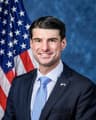 Robert Bresnahan
Republican · Pennsylvania
 Mike Collins
Republican · Georgia
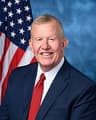 Mike Ezell
Republican · Mississippi
 Gabe Evans
Republican · Colorado
 Scott Franklin
Republican · Florida
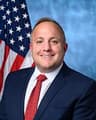 Russell Fry
Republican · South Carolina
 Michael Guest
Republican · Mississippi
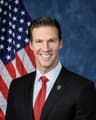 Pat Harrigan
Republican · North Carolina
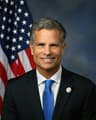 Daniel Meuser
Republican · Pennsylvania
 Richard McCormick
Republican · Georgia
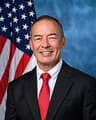 James Moylan
Republican · Guam
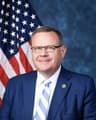 Tim Moore
Republican · North Carolina
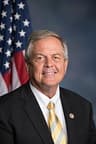 Ralph Norman
Republican · South Carolina
 Burgess Owens
Republican · Utah
 John Rutherford
Republican · Florida
 John Rose
Republican · Tennessee
 Terri Sewell
Democrat · Alabama
 Pete Stauber
Republican · Minnesota
 Glenn Thompson
Republican · Pennsylvania
 Claudia Tenney
Republican · New York
 Randy Weber
Republican · Texas
 Bruce Westerman
Republican · Arkansas