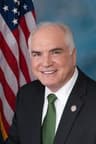
Mike Kelly (R-PA)
To amend the Internal Revenue Code of 1986 to restore the taxable REIT subsidiary asset test.
A Republican bill with 6 Democratic cosponsors · See all 20 cosponsors
Last activity — Referred to the House Committee on Ways and Means.
In committee
Introduced and handed to a committee in the chamber it started in.
The committee holds it, and most bills are never heard from again. A hearing or a committee vote would be news; silence is the usual outcome, and it kills the bill without anyone voting against it.
Its path through Congress
- Introduced
- In Committee
What this bill would do
This bill proposes an amendment to the Internal Revenue Code of 1986. The primary purpose is to restore the taxable REIT subsidiary asset test. It achieves this by changing a specific percentage requirement in the code. The change involves striking the current "20 percent" and replacing it with "25 percent." This amendment would apply to taxable years that begin after December 31, 2025.
Yes· 3 of 6
- Scored +1
Would high-income households be better off under this?
The change in the REIT asset test primarily benefits real estate investment entities and their investors.
- Scored +1
Would business owners be better off under this?
The relaxation of the asset test may benefit owners of real estate-related businesses and investment vehicles.
- Scored +1
Would people with substantial wealth be better off under this?
The bill's provision is likely to benefit high net worth individuals who invest in REITs.
The opposite
No question was scored the opposite.
Who it would affect, and how
Potential Positive Impacts for People
- Restoration of the asset test: The bill aims to change the requirement in Section 856(c)(4)(B)(ii) of the Internal Revenue Code of 1986 from "20 percent" to "25 percent" (Section 1(a)).
Potential Negative Impacts for People
- No specific negative impacts are mentioned in the provided text.
Groups and Interests Ranking
Every group the model scored this bill for, from -10 to +10. Tap or hover a score for the reason it gave.
- Demographic And Interest Groups
- Would billionaires be better off under this? — The bill's provision is likely to benefit billionaires who invest in REITs. Would business owners be better off under this? — The relaxation of the asset test may benefit owners of real estate-related businesses and investment vehicles. Would high-income households be better off under this? — The change in the REIT asset test primarily benefits real estate investment entities and their investors. Would people with substantial wealth be better off under this? — The bill's provision is likely to benefit high net worth individuals who invest in REITs. Would the very wealthiest people be better off under this? — The bill's provision is likely to benefit ultra high net worth individuals who invest in REITs.
- Economy And Finance
- Is this likely to grow the economy? — The adjustment to the REIT asset test may provide more flexibility for real estate investment structures, potentially aiding economic activity in that sector.
- 10/3/2025
- 1 Cosponsor added.
- 4/8/2025
- 1 Cosponsor added.
- 3/31/2025
- 3 Cosponsors added.
- 3/18/2025
- Referred to the House Committee on Ways and Means.
- 15 Cosponsors added.
- Introduced in House
 Vern Buchanan
Republican · Florida
 Mike Carey
Republican · Ohio
 Danny Davis
Democrat · Illinois
 Suzan DelBene
Democrat · Washington
 Ron Estes
Republican · Kansas
 Randy Feenstra
Republican · Iowa
 Brian Fitzpatrick
Republican · Pennsylvania
 Kevin Hern
Republican · Oklahoma
 David Kustoff
Republican · Tennessee
 Darin LaHood
Republican · Illinois
 Nicole Malliotakis
Republican · New York
 Gwen Moore
Democrat · Wisconsin
 Gregory Murphy
Republican · North Carolina
 Blake Moore
Republican · Utah
 Nathaniel Moran
Republican · Texas
 Jimmy Panetta
Democrat · California
 Adrian Smith
Republican · Nebraska
 Bradley Schneider
Democrat · Illinois
 Thomas Suozzi
Democrat · New York
 Claudia Tenney
Republican · New York