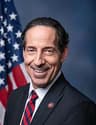
Jamie Raskin (D-MD)
Sarah Debbink Langenkamp Active Transportation Safety Act
A Democratic bill with 9 Republican cosponsors · See all 17 cosponsors
Last activity — Referred to the Subcommittee on Highways and Transit.
In committee
Introduced and handed to a committee in the chamber it started in.
The committee holds it, and most bills are never heard from again. A hearing or a committee vote would be news; silence is the usual outcome, and it kills the bill without anyone voting against it.
Its path through Congress
- Introduced
- In Committee
What this bill would do
This bill, known as the "Sarah Debbink Langenkamp Active Transportation Safety Act," seeks to amend title 23 of the United States Code regarding the highway safety improvement program. It expands the types of eligible highway safety improvement projects to include the connection of existing bicyclist or pedestrian infrastructure and projects aimed at reducing safety risks to vulnerable road users. The legislation also adjusts how the Federal share of project costs is calculated. Specifically, it allows for the Federal share to be up to 100 percent for certain projects. These adjustments involve flexible financing and the treatment of certain funds toward non-Federal shares.
Yes· 3 of 17
- Scored +6
Does this repair or build roads and bridges?
The bill enhances safety and connectivity for bicyclist and pedestrian infrastructure.
- Scored +5
Does this expand the rights of people with disabilities?
The inclusion of ADA transition plans supports accessibility for people with disabilities.
- Scored +3
Would children be better off under this?
Increased safety for vulnerable road users benefits children walking or biking.
The opposite
No question was scored the opposite.
Who it would affect, and how
Potential Positive Impacts for People
-
Enhanced Infrastructure Connectivity: The bill adds the connection of two or more segments of existing bicyclist or pedestrian infrastructure as an eligible project under Section 148(a)(4)(B) (clause xxix). This could help create more continuous paths for people traveling on foot or by bike.
-
Increased Safety for Vulnerable Travelers: Under Section 148(a)(4)(B) (clause xxx), the bill includes projects or strategies designed to reduce safety risks to vulnerable road users. This is intended to make roads safer for those not in traditional motor vehicles.
-
Increased Federal Funding Availability: Section 148(j) allows the Federal share of costs for specific highway safety improvement projects to be up to 100 percent. This increased federal support could facilitate the completion of safety-focused projects at the state level.
-
Flexible Project Financing: Section 133(h)(7)(B) introduces flexible financing where the non-Federal share can be calculated on a project, multiple-project, or program basis, and the Federal share for an individual project may be up to 100 percent.
-
Support for Local Safety Planning: Under Section 133(h)(7)(C), funds may be credited toward non-Federal shares if projects include proven safety countermeasures or align with various safety plans, such as Vision Zero Action Plans or local roadway safety plans.
Potential Negative Impacts for People
- No negative impacts or burdens are explicitly stated in the provided text.
Groups and Interests Ranking
Every group the model scored this bill for, from -10 to +10. Tap or hover a score for the reason it gave.
- Demographic And Interest Groups
- Would children be better off under this? — Increased safety for vulnerable road users benefits children walking or biking. Would people over 65 be better off under this? — Improved safety for vulnerable road users benefits seniors walking or biking. Would people in cities be better off under this? — Increased density of infrastructure connectivity often benefits urban dwellers. Would households on low incomes be better off under this? — Improved public infrastructure often benefits those who rely more on walking or cycling. Would retired people be better off under this? — Improved pedestrian safety is highly beneficial for older populations. Would students be better off under this? — Safer routes to schools and campuses benefit student populations. Would people in their twenties and thirties be better off under this? — Enhanced infrastructure connectivity benefits young adults who often use active transportation. Would men be better off under this? — Enhanced safety in public spaces generally benefits all genders. Would people in middle age be better off under this? — Increased safety for pedestrians and cyclists provides a general benefit. Would middle-income households be better off under this? — General infrastructure safety improvements provide a modest benefit. Would Native Americans be better off under this? — The inclusion of Tribal transportation safety plans provides direct benefit. Would people in rural areas be better off under this? — Improved safety on rural roads can be beneficial for all road users. Would women be better off under this? — Enhanced safety in public spaces generally benefits all genders.
- Environment Energy And Infrastructure
- Does this repair or build roads and bridges? — The bill enhances safety and connectivity for bicyclist and pedestrian infrastructure. Does this improve buses, trains and other public transport? — The bill promotes active transportation, which complements public transit systems.
- Social Issues And Justice
- Does this expand the rights of people with disabilities? — The inclusion of ADA transition plans supports accessibility for people with disabilities.
- Governance And Ideology
- Does this give the federal government more power? — The bill increases the federal share of project costs for specific safety initiatives.
- 8/1/2025
- 2 Cosponsors added.
- 6/24/2025
- 4 Cosponsors added.
- 4/29/2025
- 2 Cosponsors added.
- 4/17/2025
- 2 Cosponsors added.
- 3/24/2025
- 4 Cosponsors added.
- 3/10/2025
- Referred to the House Committee on Transportation and Infrastructure.
- Referred to the Subcommittee on Highways and Transit.
- 3 Cosponsors added.
- Introduced in House
2 bills Congress.gov lists as related to this one — companions in the other chamber, earlier versions, and bills this one absorbed or was folded into.
 Vern Buchanan
Republican · Florida
 Jack Bergman
Republican · Michigan
 André Carson
Democrat · Indiana
 Christopher Deluzio
Democrat · Pennsylvania
 Brian Fitzpatrick
Republican · Pennsylvania
 Scott Fitzgerald
Republican · Wisconsin
 Josh Gottheimer
Democrat · New Jersey
 Laura Gillen
Democrat · New York
 Nick LaLota
Republican · New York
 Michael Lawler
Republican · New York
 Jerrold Nadler
Democrat · New York
 Eleanor Norton
Democrat · District of Columbia
 Thomas Suozzi
Democrat · New York
 Bryan Steil
Republican · Wisconsin
 Mike Thompson
Democrat · California
 Derrick Van Orden
Republican · Wisconsin
 Tony Wied
Republican · Wisconsin