
A Republican bill with 2 Republican cosponsors · See all 2 cosponsors
Last activity — Referred to the House Committee on Education and Workforce.
In committee
Introduced and handed to a committee in the chamber it started in.
The committee holds it, and most bills are never heard from again. A hearing or a committee vote would be news; silence is the usual outcome, and it kills the bill without anyone voting against it.
Its path through Congress
- Introduced
- In Committee
What this bill would do
The Retirement Proxy Protection Act aims to amend the Employee Retirement Income Security Act of 1974. It clarifies how fiduciaries must handle shareholder rights, such as voting proxies, when managing plan assets. Under this bill, fiduciaries are required to act solely in the economic interest of plan participants and beneficiaries. The Act establishes specific requirements for exercising these rights, including evaluating material facts and maintaining records. It also provides guidelines for adopting proxy voting policies and monitoring investment managers or advisory firms. These changes are intended to apply to actions occurring on or after January 1, 2026.
Yes
- Scored +5
Would people over 65 be better off under this?
The bill strengthens fiduciary duties to prioritize economic interests in retirement plans, which benefits retirees.
- Scored +5
Would retired people be better off under this?
It enforces fiduciary duties to prioritize financial returns over non-pecuniary goals for retirement plan beneficiaries.
- Scored +3
Would middle-income households be better off under this?
The bill protects the financial interests of retirement plan participants which can include middle-class workers.
The opposite
No question was scored the opposite.
Who it would affect, and how
Potential Positive Impacts for People
-
Prioritizing Financial Interests: Fiduciaries must act solely in the interests of participants and beneficiaries for the exclusive purpose of providing benefits and defraying reasonable administrative expenses (Section 2(a)(1)(A)). This ensures that the primary focus remains on the financial well-being of the people in the plan.
-
Protection Against Non-Financial Goals: The bill prohibits fiduciaries from subordinating the retirement income or financial benefits of participants to any non-pecuniary objective or promoting goals unrelated to those financial interests (Section 2(a)(2)(B)). This protects individuals from having their retirement funds used to pursue goals that are not related to their money.
-
Increased Accountability and Transparency: Fiduciaries are required to evaluate material facts and maintain records of proxy votes, voting activity, or attempts to influence management (Section 2(a)(2)(A)). This creates a clear paper trail of how shareholder rights are being used.
-
Ensuring Diligent Oversight: The Act requires fiduciaries to exercise prudence and diligence when selecting and monitoring persons who assist with shareholder rights, such as research or advisory services (Section 2(a)(3)). This adds a layer of responsibility to those helping manage the voting process.
-
Monitoring Delegated Authority: When authority is given to investment managers or proxy advisory firms, the plan fiduciary must prudently monitor their activities to ensure they follow the law (Section 2(a)(4)). This helps ensure that those acting on behalf of the plan are held to the required standards.
Potential Negative Impacts for People
-
Exceptions for Individual Accounts: The specific duties regarding voting and similar rights do not apply to certain securities that are passed through pursuant to the terms of an individual account plan (Section 2(a)(1)(B)). This means the protections established in this subsection might not cover all types of individual account holdings.
-
Limitations on Voting via Safe Harbor: Fiduciaries can adopt "safe harbor" policies that allow them to refrain from voting on certain proposals, such as those where the plan's assets in the issuer are below 5 percent (Section 2(a)(5)(B)). This could mean certain votes are not cast even if a participant might have wanted them to be.
Groups and Interests Ranking
Every group the model scored this bill for, from -10 to +10. Tap or hover a score for the reason it gave.
- Demographic And Interest Groups
- Would retired people be better off under this? — It enforces fiduciary duties to prioritize financial returns over non-pecuniary goals for retirement plan beneficiaries. Would people over 65 be better off under this? — The bill strengthens fiduciary duties to prioritize economic interests in retirement plans, which benefits retirees. Would middle-income households be better off under this? — The bill protects the financial interests of retirement plan participants which can include middle-class workers.
- 3/10/2025
- Referred to the House Committee on Education and Workforce.
- 2 Cosponsors added.
- Introduced in House
2 bills Congress.gov lists as related to this one — companions in the other chamber, earlier versions, and bills this one absorbed or was folded into.
 Glenn Grothman
Republican · Wisconsin
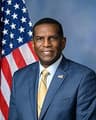 Burgess Owens
Republican · Utah