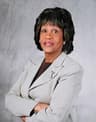
Maxine Waters (D-CA)
Mamas and Babies in Underserved Communities Act of 2025
A Democratic bill with 40 Democratic cosponsors · See all 40 cosponsors
Last activity — Referred to the House Committee on Energy and Commerce.
In committee
Introduced and handed to a committee in the chamber it started in.
The committee holds it, and most bills are never heard from again. A hearing or a committee vote would be news; silence is the usual outcome, and it kills the bill without anyone voting against it.
Its path through Congress
- Introduced
- In Committee
What this bill would do
This bill, known as the "Mamas and Babies in Underserved Communities Act of 2025," authorizes the Secretary of Health and Human Services to award grants through the Health Resources and Services Administration. The primary goal is to expand and improve maternal health care services. These grants are intended to support prenatal care, postnatal care for infants, and postpartum care for mothers. The program targets underserved communities, including minority and low-income areas. It also aims to reduce disparities in health outcomes and access to care.
Yes· 3 of 9
- Scored +8
Would women be better off under this?
The bill explicitly expands and improves maternal health services, including prenatal and postpartum care.
- Scored +7
Would children be better off under this?
The bill funds postnatal care for infants to improve their health outcomes.
- Scored +7
Would households on low incomes be better off under this?
The bill prioritizes health care providers that serve low-income communities.
The opposite
No question was scored the opposite.
Who it would affect, and how
Potential Positive Impacts for People
-
Expanded Maternal Health Services: The bill allows for the expansion of prenatal care, postnatal care for infants, and postpartum care for mothers (Section 2, SEC. 317K-1(a)(1)). This could help more people receive essential medical attention during and after pregnancy.
-
Improved Health Outcomes: The grants aim to improve the quality of services and overall health outcomes for women and infants (Section 2, SEC. 317K-1(a)(2-3)). This could lead to better health for families in specific communities.
-
Reduction of Disparities: The bill focuses on reducing disparities in access to care and health outcomes (Section 2, SEC. 317K-1(a)(4)). This is intended to help those in need receive more equitable treatment.
-
Culturally Appropriate Care: Grant recipients must agree to provide services in a culturally and linguistically appropriate manner (Section 2, SEC. 317K-1(d)(1)). This ensures that care is more accessible and respectful of the communities being served.
-
Support for Local Communities: Priority is given to entities led by people who live in, were educated in, or have lived in the communities they serve (Section 2, SEC. 317K-1(c)(2)). This ensures that the people managing the funds have a direct connection to the people they are helping.
Potential Negative Impacts for People
- Administrative Restrictions: There is a limit on the percentage of grant funds that can be used for administrative expenses, capping it at 10 percent (Section 2, SEC. 317K-1(d)(2)). This could potentially place a burden on the operations of the healthcare providers receiving the funds.
Groups and Interests Ranking
Every group the model scored this bill for, from -10 to +10. Tap or hover a score for the reason it gave.
- Demographic And Interest Groups
- Would women be better off under this? — The bill explicitly expands and improves maternal health services, including prenatal and postpartum care. Would Black Americans be better off under this? — The bill aims to reduce healthcare disparities for minority and underserved communities. Would children be better off under this? — The bill funds postnatal care for infants to improve their health outcomes. Would Hispanic Americans be better off under this? — The bill aims to reduce healthcare disparities for minority and underserved communities. Would households on low incomes be better off under this? — The bill prioritizes health care providers that serve low-income communities. Would people in their twenties and thirties be better off under this? — The bill supports women of childbearing age, a group that often falls into the young adult demographic.
- Social Issues And Justice
- Does this narrow racial gaps in how people are treated? — The bill specifically targets reducing healthcare disparities for minority and underserved communities. Is this likely to lift people out of poverty? — By targeting low-income communities for maternal health services, the bill helps support the health of those in poverty.
- Healthcare
- Does this make health care easier to get in general? — The bill provides grants to expand prenatal, postnatal, and postpartum care services in underserved communities.
- 8/20/2026
- 1 Cosponsor added.
- 4/28/2026
- 2 Cosponsors added.
- 9/17/2025
- 1 Cosponsor added.
- 5/8/2025
- 1 Cosponsor added.
- 4/24/2025
- 1 Cosponsor added.
- 3/11/2025
- 2 Cosponsors added.
- 3/6/2025
- Referred to the House Committee on Energy and Commerce.
- 32 Cosponsors added.
- Introduced in House
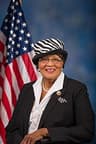 Alma Adams
Democrat · North Carolina
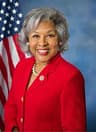 Joyce Beatty
Democrat · Ohio
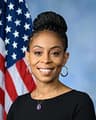 Shontel Brown
Democrat · Ohio
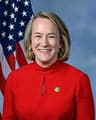 Nikki Budzinski
Democrat · Illinois
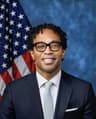 Wesley Bell
Democrat · Missouri
 Kathy Castor
Democrat · Florida
 Yvette Clarke
Democrat · New York
 Steve Cohen
Democrat · Tennessee
 André Carson
Democrat · Indiana
 Gerald Connolly
Democrat · Virginia
 Troy Carter
Democrat · Louisiana
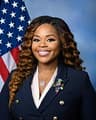 Sheila Cherfilus-McCormick
Democrat · Florida
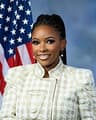 Jasmine Crockett
Democrat · Texas
 Lloyd Doggett
Democrat · Texas
 Madeleine Dean
Democrat · Pennsylvania
 Veronica Escobar
Democrat · Texas
 Cleo Fields
Democrat · Louisiana
 Shomari Figures
Democrat · Alabama
 Raúl Grijalva
Democrat · Arizona
 Josh Gottheimer
Democrat · New Jersey
 Jahana Hayes
Democrat · Connecticut
 Henry Johnson
Democrat · Georgia
 Sara Jacobs
Democrat · California
 Jonathan Jackson
Democrat · Illinois
 Summer Lee
Democrat · Pennsylvania
 LaMonica McIver
Democrat · New Jersey
 Kristen McDonald Rivet
Democrat · Michigan
 Eleanor Norton
Democrat · District of Columbia
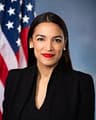 Alexandria Ocasio-Cortez
Democrat · New York
 Delia Ramirez
Democrat · Illinois
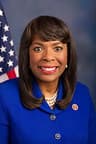 Terri Sewell
Democrat · Alabama
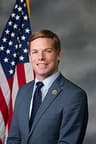 Eric Swalwell
Democrat · California
 Bennie Thompson
Democrat · Mississippi
 Paul Tonko
Democrat · New York
 Rashida Tlaib
Democrat · Michigan
 Shri Thanedar
Democrat · Michigan
 Lauren Underwood
Democrat · Illinois
 Nydia Velázquez
Democrat · New York
 Juan Vargas
Democrat · California
 Bonnie Watson Coleman
Democrat · New Jersey